Ceramic application cases
3D-printed alumina components for semiconductor equipment: vacuum chucks and electrical insulators
Four DLP alumina examples: an F-shaped vacuum chuck, patterned insulating plates, an eight-hole cylindrical connector and a five-shed insulating sleeve.
Authorized translation of a supplied application case, not a KUNWU qualification test. Source-account promotions are excluded. Sample photographs have localized logo retouching; texture inside those regions is reconstructed, not raw measurement evidence. Image dimensions and pixels outside the repair regions are unchanged.
Alumina for structural and functional components
Alumina (Al₂O₃) ceramics combine high electrical insulation and hardness with resistance to heat and wear and low particulate contamination. They are commonly used for structural and functional components in semiconductor and electronic equipment. Such parts often contain complex cavities, arrays of holes or irregular outlines; conventional manufacturing can involve difficult shaping, many process steps and low yields. The supplied case presents four DLP vat-photopolymerized alumina samples: an F-shaped vacuum chuck, honeycomb insulation structures, a circular connector and an insulating sleeve for a threaded post.
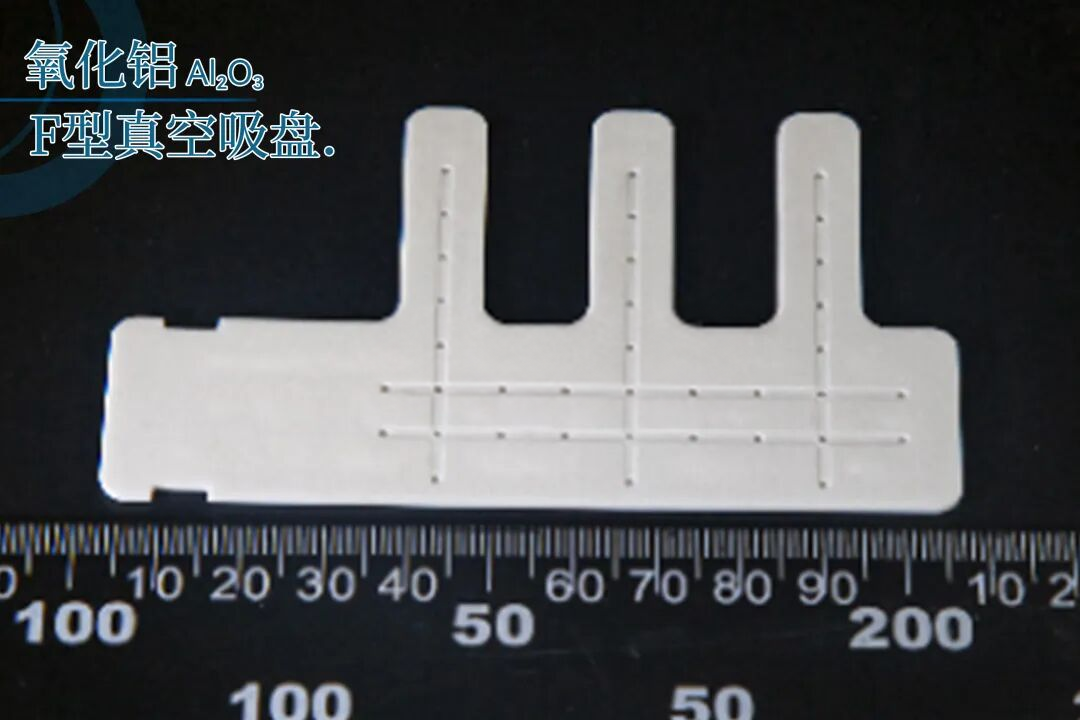
1 · F-shaped alumina vacuum chuck
The sample has a three-finger, F-shaped comb geometry. Multiple vacuum suction holes are distributed along each finger to provide multipoint gripping, while the F-shaped outline facilitates arrangement on a locating surface. The structure is formed as one piece. The source highlights alumina’s hardness and wear resistance and the absence of metal contamination as advantages for clean environments.
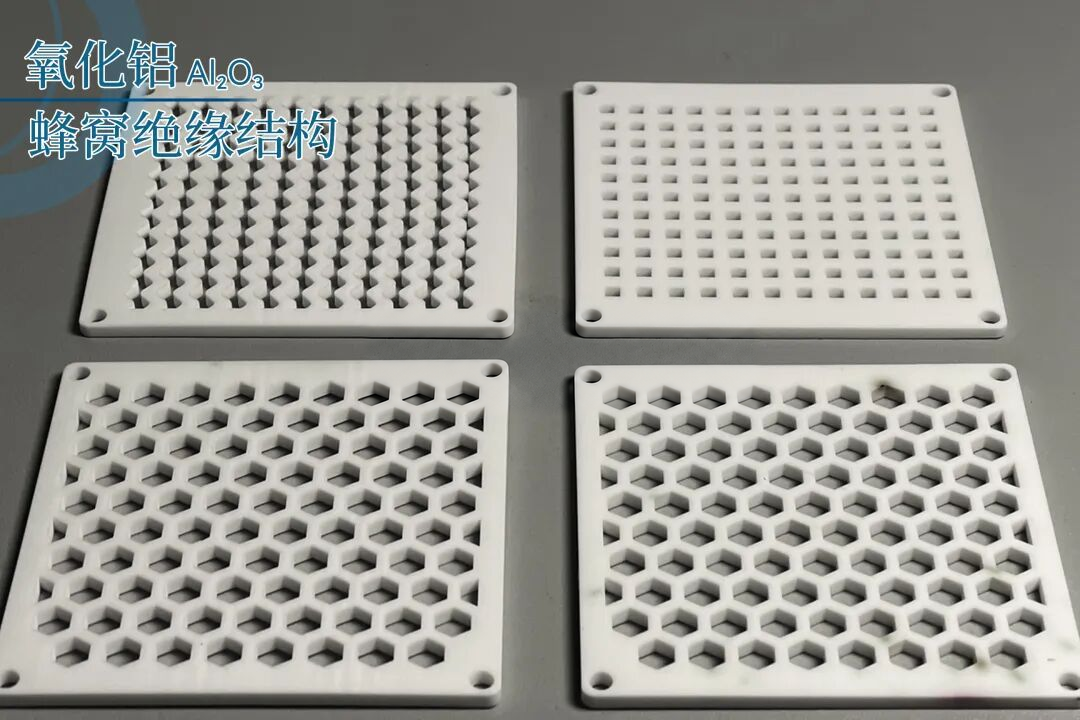
2 · Honeycomb alumina insulation structures
The set comprises four square alumina insulating plates with three surface-pattern families: a raised point array, a square array of through-holes, and hexagonal honeycomb through-holes in two aperture sizes. Each can be formed as a single part. The hole arrays and honeycomb structures reduce weight while retaining stiffness, and the channels allow airflow. Alumina’s inherent electrical insulation and heat resistance provide the material basis for these perforated insulating plates.
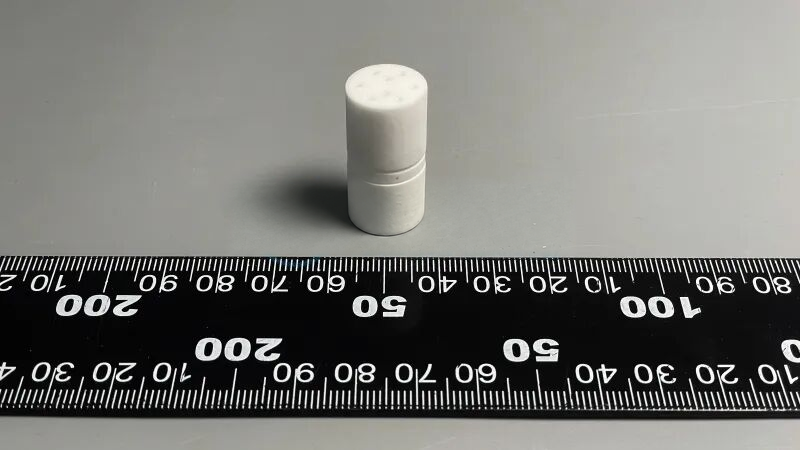
3 · Circular alumina connector
This cylindrical alumina insulating terminal has eight through-holes distributed over its top face: two in the center and six around them. It supports multiple electrically isolated paths and is printed as a single component. The cylindrical body provides insulation distance. The source associates alumina’s high electrical insulation and arc resistance with stable long-term operation in energized environments.
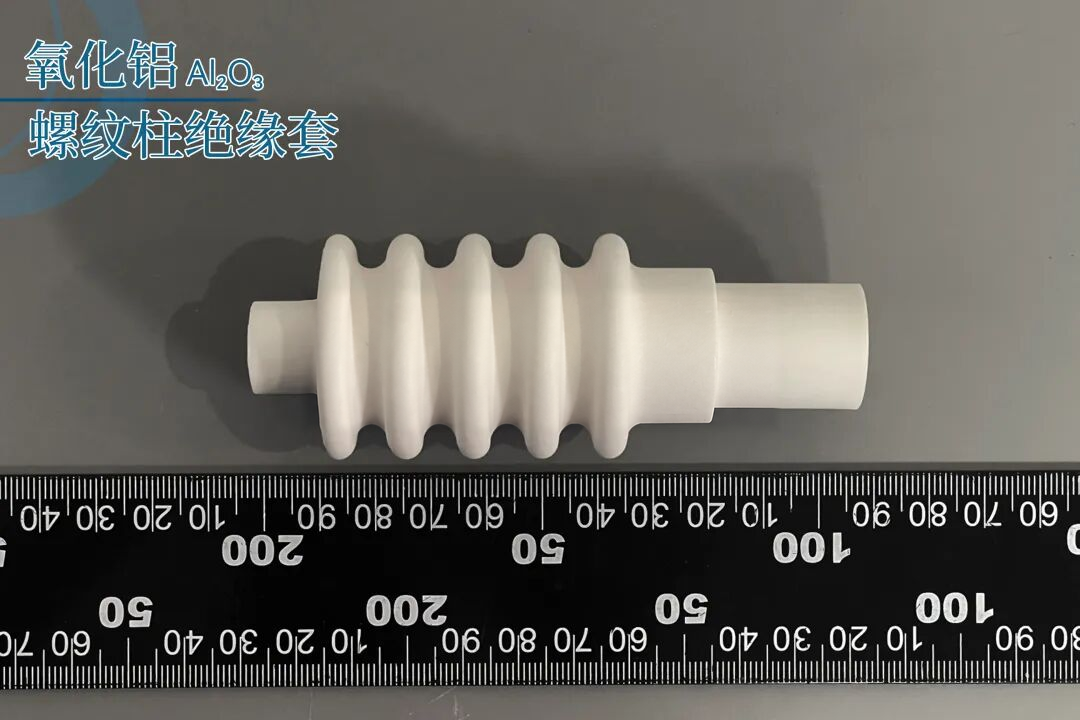
4 · Insulating sleeve with annular sheds
The cylindrical sleeve has five annular sheds along its middle section and straight cylindrical portions at both ends. It is formed in one piece. Within a limited overall length, the sheds increase the surface creepage distance, providing additional insulation margin between a conductor and grounded components.
Conclusion · Coordinating electrical, thermal and structural design
From vacuum chucks to insulating terminals, and from honeycomb plates to insulating sleeves, the value of alumina 3D printing extends beyond making a shape. It supports integrated electrical, thermal and structural design. Additive manufacturing relaxes geometric constraints of conventional processes and can support more integrated, reliable and lightweight semiconductor and electronic components.
Engineering verification before use
Editorial clarification: the source provides no dielectric-strength measurements, service-life tests, cleanroom certification or dimensional inspection report for these samples. Material characteristics and stated design benefits are not a qualification guarantee for a finished part. Agree on the working voltage, temperature, cleanliness, tolerances and acceptance tests before commissioning a component. Contact KUNWU to discuss a sample and its validation requirements.