Equipment release
Ceram-DD50 Mini DLP: a RMB 39,800 platform for ceramic material development
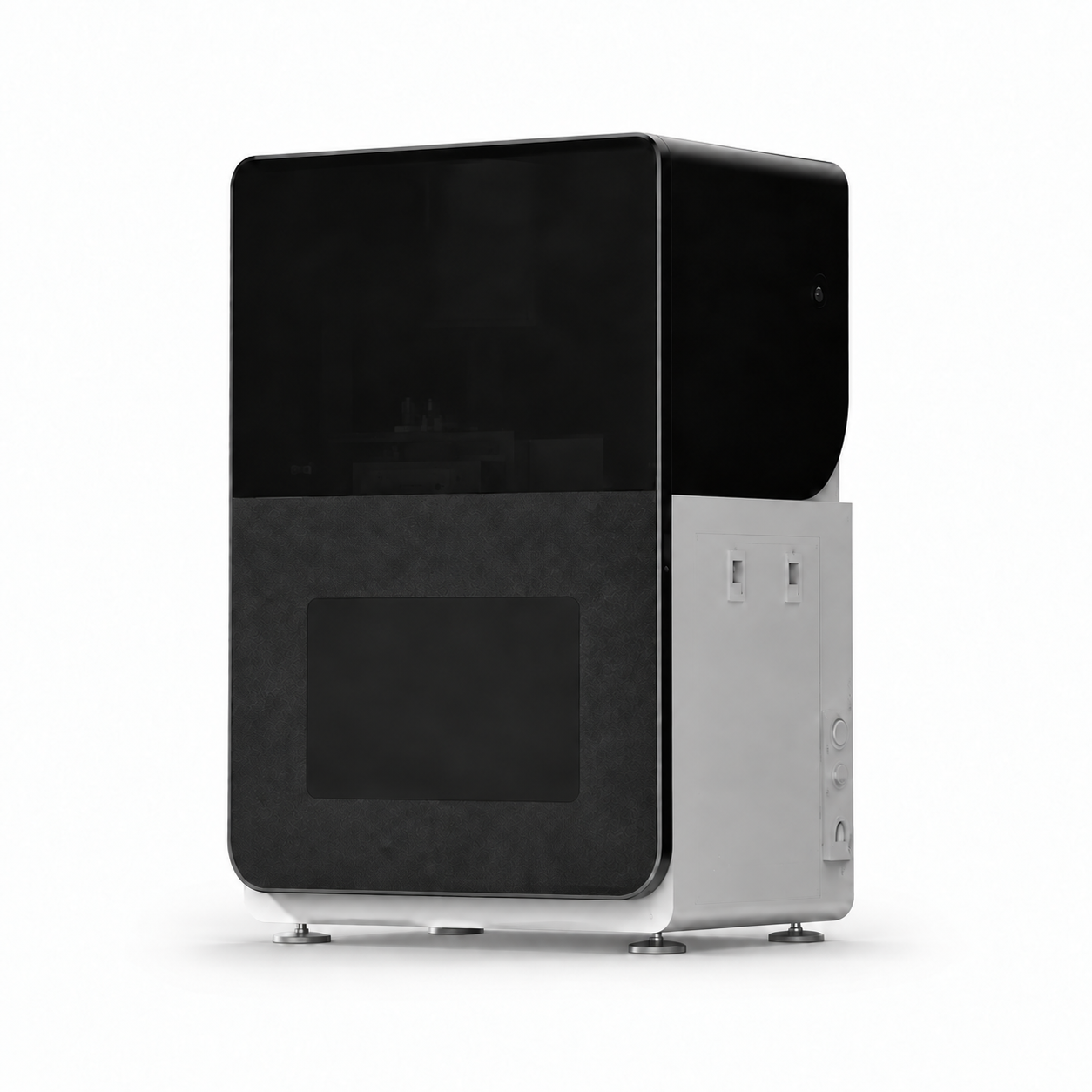
A newly released compact dual-cylinder ceramic printer combines a 10 mL starting feed volume with a 51.2 × 28.8 × 60 mm build envelope and 20 μm optical resolution.
The 12 October 2026 announcement lists RMB 39,800 for the bare machine, with the main unit and control software as standard. The complete project quotation confirms configuration, taxes, freight, materials and thermal equipment. Optical resolution does not establish finished-part dimensional tolerance.
- Published bare-machine price
- RMB 39,800
- Starting feed volume
- 10 mL
- Build volume
- 51.2 × 28.8 × 60 mm
- Optical resolution
- 20 μm
A smaller investment for research and teaching
High-precision ceramic DLP printing supports formulation testing, complex structures and small experimental batches in universities, research institutes and industrial R&D teams. Equipment cost and the amount of slurry needed to start a trial can make access difficult. The Mini Ceram-DD50, announced on 12 October 2026, addresses both: a published bare-machine price of RMB 39,800 and a 10 mL starting feed volume. Its focus is small research specimens, not large-format volume production.
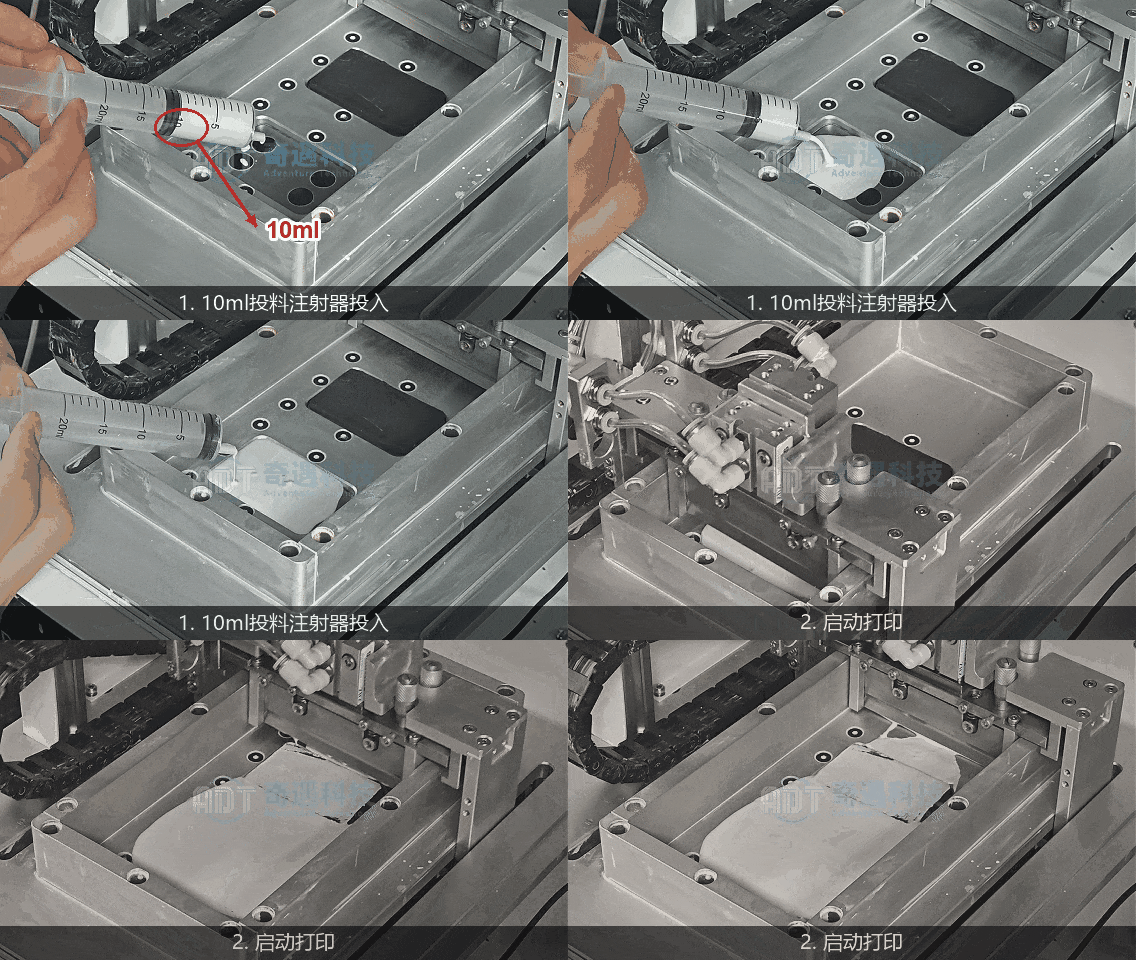
10 mL and a dual-cylinder feed system
A feed cylinder supplies ceramic slurry to the build cylinder; a scraper blade spreads the fresh layer. For a new slurry, a laboratory-made formulation or a material available only in small quantities, this low starting volume leaves more material for repeated trials. Researchers can iterate solids loading, dispersion, exposure and sintering conditions with less slurry committed to each build. The 10 mL value describes the starting feed requirement, not consumption per finished part or a universal operating minimum for every formulation.
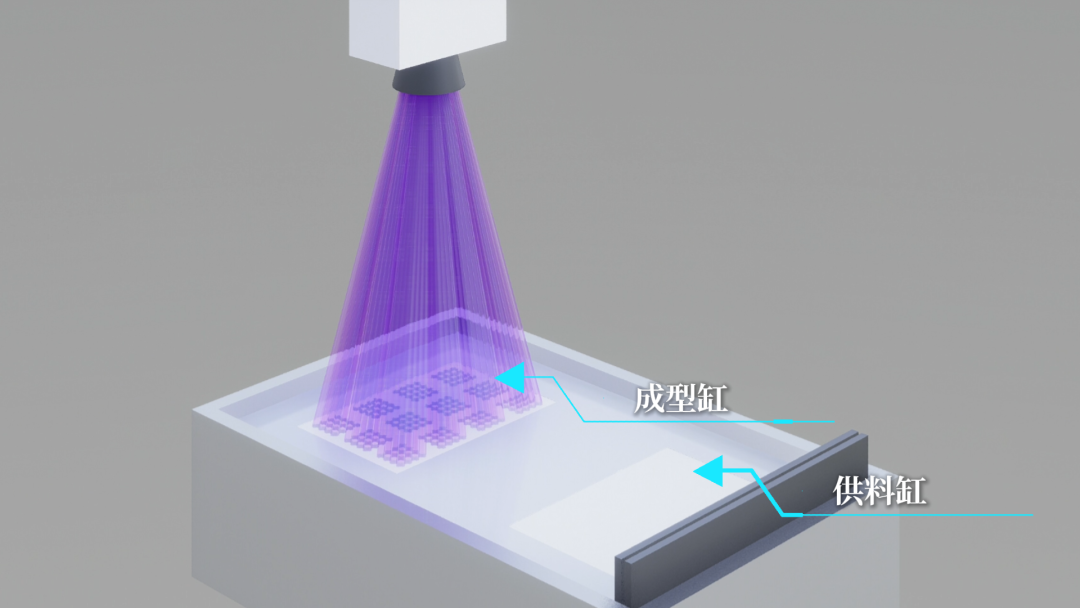
Top exposure and a descending build platform
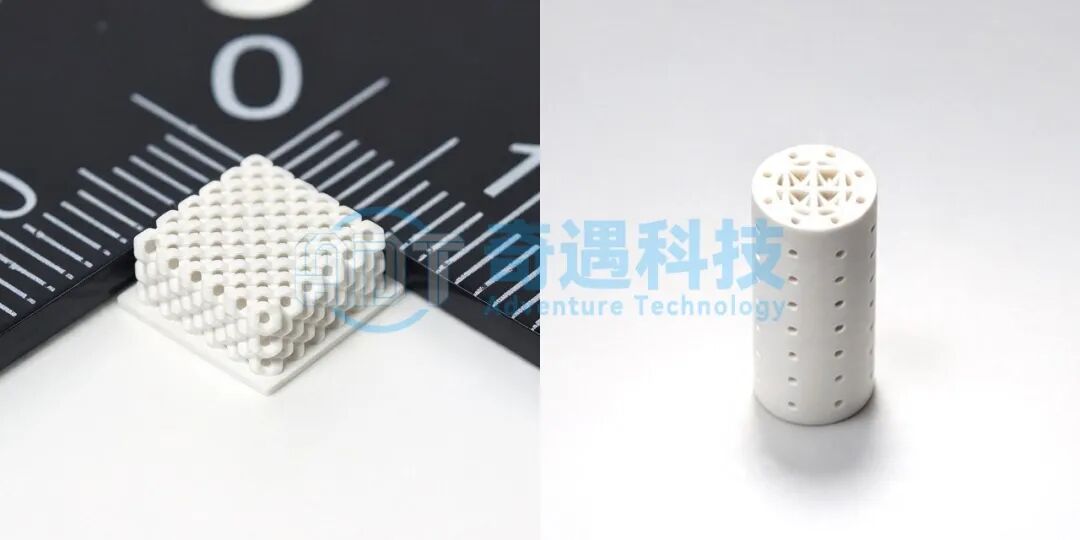
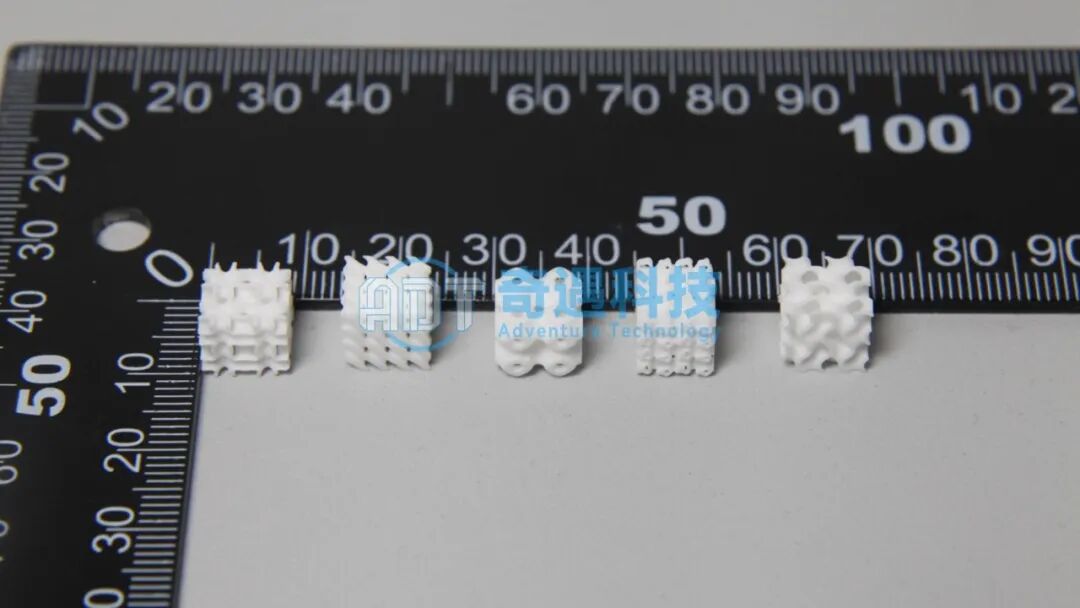
The DD50 uses a top-down DLP layout with the optical engine above the slurry and a descending build platform. Its projector resolution is 2560 × 1440, with a reported optical pixel size of 20 μm over a 51.2 × 28.8 mm area and a 60 mm build height. The launch examples show zirconia and hydroxyapatite structures and alumina TPMS specimens. Lattices and curved microstructures allow the team to evaluate formulation, exposure and geometry together. Final dimensions also depend on curing, cleaning, debinding and sintering shrinkage.
Spreading and heating for formulation trials
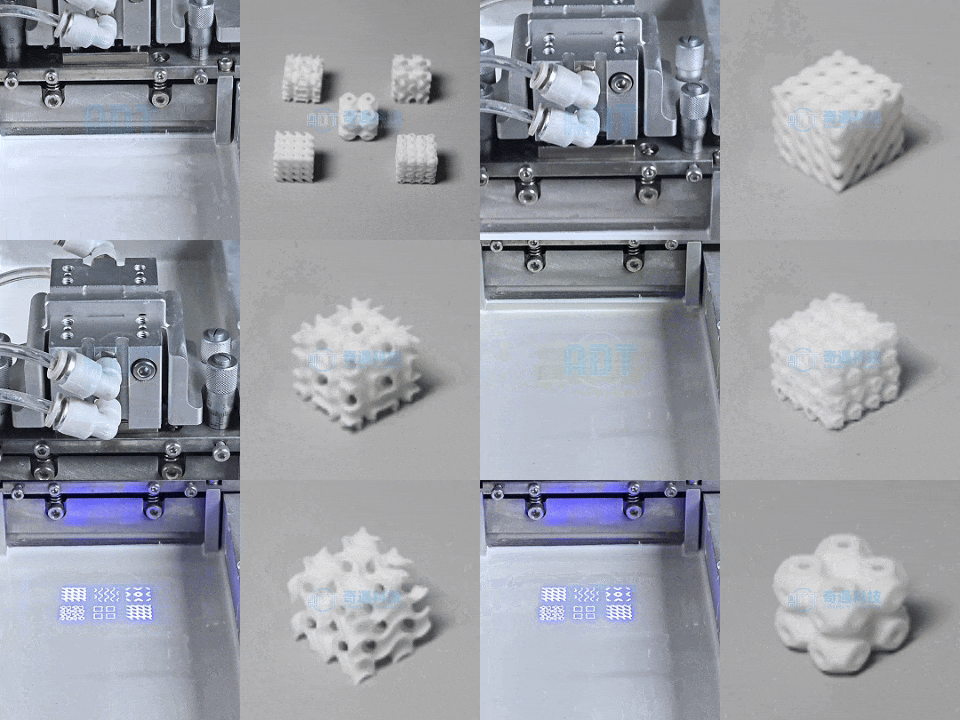
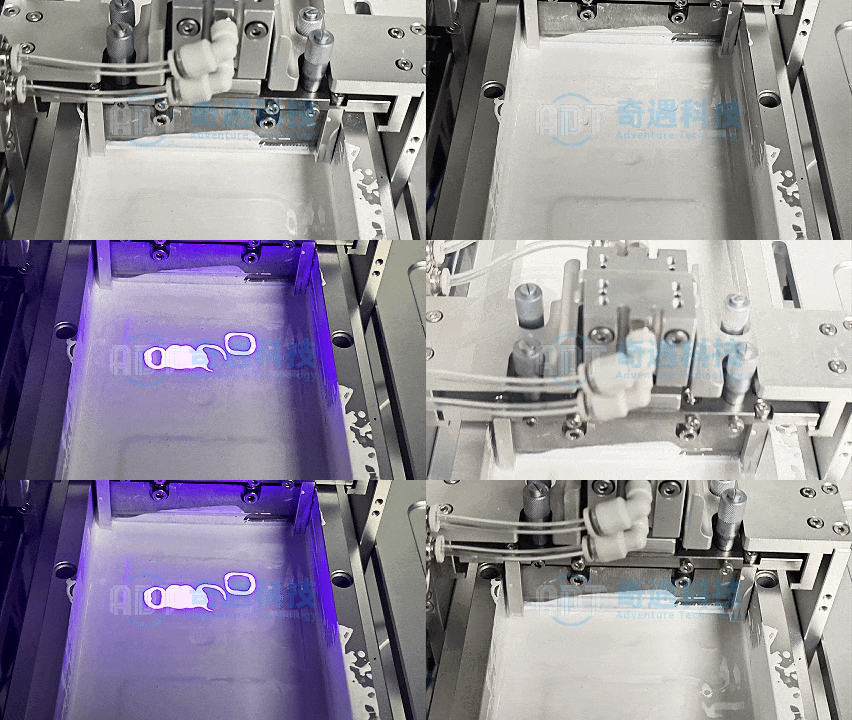
Powder type, solids loading and binder formulation alter viscosity and spreading. The announcement presents descending-platform printing, blade spreading and dual-cylinder feeding as a combination intended to accommodate a broad range of ceramic slurry viscosities, including more viscous formulations. A heating system supports adjustment of the printing conditions. This is an experimental capability: each slurry still needs its own exposure, spreading and temperature window. The source printing animations below are retained in their original form.
What the price covers and what the workflow requires
The overall machine dimensions are 415 × 375 × 735 mm. The article states that the main unit and control software are standard and that the model is available for sale. The printed object is a ceramic green body: compatible cleaning, debinding and sintering are needed to obtain the final ceramic part. When planning a laboratory, assess the printer together with material supply, cleaning arrangements, furnace access, validation specimens and operator training. KUNWU can help review the required configuration and prepare a project-specific quotation.