Catalysis and petrochemicals
Choosing a ceramic catalyst support: alumina or silicon carbide
A practical selection framework for alumina and silicon carbide in 3D-printed monoliths, channels and porous catalyst supports.
A KUNWU engineering guide based on open scientific sources. Material, geometry and processing must be validated with the real formulation, active phase and operating environment. Illustrations show design directions and are not results from the cited studies.
Start with the process, not the material name
A first screen needs operating temperature and atmosphere, steam or oxygen exposure, acids or bases, heat flux, allowable pressure drop, active-phase deposition and regeneration method. The same material can behave differently when porosity, sintering or coating changes, so an Al2O3 or SiC label alone does not determine support lifetime.
When alumina is a logical candidate
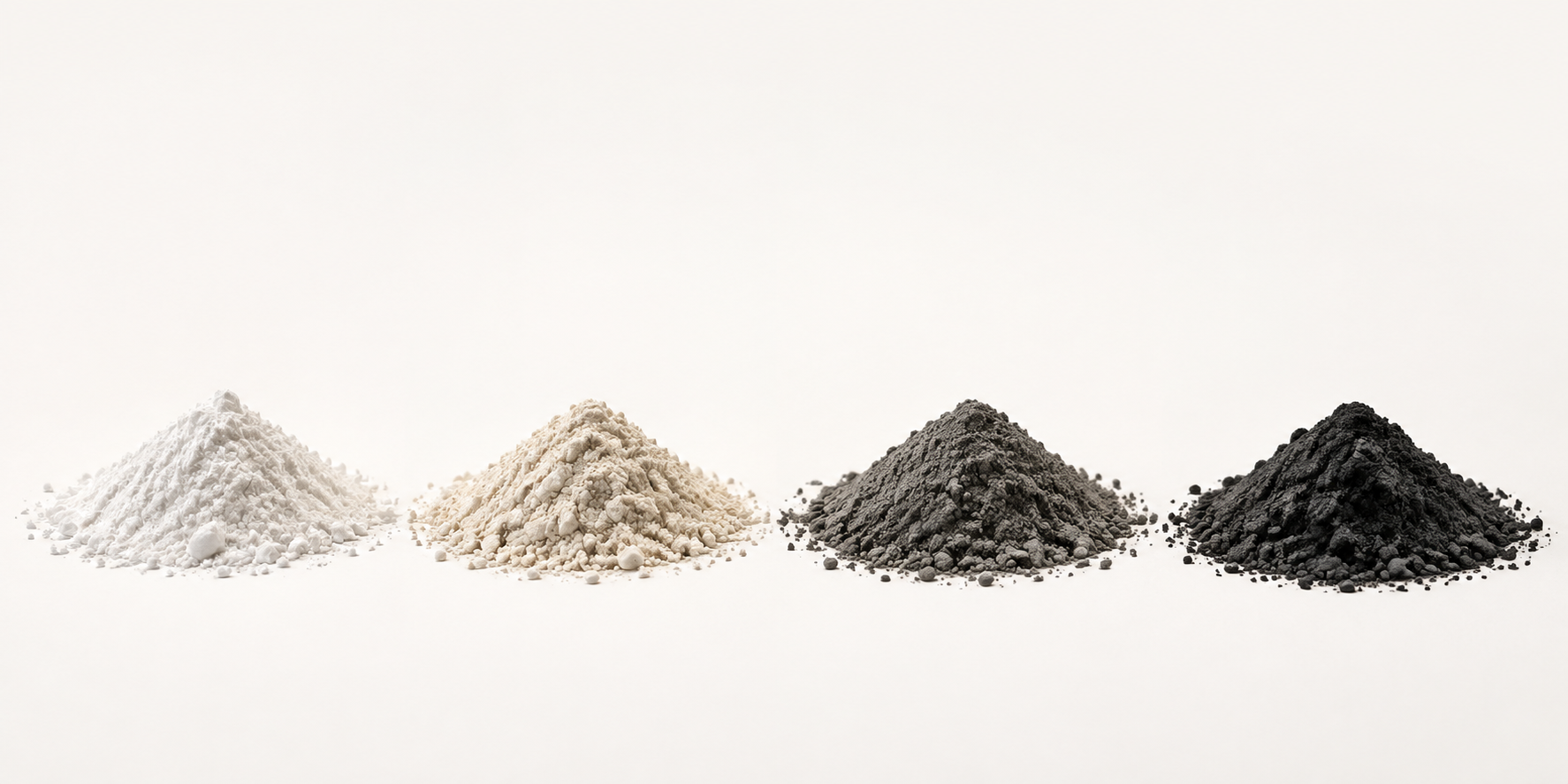
Alumina is widely used as an engineering ceramic and catalyst-support base. For additive manufacturing, ink or slurry formulation, shrinkage, wall strength and surface retained after thermal processing all matter. Research on a hierarchically porous alumina carrier shows why printed macrochannels, internal porosity and mechanical strength must be designed together rather than judged by one value.
When SiC may help
Silicon carbide is attractive when heat transfer, mechanical stability and elevated-temperature operation matter. Published steam-reforming work demonstrates the value of a thermally conductive monolith for managing the temperature profile. Stability still depends on the specific SiC form and environment: high-surface-area SiC studies report limitations under strongly oxidizing or steam-containing high-temperature conditions. Those conditions require separate validation.
Load-bearing geometry and active surface are separate jobs
A printed monolith establishes channels, strength and hydrodynamics, but it does not automatically supply the required surface area or active-phase retention. A second level is often needed: impregnation, washcoat, functional coating or controlled wall porosity. Validate coating uniformity, adhesion after thermal cycling, reagent access and the resulting change in pressure drop.
Information needed for an engineering review
Provide catalyst composition and active phase, normal and peak temperatures, gas or liquid environment, flow rate, reactor envelope, pressure-drop limit, target open porosity and active-phase loading method. These inputs support a trial material, specimen geometry and thermal route without presenting an early choice as a production-ready solution.
Sources
- Hierarchically porous alumina catalyst carrier with biomimetic vein structure prepared by direct ink writing · Journal of the European Ceramic Society (2021)
- High surface area silicon carbide as catalyst support: characterization and stability · Applied Catalysis A (1998)
- Innovative catalyst design for methane steam reforming intensification · Fuel (2017)