Research applications
DIW-printed inverted cones: ceramic solar evaporators that shed salt
A Chongqing University of Technology study combines controlled pores, a carbon-nanotube coating and a reflector to balance solar evaporation with salt recovery.
Editorial translation of the supplied research article. Values describe the cited study, not guaranteed printer performance or a qualified KUNWU product. Original figure panels, labels and scale bars are unchanged. Publisher full text was not independently accessible during this update; check the original paper before reproducing its procedure.
1 · Why print the porous skeleton?
Solar interfacial evaporation localizes photothermal energy near the air–water interface instead of heating the whole water reservoir. Its performance depends jointly on light absorption, water supply and thermal management. Conventional templating, freeze-drying and one-step sintering offer limited control over pore size and connectivity; salt may crystallize randomly, obstruct channels and cover the absorber. The supplied study addresses this trade-off by digitally designing a porous ceramic skeleton and integrating evaporation with salt collection.
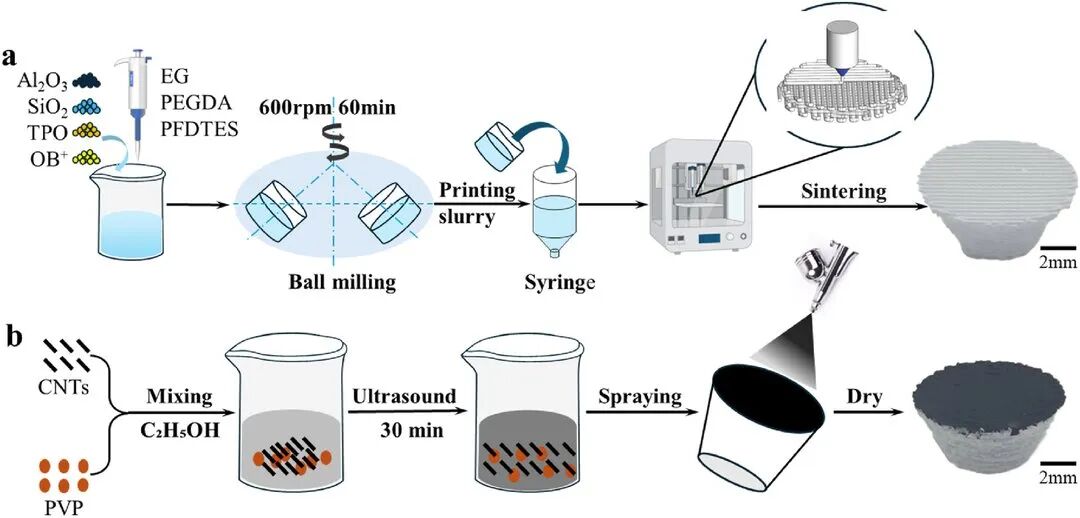
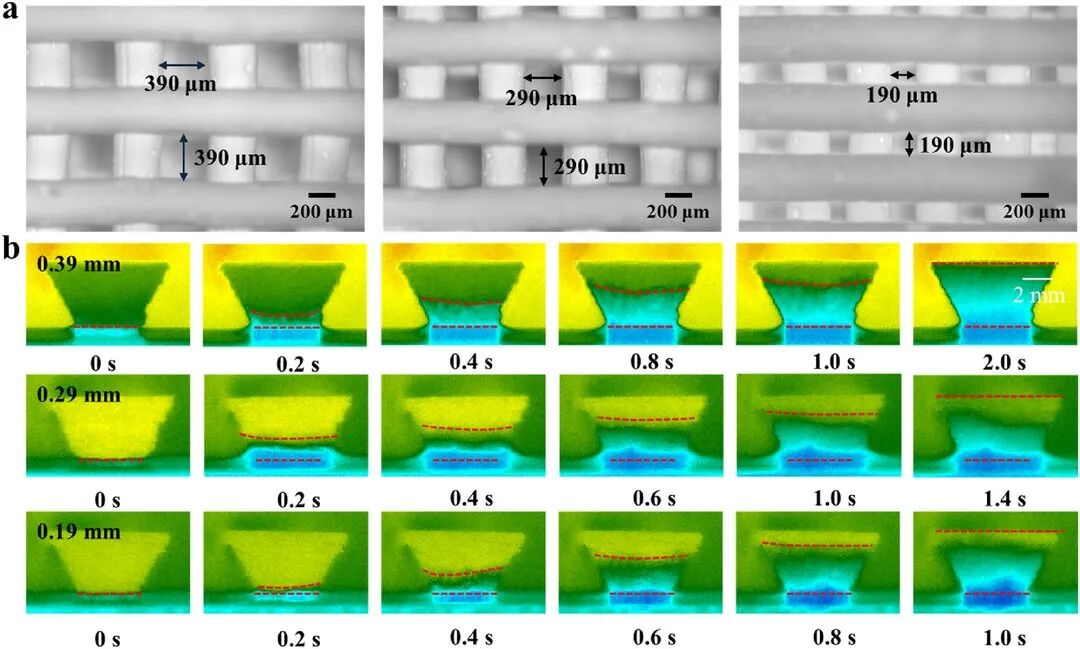
The authors use DIW with photo-assisted ceramic-ink shaping. Toolpath spacing sets nominal channels of 0.19, 0.29 or 0.39 mm while building the inverted-cone outline in one piece. The printed green body is dried and sintered into a stable, hydrophilic ceramic skeleton. Digital control concerns the designed geometry; actual channel dimensions and transport still require measurement after processing.
2 · Inverted geometry and thermal zoning
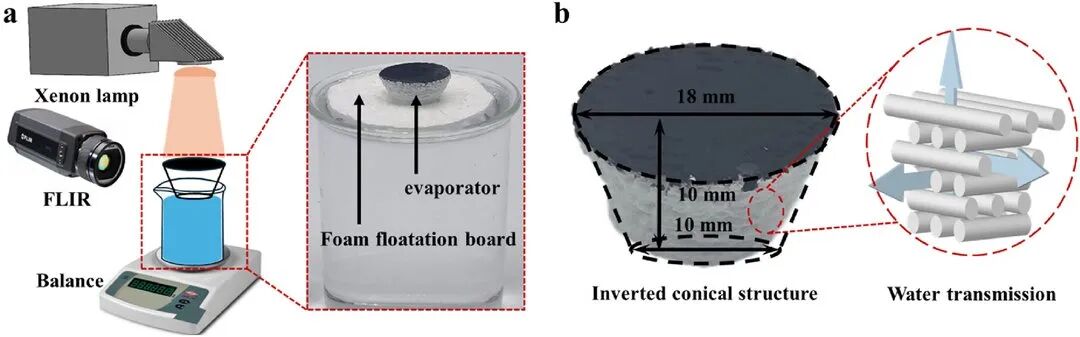
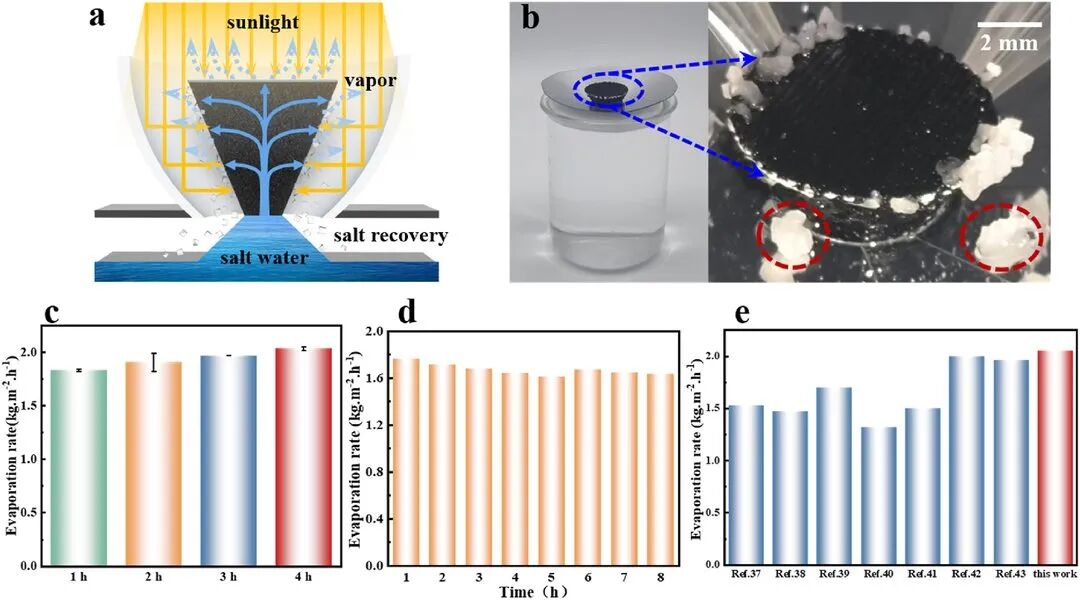
The cone widens upward: a small bottom contact reduces conduction into the water reservoir, while a wider upper area encourages radial spreading of capillary-fed water. Greater edge cooling makes the rim cooler than the center. The authors use that gradient to favor crystallization at the edge, where growing salt can fall under gravity rather than cover the active surface. Pore spacing controls the balance between capillary delivery and resistance to salt blockage.
3 · Coating, wetting and light absorption
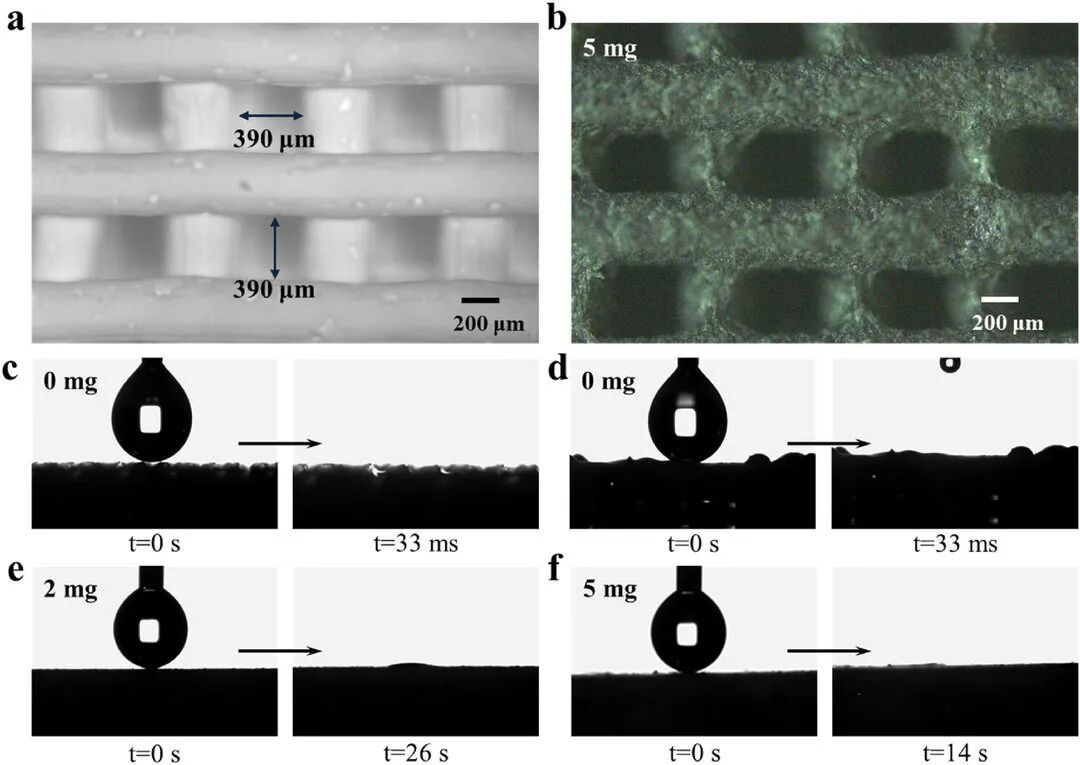
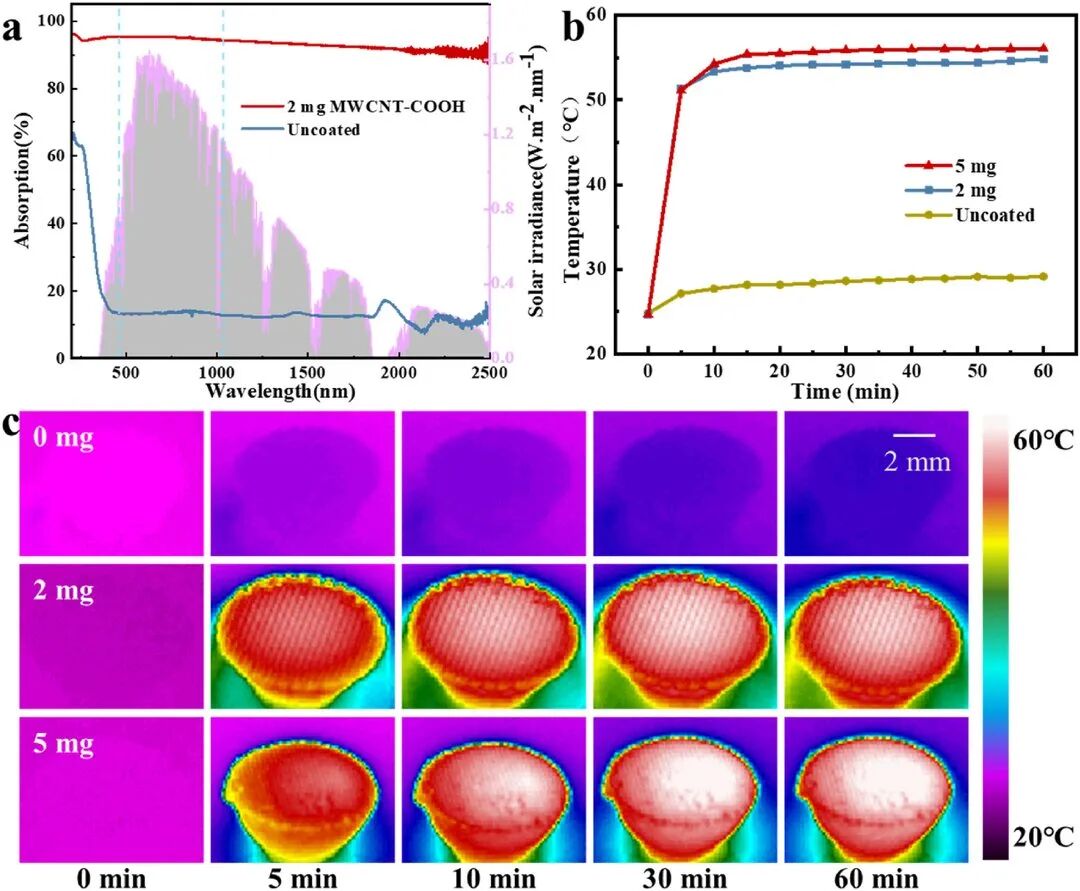
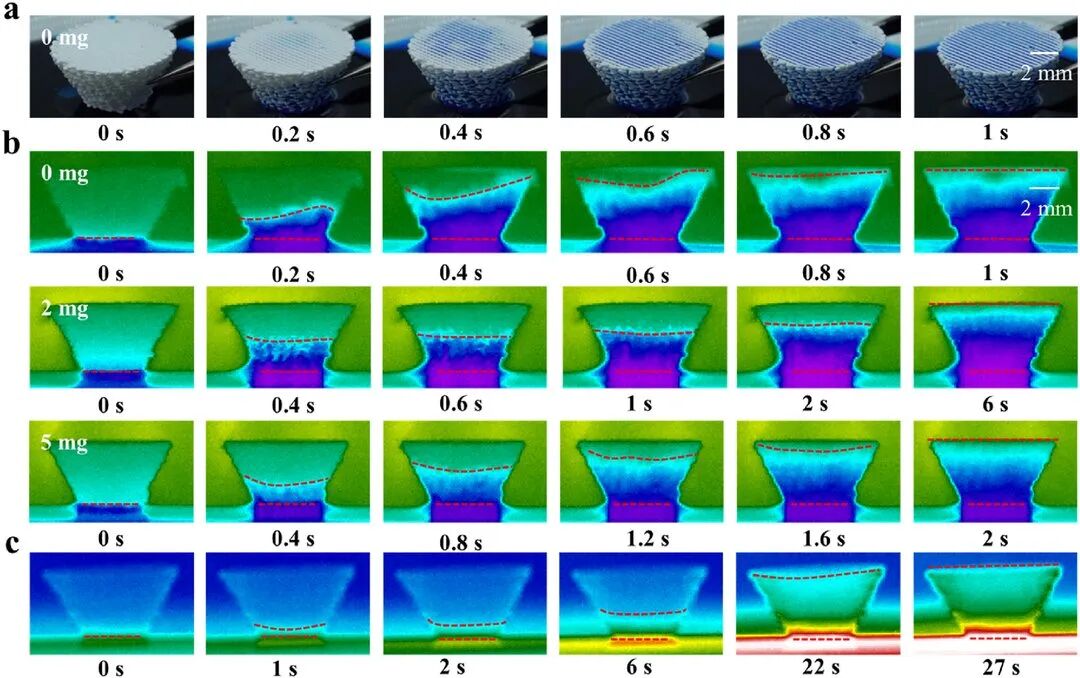
Carboxylated multi-walled carbon nanotubes (MWCNT-COOH) are sprayed onto the top and side surfaces. The source reports approximately 95% broadband absorption. SEM and dynamic wetting compare the untreated substrate with 2 mg and 5 mg coatings; optical spectra, surface-temperature curves and infrared images evaluate heating under one-sun illumination. Visible and infrared sequences track water transport with and without coating, including a hot-plate validation experiment.
4 · Pore size links water supply and evaporation
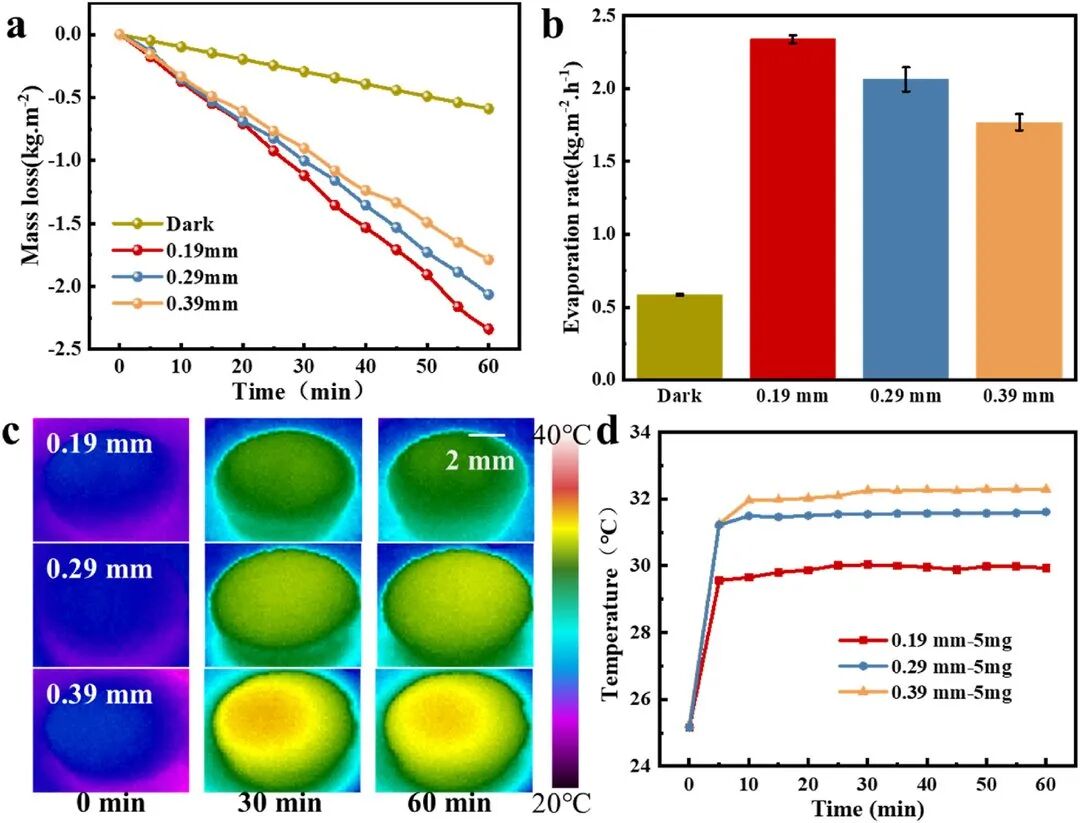
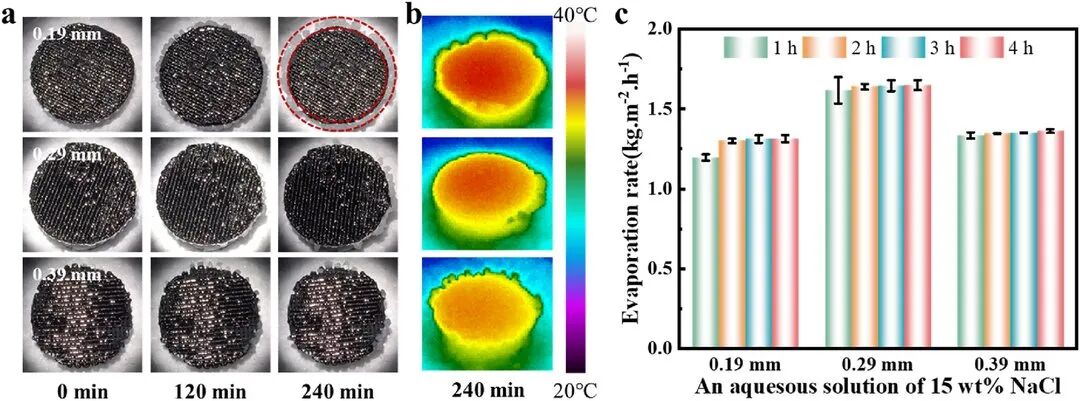
The 0.19, 0.29 and 0.39 mm channel variants are compared using surface microscopy, time-resolved infrared water-transport images, mass loss, evaporation rate and temperature distributions under one sun. Smaller passages strengthen capillary action but can also change hydraulic resistance and the space available for salt. The result is a coupled geometric and thermal design problem, not a rule that the smallest pore always gives the best long-term evaporator.
5 · Evaporation with salt recovery
A conical annular reflector tilted by 20° redirects otherwise unused light toward the coated sidewalls and also guides fallen salt to a collection location. In 15 wt% NaCl, the integrated system reports a stable rate of 2.05 kg m⁻² h⁻¹ over the four-hour test while recovering salt. The original figures also compare salt deposits for different pores, show an eight-hour experiment in 25 wt% NaCl and place the system alongside published high-salinity evaporators.
The study links digital fabrication, controllable porosity and functional integration. The named authors include corresponding author Zhenting Xie and first author Xuefeng He of Chongqing University of Technology. Laboratory illumination, solution chemistry and four/eight-hour tests do not establish outdoor seasonal performance, potable-water compliance, coating durability or economic scale-up. Those require separate validation. DIW and photopolymerization are different process routes: this case must not be presented as a demonstrated output of DD50 or ADT-D-M48.
Sources
Original paper · DOI
Xuefeng He, Jing He, Zhenting Xie, Yuan Zhou, Hao Lei, Liu Liu, Nianbing Zhong. Interfacial water evaporation performance of 3D printed inverted conical porous ceramic skeletons. Renewable Energy, 2026, 275: 126275.