Materials research
DLP hydroxyapatite: why alumina platelets did not improve strength
A 1 vol% alumina addition preserved bulk phase composition but introduced local porous interfaces. The study separates build orientation, flexural strength and fracture toughness to explain the result.
Original research interpretation, not a KUNWU material specification or a medical-use recommendation. The publisher abstract confirms the main findings; detailed numerical values below are attributed to the supplied technical report. The journal assigns the paper to its April 2027 issue. Illustrations are original explanatory diagrams, not microscopy or reproduced paper figures.
1 · Reinforcement must earn its benefit at the interface
A stiff second phase can make a crack turn or bridge its path, but that benefit depends on dispersion, interface quality and the absence of new critical flaws. This study tested a deliberately small addition of plate-like alumina to DLP-printed hydroxyapatite (HA). The publisher reports no improvement in flexural strength and no clear overall toughness gain: platelet-associated porosity offset the potential benefit of crack deflection.
The engineering lesson is specific to this material system and processing route. It does not show that all alumina additions fail, or that a printer can guarantee a particular mechanical result. Composition, layer orientation and the defects created during post-processing have to be evaluated together.
2 · Compare like with like: composition and orientation
The supplied report describes pure HA and HA with 1 vol% alumina platelets, both at 65 wt% ceramic loading and a sintering temperature of 1250 °C. The 1 vol% addition and 65 wt% loading use different reference bases and must not be interchanged. HA powder was calcined at 900 °C for 3 h; its reported particle-size peak after preparation was about 500–600 nm.
Nominal beam dimensions were 2.1 × 21 × 1.7 mm, with 27–36 valid specimens per group. L, H and W designate layer planes normal to the specimen length, height and width respectively. They are geometrical definitions, not interchangeable machine-axis labels. In L, tensile loading in bending acts across the layer interfaces; that makes interlayer flaws especially relevant.
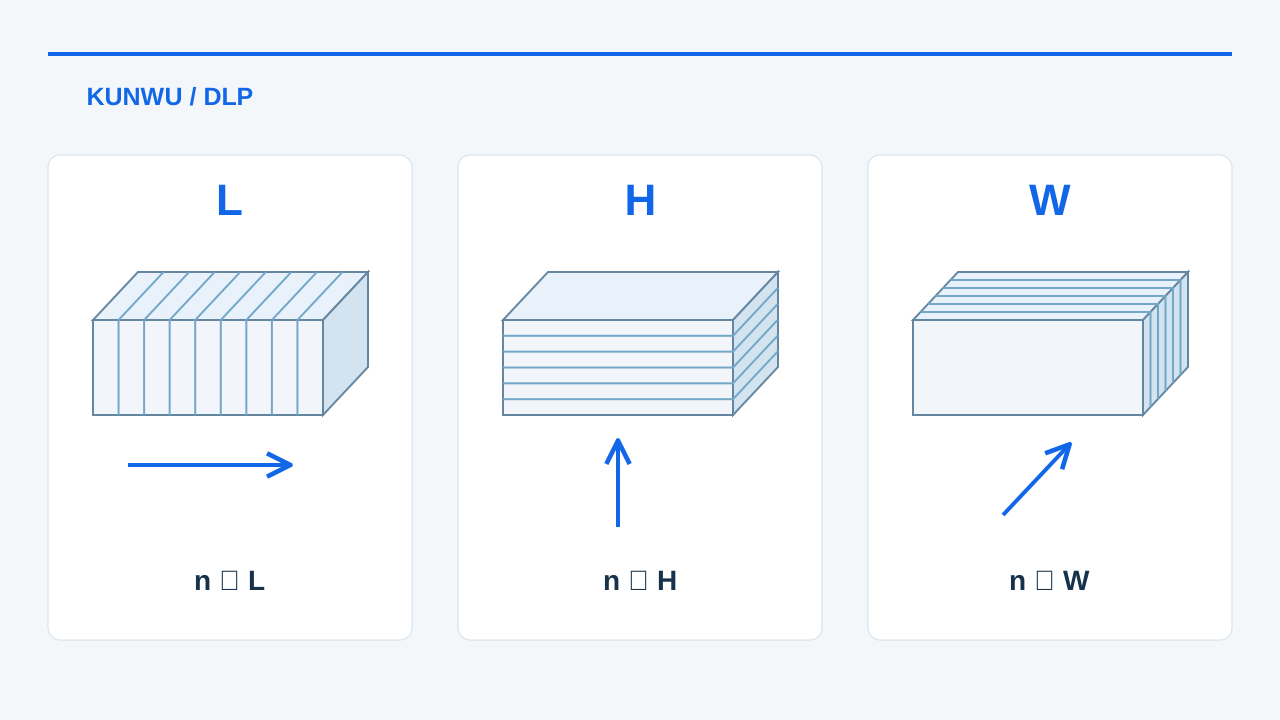
3 · Strength falls in every reported orientation
The following mean flexural strengths are transcribed from the supplied technical report, in the explicit order L, H, W. The composite is lower in every orientation, by about 9–13% relative to the corresponding pure HA mean. These are group averages, not allowable design stresses or guaranteed lot properties.
Scatter matters as well as the mean. The report gives Weibull moduli of 4.30 for composite L and 14.65 for composite W, compared with 6.26 and 10.01 for pure HA. A lower modulus indicates a broader fitted strength distribution. It does not, by itself, identify one unique flaw population; the proposed mechanisms also rely on fracture-surface observations.
| Build orientation | HA / MPa | HA + 1 vol% Al₂O₃ / MPa |
|---|---|---|
| L | 116.4 | 100.8 |
| H | 141.9 | 129.5 |
| W | 138.3 | 124.4 |
4 · Similar density can hide a different flaw distribution
The publisher abstract places both materials at about 92–93% relative density. It also describes an HA-dominated phase composition with minor β-TCP, aligned platelets, microporous halos and local MgAl₂O₄ and CaAl₂O₄ near the particles. Bulk densification alone therefore cannot explain the mechanical difference. Where pores cluster and how they align with loading are essential parts of the explanation.
A plausible process interpretation is that slurry spreading aligns the platelets within the layer plane, while differential shrinkage and local interface reactions hinder pore closure near them. This makes interface quality a separate acceptance question from average density. Absence of an extra bulk XRD peak does not exclude a small local reaction region detected by microscopy.
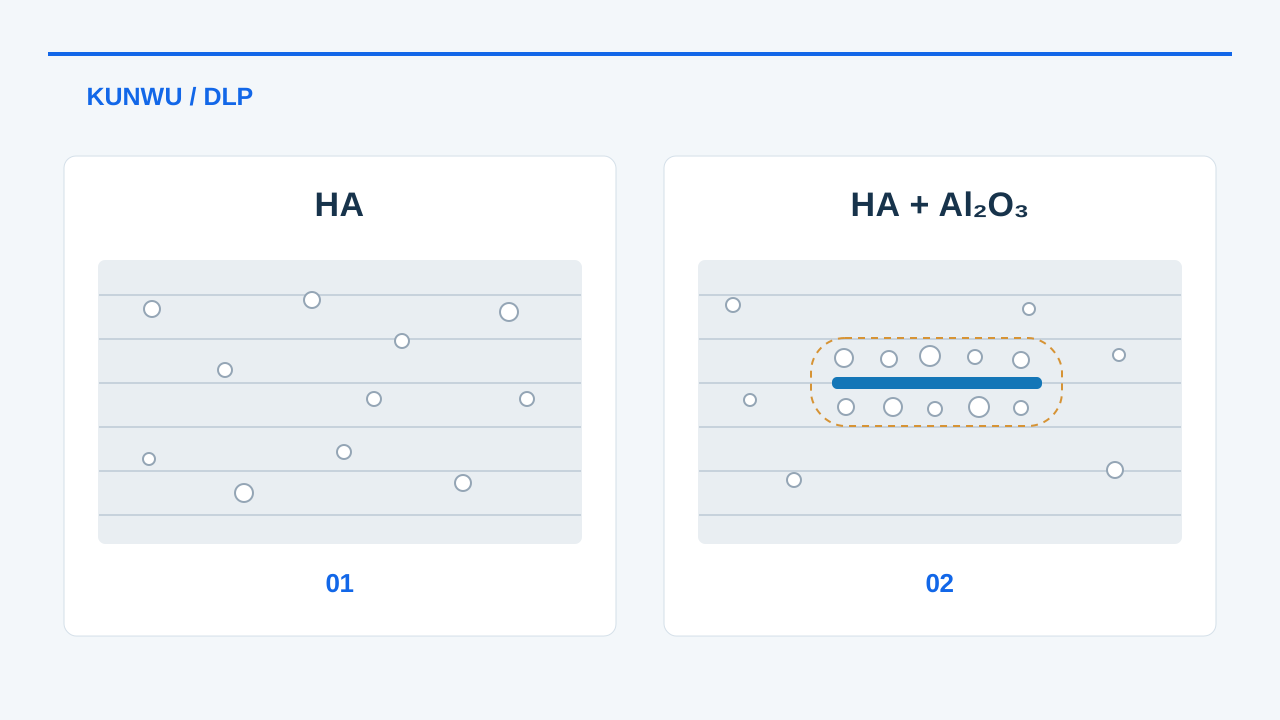
5 · Toughness is a different question from strength
The report describes chevron-notched beam testing for fracture toughness. The values below use MPa·m½, not MPa. L and H show small numerical changes that the report does not regard as significant; W decreases from 0.730 to 0.618 MPa·m½, about 15%. This is why a claim of generally improved toughness would be misleading even if local crack deflection is visible.
Mechanisms can compete: a platelet may divert a crack while nearby pores make crack initiation easier. A nearly unchanged net result is not proof that nothing happened, but it cannot quantify the hidden benefit of each mechanism either. Compare formulations using consistent orientation, density, specimen preparation and test method before attributing a difference to the additive.
| Orientation | HA / MPa·m½ | HA + 1 vol% Al₂O₃ / MPa·m½ |
|---|---|---|
| L | 0.593 | 0.606 |
| H | 0.657 | 0.666 |
| W | 0.730 | 0.618 |
6 · What to validate in a new DLP material project
A useful trial matrix should separate three variables: build orientation, platelet distribution and the debinding/sintering route. Retain a pure-material control, record strength scatter rather than only the best specimen, and examine the fracture origin. Pair bulk density and phase measurements with local interface inspection where the additive is concentrated. A powder percentage alone is not a material qualification.
For a KUNWU research-equipment or sample assessment, share the material composition, intended geometry, loading direction and required validation method. This study offers a process-development lesson; it does not establish clinical suitability, an implant approval or a standard HA–alumina recipe compatible with every DLP machine.
Sources
Original paper · DOI
Šiška Virágová E, Šťastný P, Chlup Z, Králík R, Částková K. Anisotropic mechanical behaviour and microstructural characterization of 3D-printed hydroxyapatite composite reinforced with alumina plate-like particles. Journal of the European Ceramic Society, 47(4), 118970 (2027).