Process and equipment
DLP or DIW for ceramic catalyst supports
Comparing two routes by channel geometry, material, scale, binder removal and the method used to create the working surface.
A KUNWU engineering guide based on open scientific sources. Material, geometry and processing must be validated with the real formulation, active phase and operating environment. Illustrations show design directions and are not results from the cited studies.
The choice begins with geometry and composition
DLP and DIW are not interchangeable buttons for the same part. First define the minimum channel, wall thickness, external envelope, required open architecture, chemistry and later functionalization route. Then determine which process can deliver a repeatable green body and controlled shrinkage through binder removal and sintering.
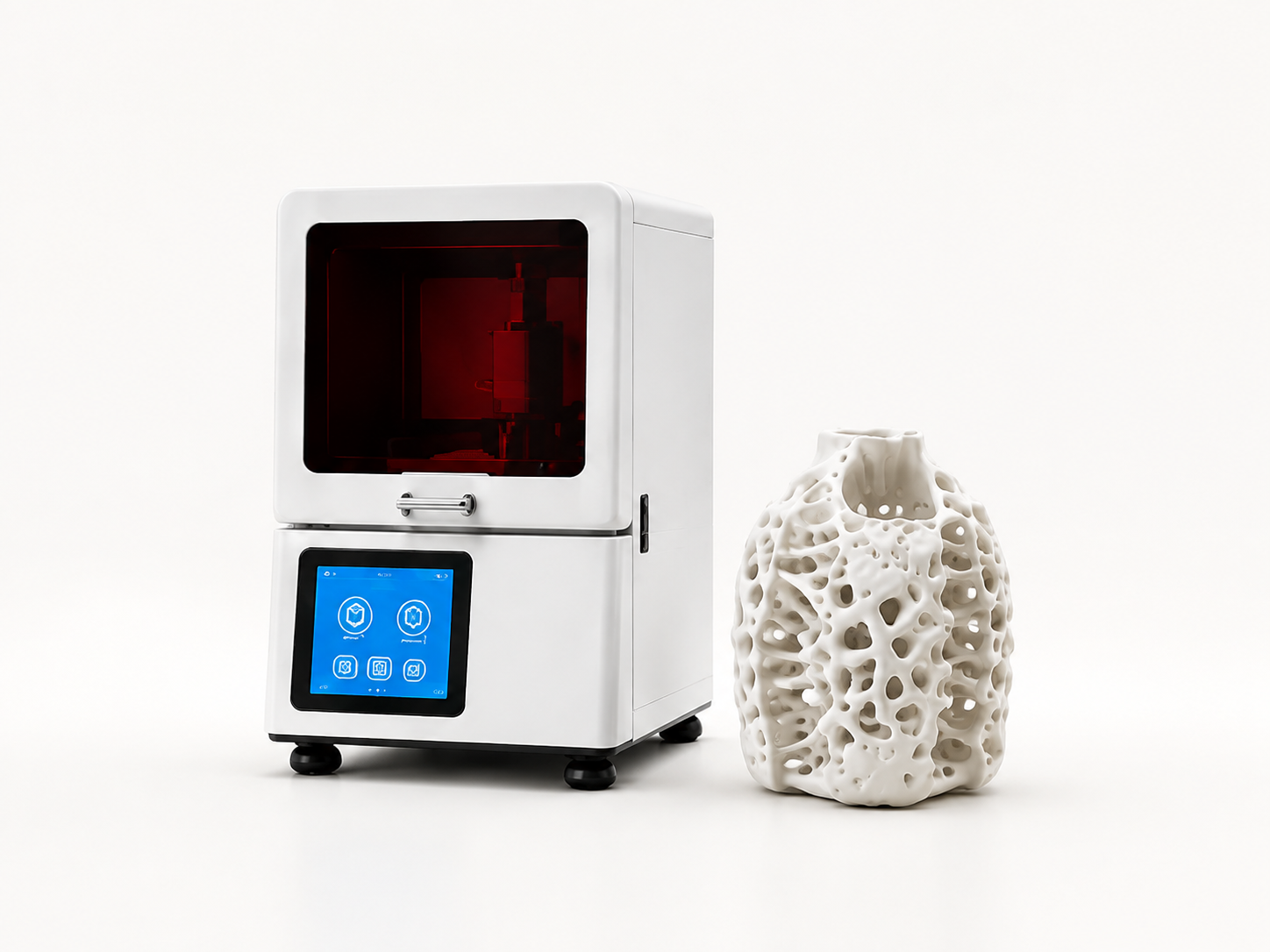
DLP: detail with a demanding thermal route
DLP cures layers of a photopolymerizable ceramic suspension and can suit fine repeating features and complex internal channels when the slurry cures and cleans consistently. The price of detail is the need to coordinate optical curing, powder loading, removal of uncured slurry, organic burnout and sintering distortion.
DIW: paste rheology and open architectures
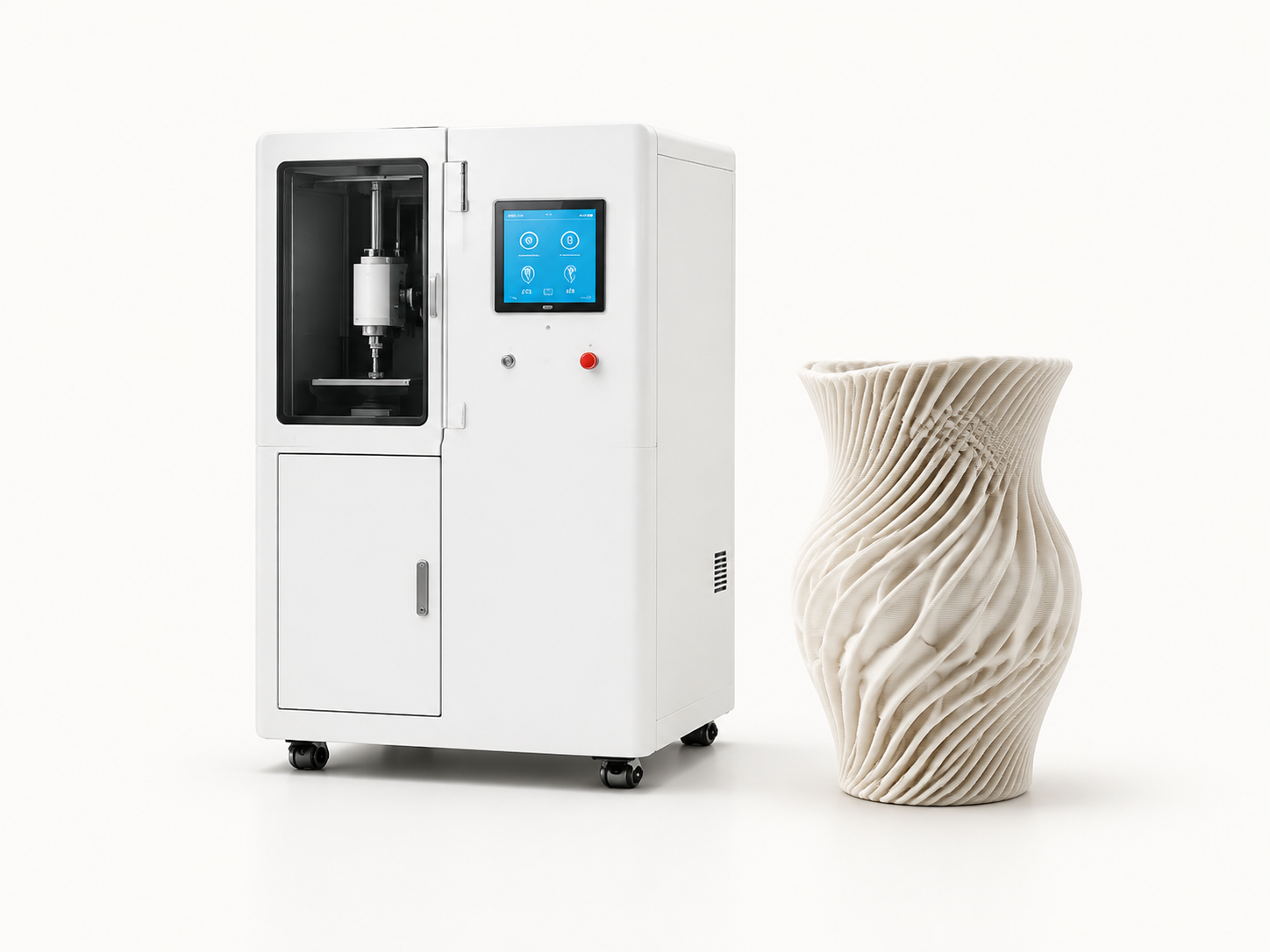
DIW extrudes paste through a nozzle and is particularly useful for lattices, multi-pass toolpaths and hierarchically porous monoliths. Yield stress, shape recovery, nozzle diameter, filament bonding, drying rate and unsupported spans are central variables. Published studies demonstrate both dense and porous alumina parts, while formulation and thermal processing remain part of the result.
A short preliminary selection rule
If the project needs fine closed or branching channels and a smooth repeatable surface, screen DLP first. If the priority is an open lattice, variable filament thickness, larger format or a paste with a special functional addition, screen DIW first. A test geometry in the real material must confirm the route.
Compare the complete process chain
Do not compare print time alone. Include material preparation, cleaning, drying, debinding, sintering, part yield, dimensional change, access for coating and batch repeatability. For a catalyst support, the better technology is the one that preserves the required geometry and surface after the full thermal cycle.
Sources
- 3D printed ceramics as solid supports for enzyme immobilization · Journal of Flow Chemistry (2021)
- Direct ink writing of dense alumina ceramics prepared by rapid sintering · Ceramics International (2022)
- Hierarchically porous alumina catalyst carrier with biomimetic vein structure prepared by direct ink writing · Journal of the European Ceramic Society (2021)