Printing practice
Fine-wall alumina porous plate
A uniform network of fine channels tests resolution, cleaning access and geometry retention after thermal processing.
This KUNWU editorial note is based on the supplied technical source. Reported results belong to the described study or sample and are not KUNWU equipment specifications.
In scenarios such as filtration, thermal management, and bioengineering, the demand for porous ceramics is growing day by day; however, complex, uniform, and high-precision pore structures are difficult to achieve stably using traditional molds or machining. This case uses an alumina porous plate sample as an example to introduce its structural characteristics and demonstrate the real production process of DLP ceramic 3D printing.
Specimen architecture
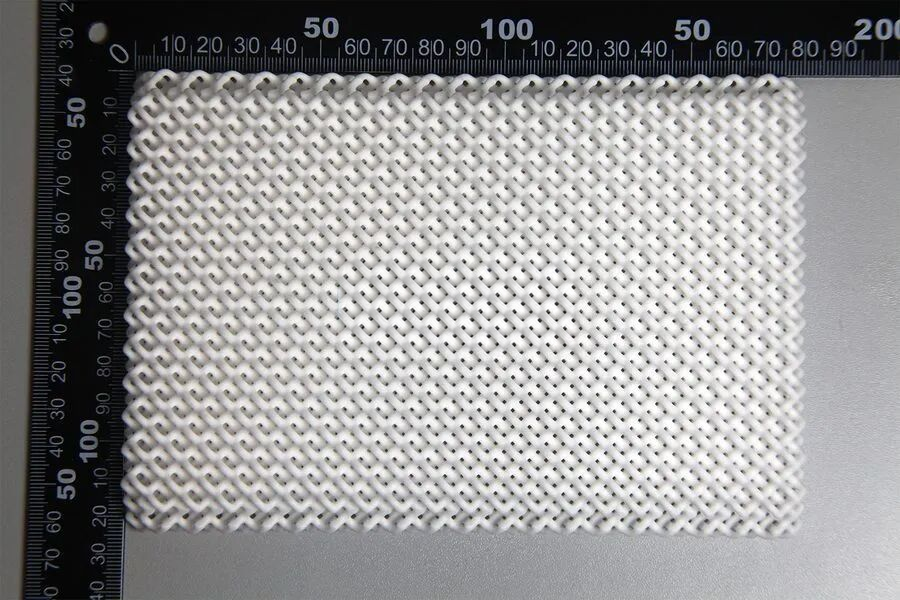
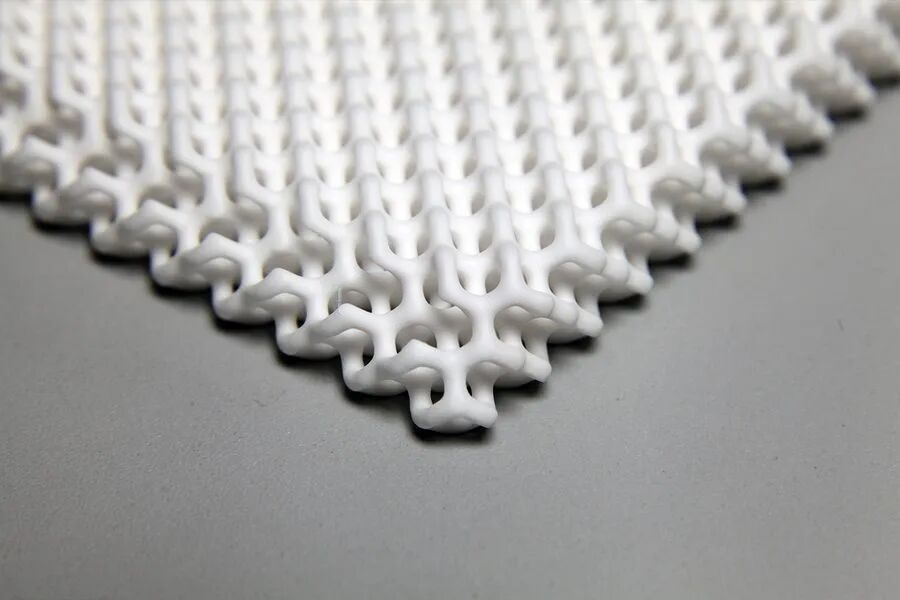
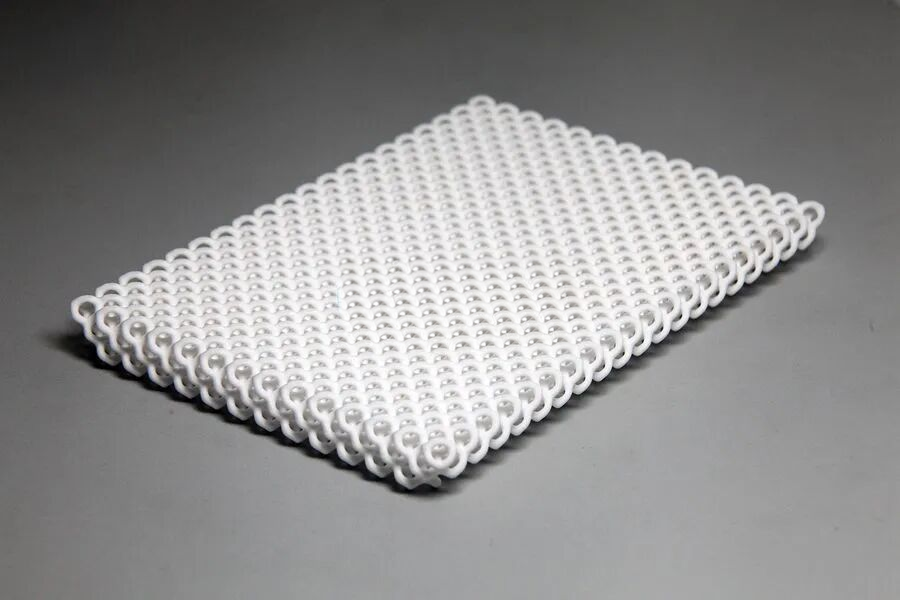
This case is a rule rectangular aluminium oxide multi-pore sample. The interior is not a simple perforation, but consists of a three-dimensional staggered cell with a large number of cyclical ejections, with a thick pole wall, a flat pore and aperture connectivity; apertures, porerates and pore paths can be directly controlled by the 3D model, reflecting the characteristic of ceramic 3D printing, "Design is what you get."
Printing, release, cleaning, debinding and sintering
The following four aerobics depict the complete production process of the sample from formation to sinter: first, it is printed by layer by layer, then it is released/demolated, it is cleaned to remove unsettled slurry, and finally, it is burned by high temperature and becomes certifiable.
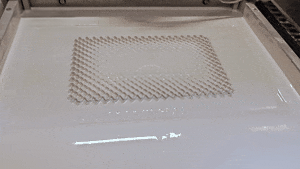
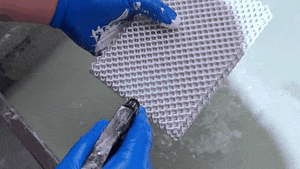
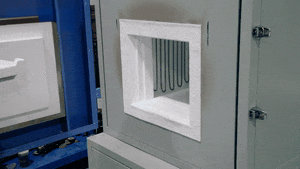
The direct formation of complex and uniform pore structures from the model is the advantage of ceramic 3D printing over traditional processes. KUNWU series ceramic 3D printers and self-developed slurry systems can cover the overall solution from design, printing to sintering, making the design and manufacturing of complex porous ceramic structures more controllable.