Research horizon
Functional ceramics: from emission to bone repair
The overview connects optical, piezoelectric and bioceramic directions; medical examples remain research-stage and require separate biological validation.
This KUNWU editorial note is based on the supplied technical source. Reported results belong to the described study or sample and are not KUNWU equipment specifications.
Functional ceramics are a very broad concept, ranging from luminescent and transparent laser ceramics, to dielectric and piezoelectric barium titanate, to bioactive bone repair materials and high-temperature resistant silicon carbide. Each type has its own unique functional requirements. In many cases, these functions require specific complex shapes to be released: connected pores are beneficial for cell growth, thin-walled channels are beneficial for fluid transport, and special-shaped contours are related to optical uniformity. Several real samples are used below to demonstrate complex components made of several types of functional ceramics.
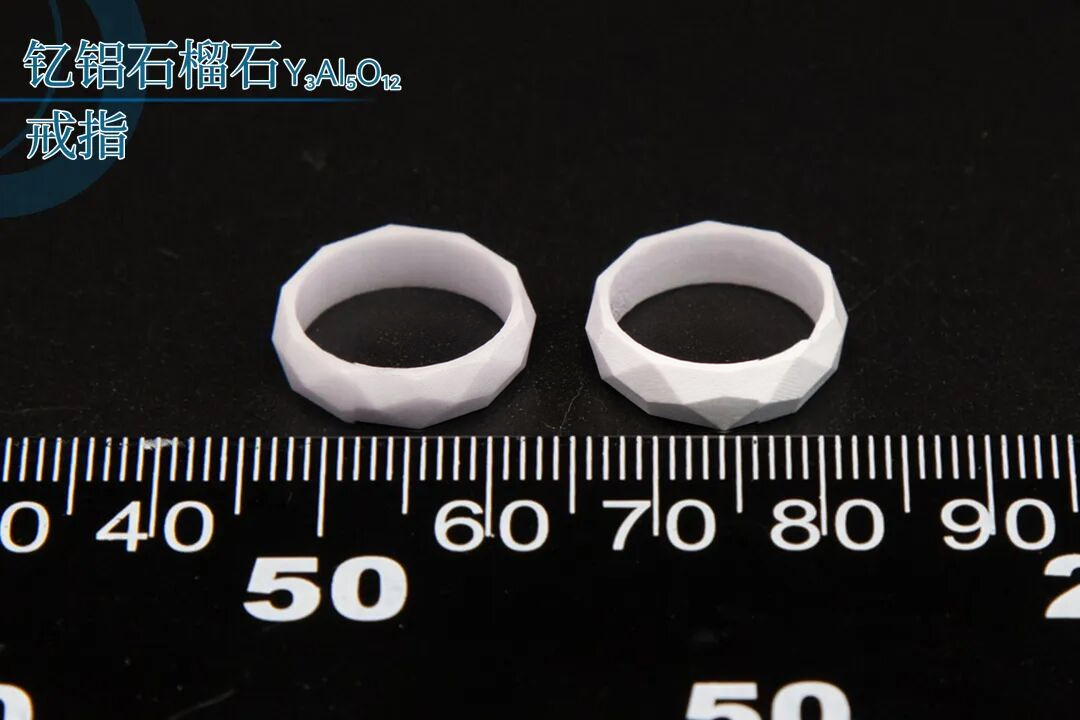
Luminescent and optical ceramics: YAG garnet
YAG (yttrium aluminum garnet, Y₃Al₅O₁₂) is an excellent host material for lasers and fluorescence, and can also be made into transparent ceramics. Its luminescence and light transmission are sensitive to contour accuracy, and special-shaped contours are the threshold for practical devices. This YAG ring sample combines a special-shaped appearance piece into a single piece, presenting a possible morphology for the complex contours of transparent ceramics.
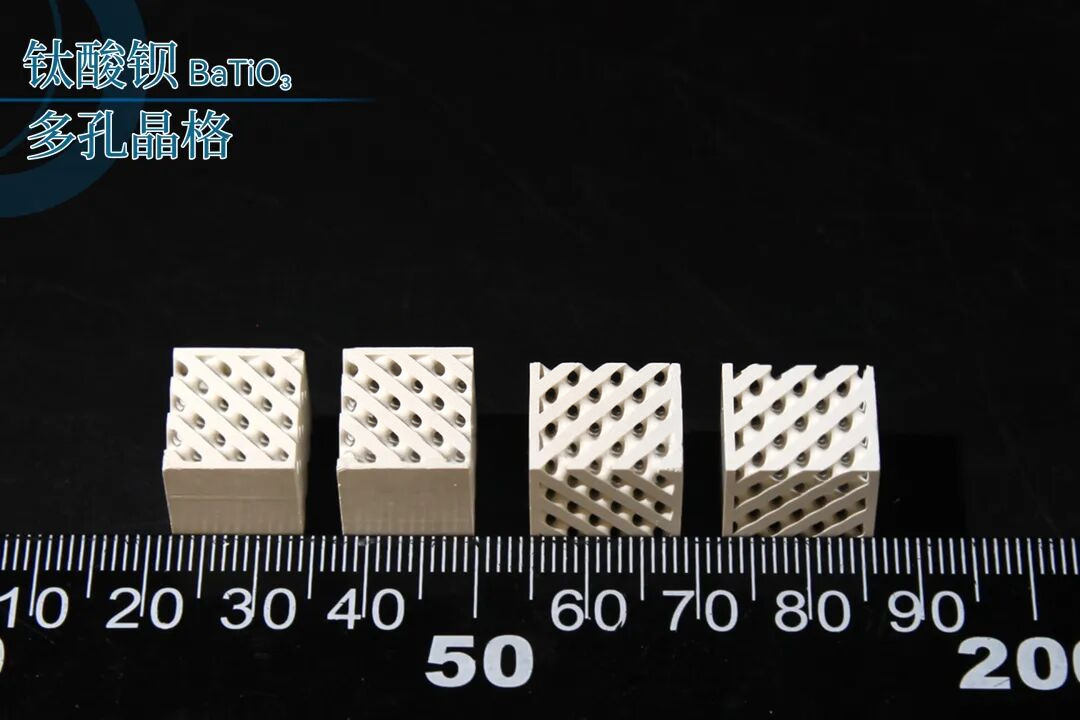
Dielectric and piezoelectric ceramics: barium titanate
Barium titanate (BaTiO₃) is a representative of lead-free ferroelectric and piezoelectric ceramics. It has a high dielectric constant and is widely used in multilayer ceramic capacitors, sensors and transducers. It can be made into a regular porous lattice to introduce controllable pores and interfaces while retaining functions. The sample is a piece of BaTiO₃ porous crystal lattice with regular channels and one-piece molding.
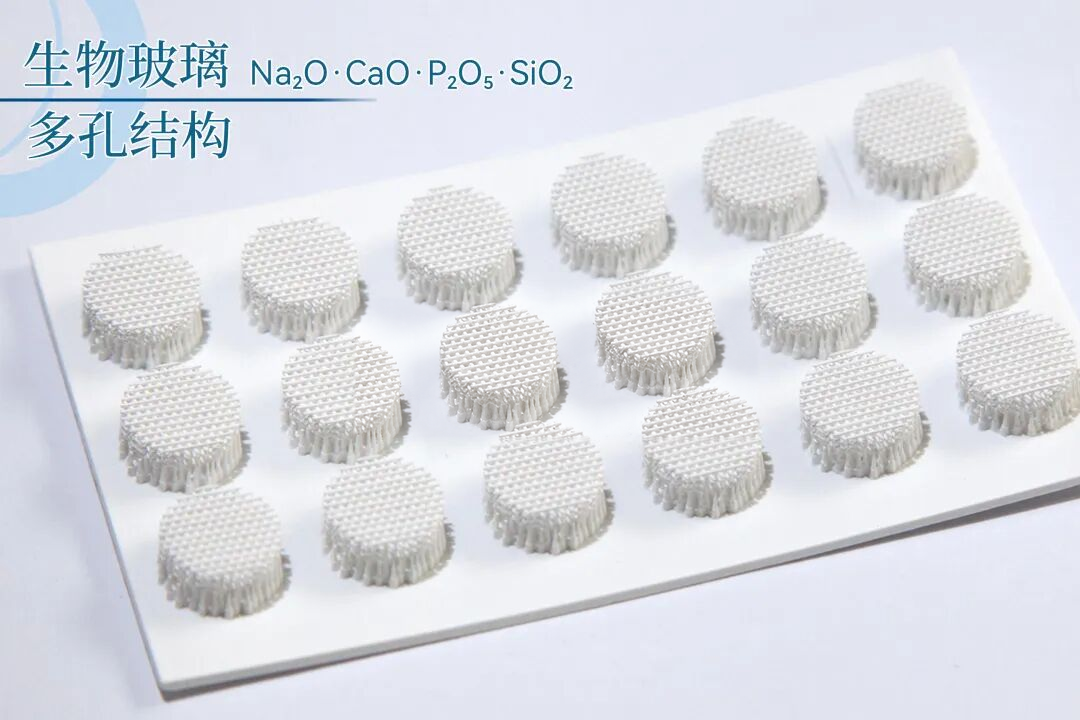
Bioactive functional ceramics: bioglass
Bioactive glass (Na₂O·CaO·P₂O₅·SiO₂) can directly bond with bone tissue and is an important material in the field of bone repair. When making a bone scaffold, it requires both active ingredients and interconnected porous materials, which are difficult to achieve with traditional foaming or molding. The sample is a bioglass porous structure with interconnected pores, leaving channels for cell growth and material exchange.
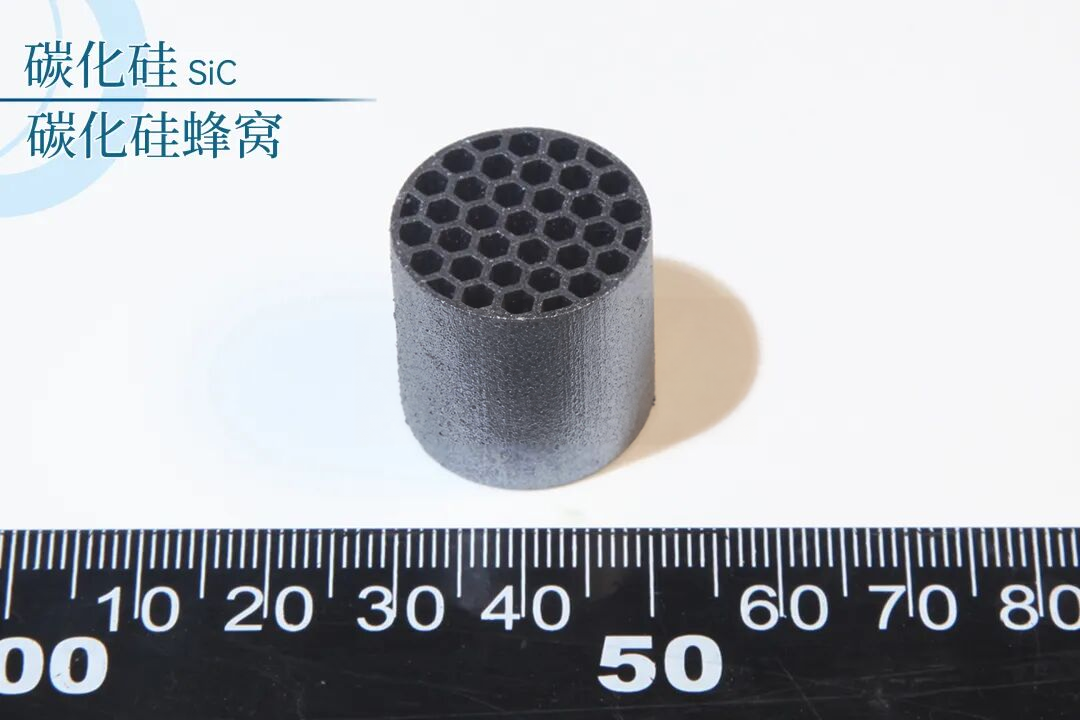
High-temperature multifunctional ceramics: SiC honeycombs
Silicon carbide (SiC) is resistant to high temperatures and corrosion, and its honeycomb shape is used for high-temperature absorbers, catalytic carriers and temperature-resistant components; its pores are required to be thin-walled, continuous and through to stabilize heat transfer and pressure drop. The sample is a SiC honeycomb with continuous thin-walled cells.
Conclusion From luminescent and transparent to dielectric and electroelectric, from bioactive to high temperature resistant and porous, these four samples are just the tip of the family of functional ceramics. They all point to the same fact: when functional ceramics need to rely on complex morphology to release performance, ceramic 3D printing puts the material and structure into the same round of preparation for verification, so that scientific research trials and errors are less stuck in the molding step.