Applications
Near-net-shape porous silicon nitride by DIW
A research-stage route combines DIW, freeze drying and reaction bonding to limit total shrinkage below 1%; implant use still requires separate biological and regulatory validation.
This KUNWU editorial note is based on the supplied technical source. Reported results belong to the described study or sample and are not KUNWU equipment specifications.
Introduction
Through a clever combination of direct ink writing and reaction keys, researchers have achieved a “near-purification” of silicate polybolic ceramics, with a total contraction rate of less than 1 per cent, opening new paths to the precision of individualized bone implants.
In the field of osteoporosis, si3N4 ceramics have been placed in high hopes because of their excellent mechanics, excellent biological compatibility and unique antibacterial properties. However, traditional methods of manufacturing — such as dry pressure formation and gel emulation — appear to be inadequate in preparing complex, personalized implants. The construction of materials, especially direct ink writing (DIW) technology, can build complex structures by extracting high-condensed ceramics, but a long-standing “rubber tiger” has been haunting researchers: a significant contraction in the sintering process.
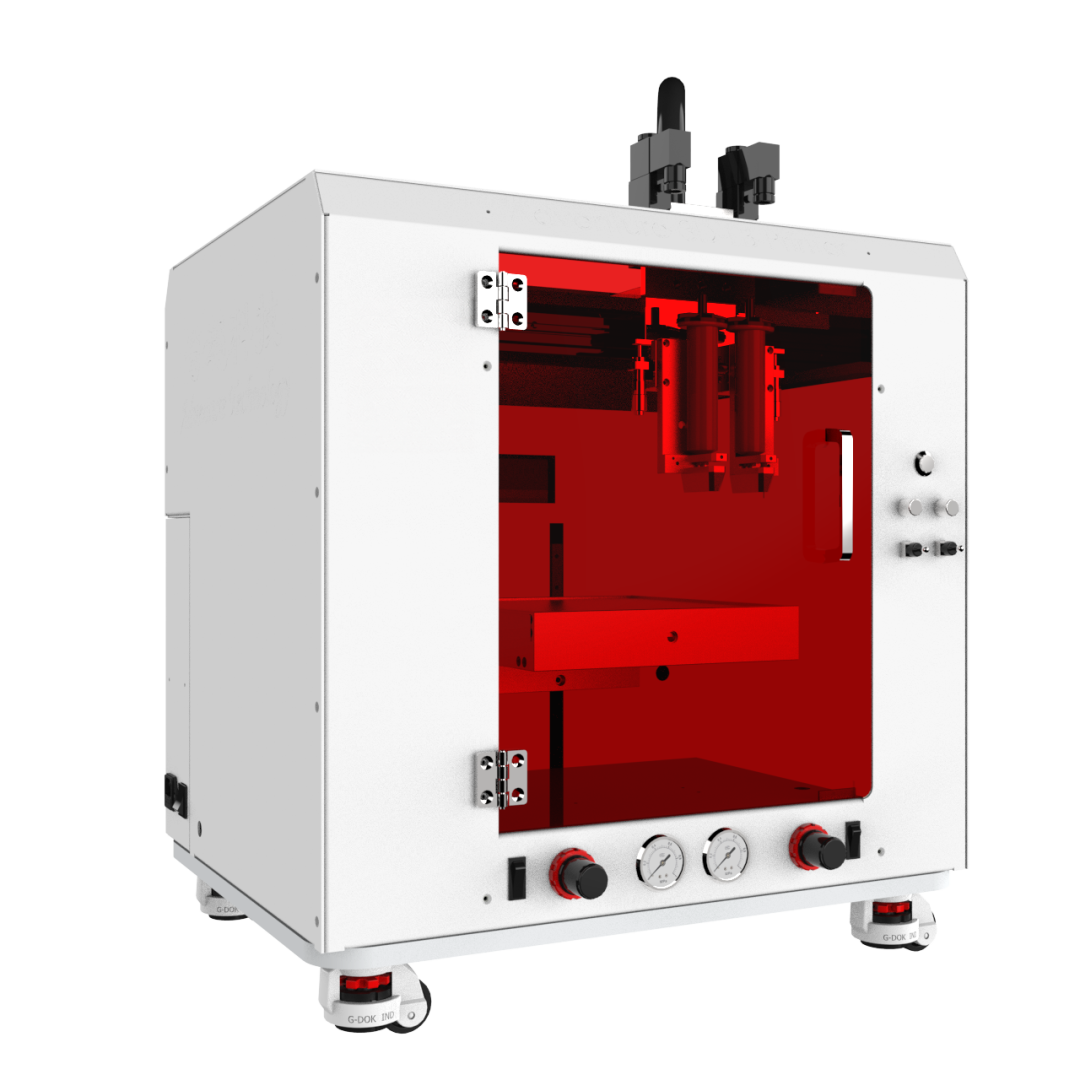
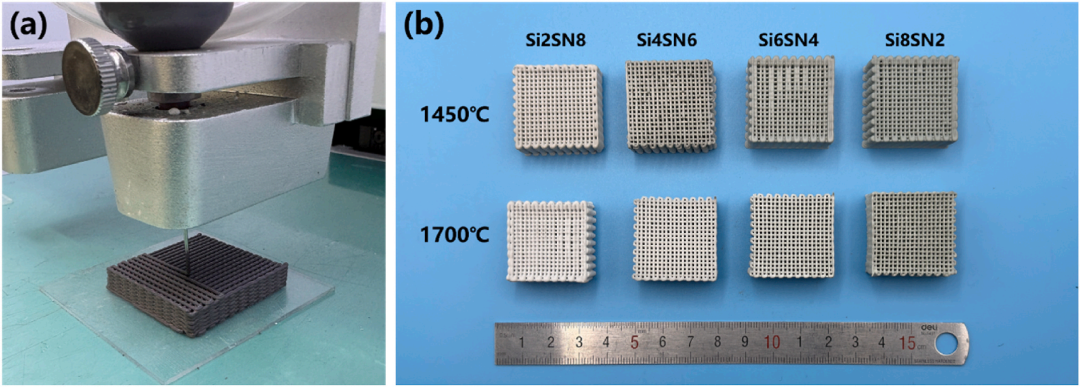
In recent days, the University Research Team has published a study in the academic journal Ceramics International entitled "Near-net Shaping of gross discipline vis-à-vis direction and reactivity printing " , and has been able to develop a solution using ADT-DIW's 3D printing facility, combining direct ink writing with reaction keys, supported by a cool drying process, which has successfully achieved a "near netting" of a total contraction rate of less than 1 per cent. This means that the printed porcelain rack is almost the size of the final product.
I. Response buttons: Insulation to compensate for burn-down
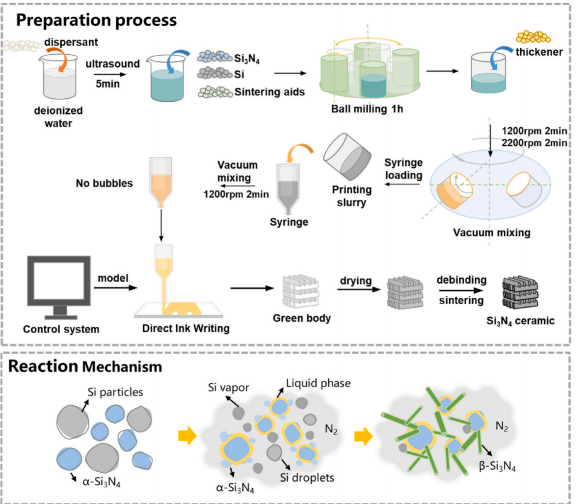
The core of this study is a fine one. Traditional ceramic sintering is due to compaction of powder particles at high temperatures and a natural decrease in volume. And researchers have come up with a different approach — introducing an “inflate” in the burning process.
They use a mixture of silicon powder and silicon powder. Silicon powder reacts in situ with nitrogen when it burns in the nitrogen atmosphere, producing silicon nitrogen. This chemical reaction was accompanied by about 21 per cent volume expansion.
The 21 per cent inflation can be used to “offset” the contraction in subsequent sintering. By accurately controlling the ratio of silicon powder to nitrogen-based silicon powder, researchers can finely balance expansion and contraction, like the adjusted scales, leading to near-zero net contraction.
II. Frozen drying: containing dry contraction
However, it is not enough to just react. There is a key drying step before the sinter begins after printing. In the traditional natural drying or heating drying process, as the solvent evaporates, the causal plume pulls ceramic particles, resulting in a significant dry contraction (usually up to 5-10 per cent) of the body, which is sufficient to disrupt the near netting objective.
The research team skilfully introduced cold drying. They quickly freeze the post-printed body, turning the solvent (water) into solid ice, and then in a vacuum, the ice rises directly to water vapour. Owing to the lack of surface tension in liquid water, the nuclei were completely eliminated. Experimental results show that freezing drying reduces the drying contraction rate to only 0.26 per cent, almost negligible.
III. Microstructure and mechanics
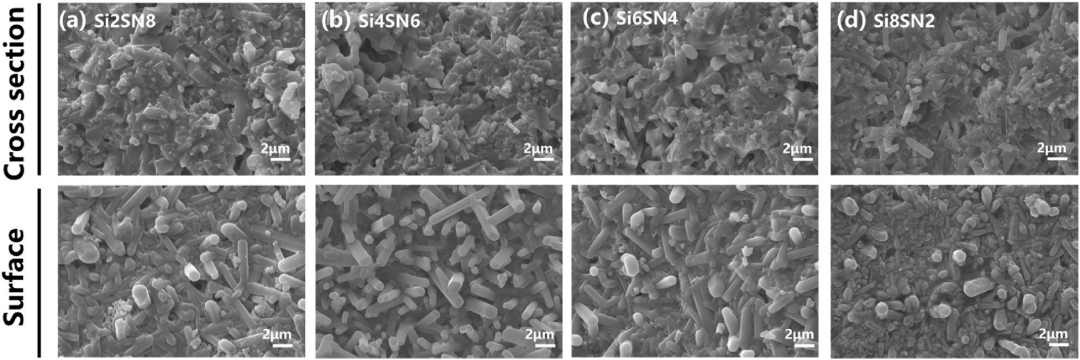
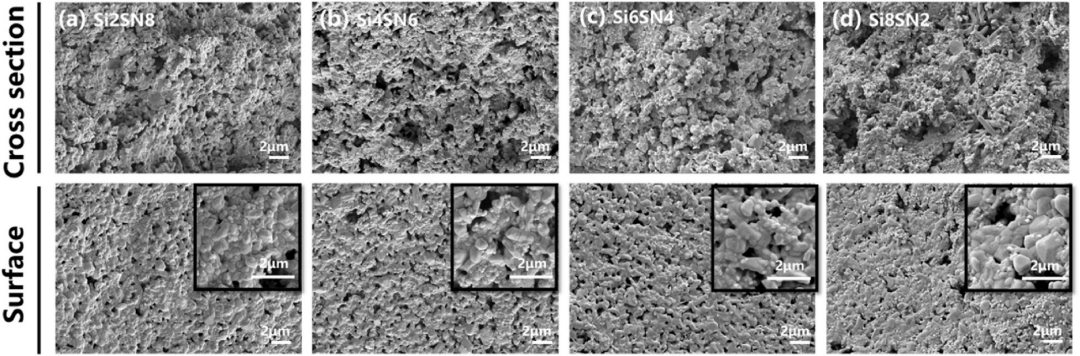
In addition to size precision, researchers have systematically studied the effects of different silica/silicate silicate ratios and sinter temperatures on the performance of final materials. The results show that the process not only achieves near-purification but also regulates the microstructure and mechanics of materials as needed.
At 1700°C, 60% of the sample with silicon content (No. Si6SN4) formed the ideal interlock microstructure - - The long β-Si3N4 crystals are interpenetrated and gnawed, like steel in concrete. This structure gives the material the highest bending strength, reaching 235.12 MPa, sufficient to meet the mechanics requirements for heavy bone implantation.
More surprisingly, the surface moisture of the material has changed significantly with the increase in beta-Si3N4 levels. The water contact angle was reduced from 112° (water extraction) to 60° (baby water). For bone implants, the adhesive surface is more conducive to cell adhesion, breeding and bone integration, which is a key prerequisite for the strong integration of implants with human bones.
IV. Research implications and verification of boundaries
The study not only proposed a common method of producing high-precision, high-strength, and highly nitrous silicon ceramics, but more importantly, it paved the way for the clinical transformation of individualized bone implants.
Imagine the future scenario: a patient suffers from fractures due to bone tumour removal or severe fractures. The doctor obtained three-dimensional data on the missing parts through a CT scan, and the engineers used DIW technology to print directly the nitrogen silicate supports that matched the missing integrity. After a reaction burn, the length of the frame was almost identical to the design plan and no secondary processing was required. After implantation, the pore structure leads to the growth of the bone tissue, the adhesive surface promotes cell attachment and ultimately leads to a solid integration of the implant and the human bones.
Of course, there is still a long way to go from laboratory results to clinical applications. Future studies will need to further optimize process parameters, explore more complex structural designs and conduct a comprehensive assessment of in vitro and in vitro biocompatibility. It is undeniable, however, that the study has opened a new door for the manufacture of ceramics — a door leading to “zero contraction, high accuracy, customization”.
References
Paper citation information: