Materials research
Material–process–structure co-design for piezoceramics
Piezoelectric function depends on composition, orientation, poling and geometry; optimizing shape alone does not guarantee a better device.
This KUNWU editorial note is based on the supplied technical source. Reported results belong to the described study or sample and are not KUNWU equipment specifications.
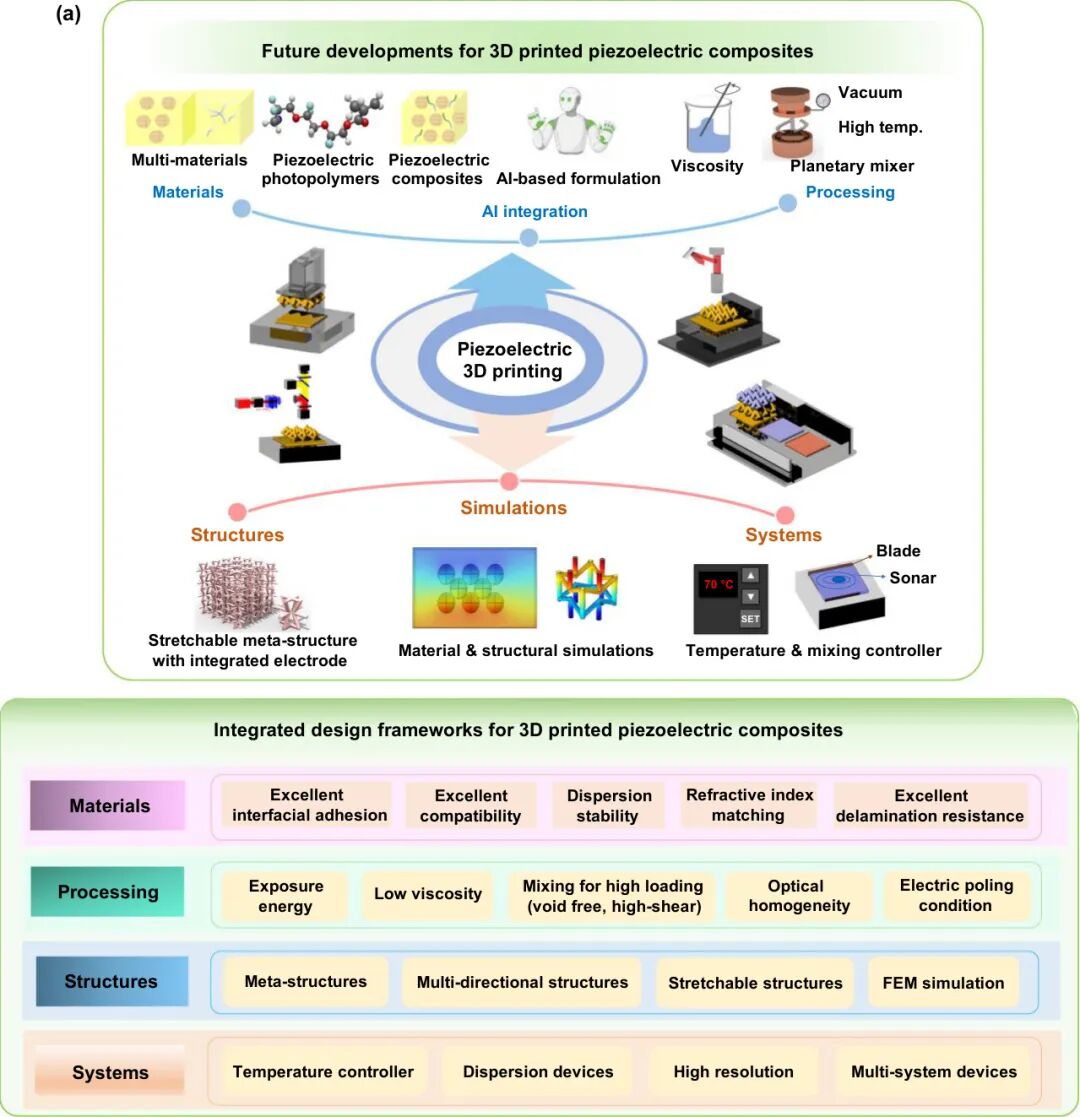
The strength of light-curing 3D printing is complex structures, while the strength of piezoelectric ceramics is converting mechanical deformation into electrical signals. After the two are combined, the real difficulty is not "whether it can be produced", but whether it can simultaneously solve high ceramic load, low viscosity, strong interface, uniform solidification and mechanical amplification. A recent review in the "International Journal of Extreme Manufacturing" breaks down this route into four levels: material, process, structure, and system. Let's read it based on four questions.
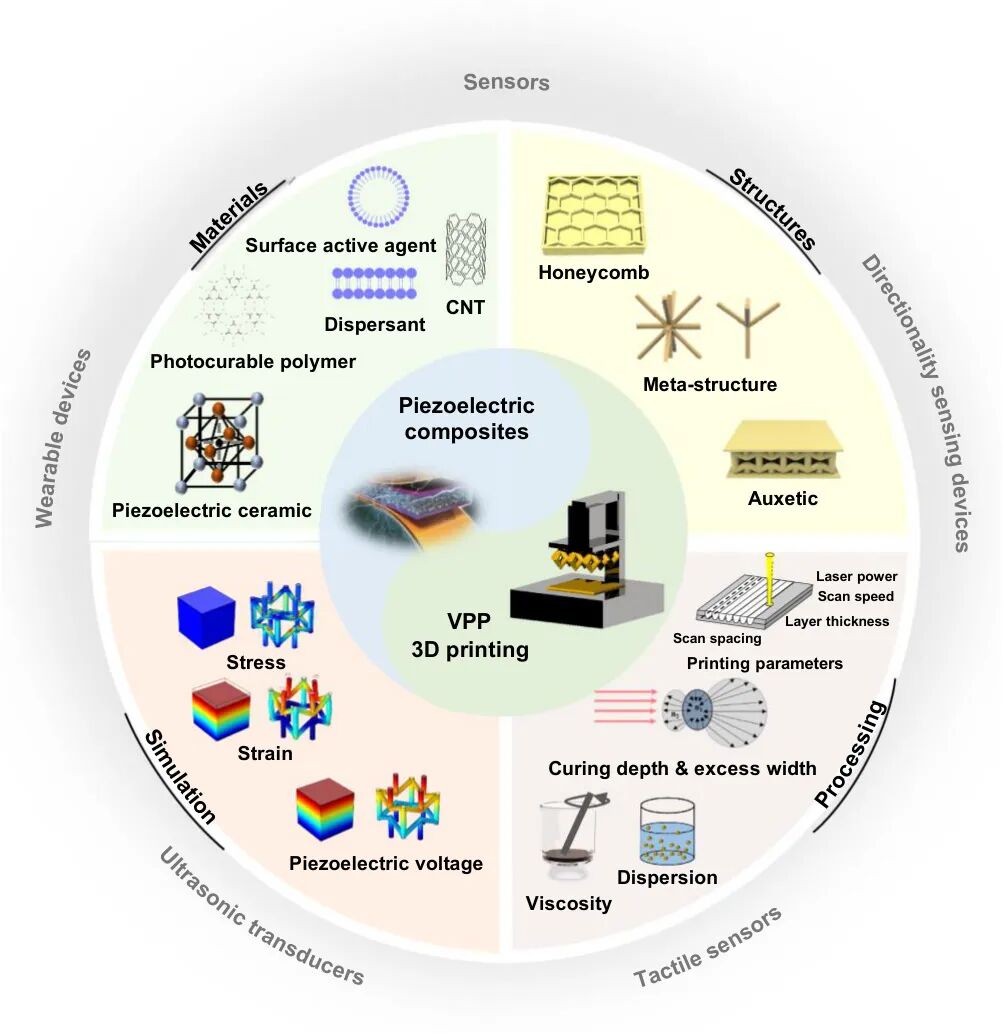
Why high-performance ceramics can be hard to print
Piezoelectric ceramic composites typically consist of ceramic fillers with high dielectric and piezoelectric properties and a flexible polymer matrix. Common ceramics include lead zirconate titanate (PZT), barium titanate (BaTiO3), potassium sodium niobate (NKN), etc.; polymers provide flexibility, processability and anti-brittleness. The difference in piezoelectric constants listed in the original article is obvious: d33 of PZT-5H is about 585 pC/N, BaTiO3 is about 460 pC/N, and NKN is about 416 pC/N. The problem is that the surface properties of the two types of materials are very different: ceramics are more hydrophilic, while photosensitive resins are more hydrophobic. The particles are prone to agglomeration and sedimentation, and the interface bonding is also weak.
Once entering the light-curing system, these inherent problems will be amplified. Ceramic particles will scatter UV light, making the curing depth shallower; particle agglomeration will also cause uneven slurry. What’s even more troublesome is that the better the piezoelectric performance, the more ceramic volume fraction is often needed; but the more ceramic is added, the higher the viscosity and the worse the printability. For example, the 74 wt% PZT composite material can achieve a d33 of about 110 pC/N, while the 77 wt% Sm-PMN-29PT sintered after printing has a d33 as high as 652 pC/N, but it is rigid and porous due to the removal of the polymer, making it difficult to manufacture flexible and complex devices. The four goals of "high voltage electrical response, high ceramic load, low viscosity, and curability" are mutually constraining and are the core contradiction of the entire technical route.
The review concludes that isolated optimization is insufficient. Dispersant–silane coupling-agent compatibility, rheology and curing, structural stress amplification, and printing-system design must be considered together. Piezoelectric ceramic printing therefore requires coordinated development of formulation, process, architecture and equipment.
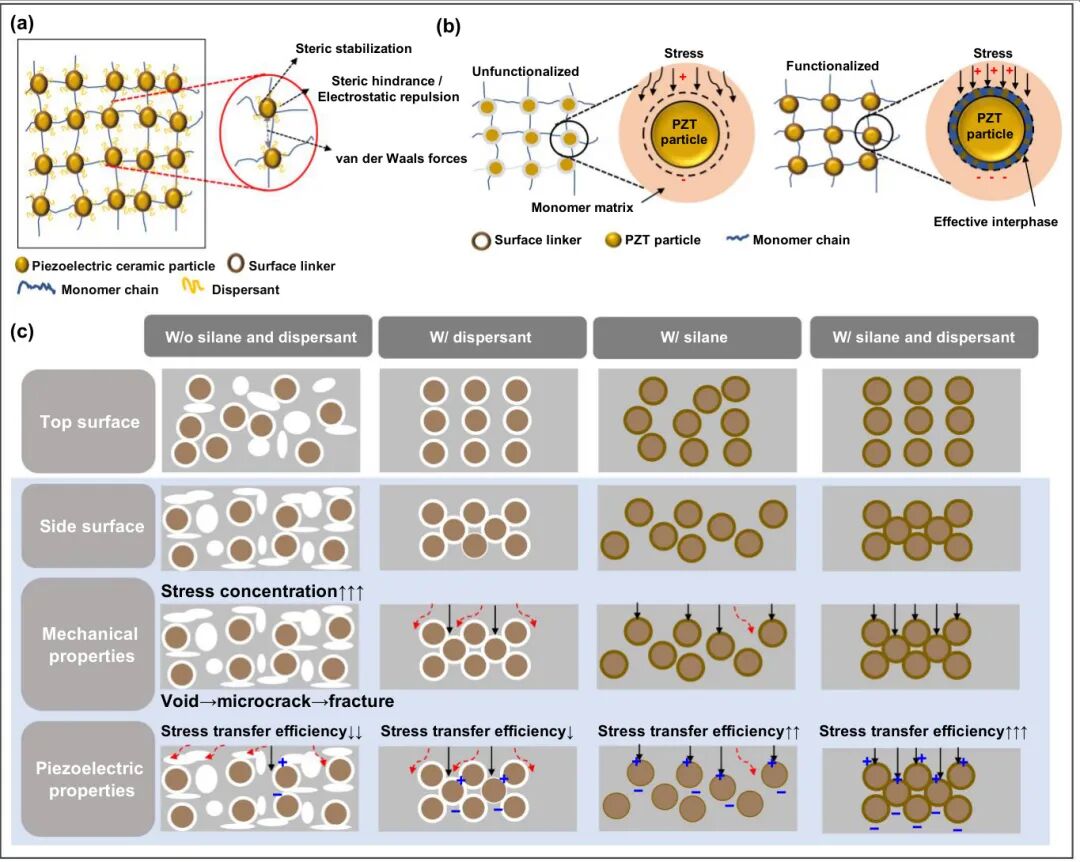
Dispersants stabilize; silane coupling agents connect
The main effect of dispersants is to prevent particles from coming closer to each other. It can form adsorption layers on particle surfaces and maintain suspension stability through spatial position resistance or static retortion; silican pyrotechnics are more like “double-sided glue”, with one end connected to ceramic surfaces and the other participating in polymer networks, upgrading the interface from physical contact to a chemical bridge.
More important is the synergy between the two. The dispersants allow the particles to be evenly distributed, and the silican pedigrees allow a strong combination between the particles and the resin. If only dispersants are uncoupled, interfaces are weak, stress transfer is inefficient and stress is prone to concentration or microcrackers; if only amplifiers do not solve fragmentation, particles may still be reunited and problems of light dispersion and viscosity persist. The synthesis refers to this relationship as dispersants in synergy with silane, which directly affects printability and voltage performance.
This synergy is not simply superimposed. The original text explains why “select pair” is more important than “multiga” in four compatible criteria: structural similarity, chemical reaction activity, solubility parameter matching and polarity matching. Only when both silican pharmacists and dispersants are compatible with ceramics and resins can particles be strongly integrated and evenly dispersed; if the dispersants are incompatible with the system, even if silicans are suitable, they may in turn lift their viscosity and introduce gas holes.
| Component | Main role | Control variables |
|---|---|---|
| Piezoelectric ceramic | Piezoelectric response and electromechanical coupling | Particle size, aspect ratio, refractive-index matching |
| Dispersant | Stable suspension and lower viscosity at high solids loading | Steric/electrostatic stabilization and addition order |
| Silane coupling agent | Connect ceramic and polymer interfaces | Hydrolysis, surface coverage, addition order |
| Photosensitive resin | Cure depth and forming accuracy | Monomer/oligomer ratio, matched photoinitiator |
Table 1 · Key points of material-side regulation of piezoelectric ceramic photosensitive composite materials
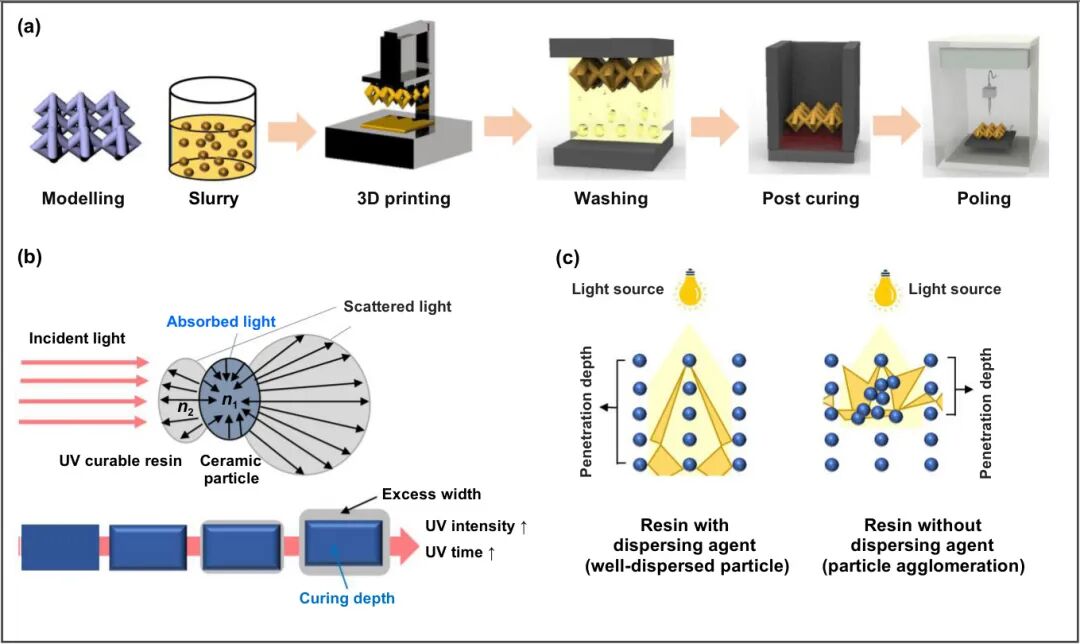
Low viscosity and suitable curing depth are both needed
The 3D of the VPP ceramics, represented by DLP, is usually cyclically based on "slice, cloth, exposure, lift". The slurry must be sufficiently low and sticky to spread smoothly; at the same time, there must be sufficient solidification depth to ensure inter-layer integration. Under-exposure may lead to weak inter-layeral integration; if over-exposure, the edge is over-solidated and loss of precision due to light dispersion.
The original article makes the viscosity problem more specific: increased viscosity will delay the leveling of the paving material, easily entrain air, and cause uneven layer thickness; if the resin is not replenished to the target area in time, the effective curing depth will be insufficient. Particle size also has an inverse effect: Nanoparticles settle slowly but scatter most strongly when their size is close to the illumination wavelength; micron particles settle quickly but generally have greater cure depth and better printability. Therefore, reactive diluents such as low molecular weight acrylates, shear thinners, and spheroidizing irregular particles are all ways to reduce viscosity.
Therefore, process control is not just about adjusting the exposure time. Exposure energy, layer thickness, slurry optical properties, scraper or feeding method, and printing environment temperature must all be judged together. The review specifically highlights that high ceramic loadings simultaneously increase viscosity and reduce light penetration, so cure depth testing and rheology testing must be used to back-end the printable window.
Architecture: smarter distribution of mechanical load
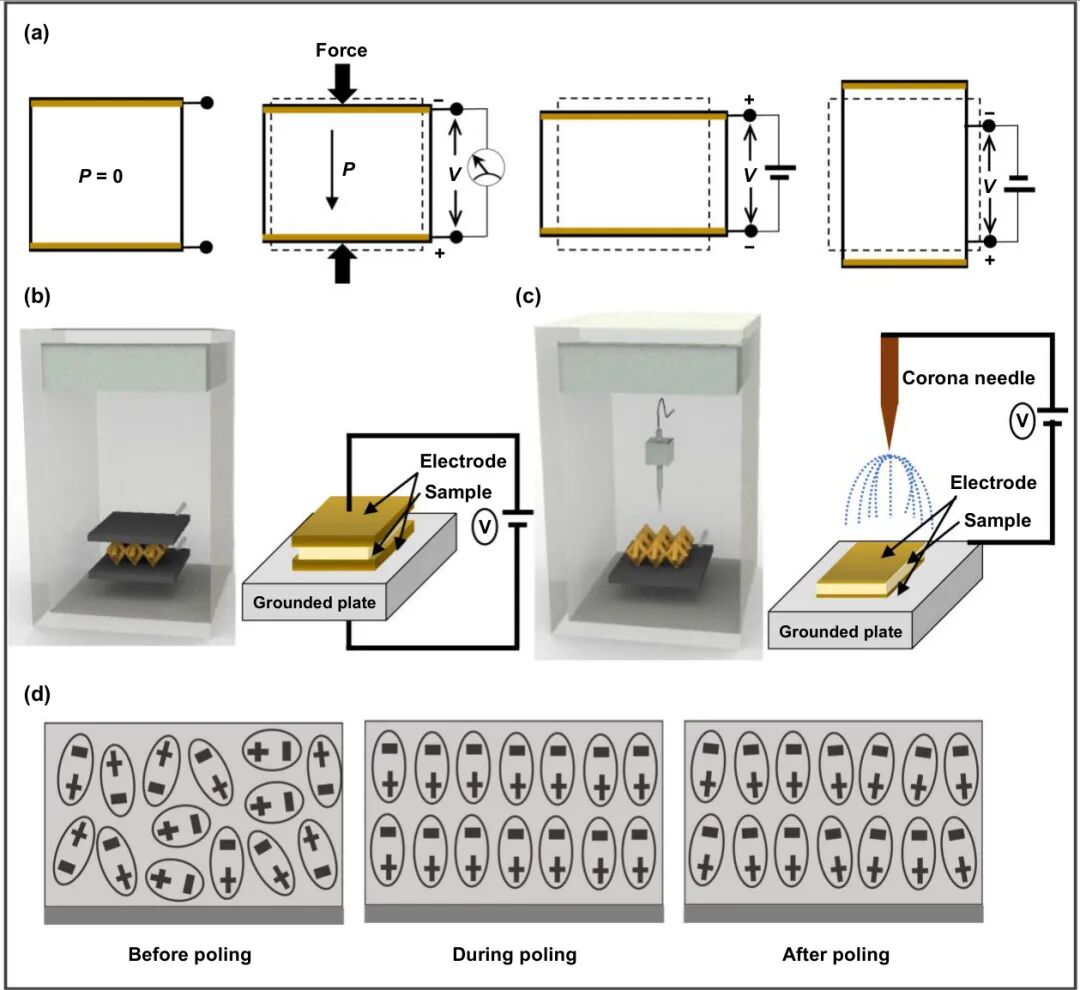
The piezoelectric response comes from mechanical deformation, so the structural design can amplify the signal. Lattice structures can locally concentrate stress, metamaterials can create anisotropic strain, and tensile structures can accommodate flexible sensors. The structural route listed in the original article is even more detailed: the honeycomb structure allows the load to be evenly distributed and forms directional strain; the negative Poisson's ratio auxetic structure expands laterally when stretched, and can stretch up to about 50%; the octahedral truss and the Gyroid structure achieve efficient stress transfer through axial tension and compression and continuous curved surfaces respectively. Compared with a solid block, a properly designed structure can allow the same material to produce stronger directional piezoelectric output.
These structures are usually validated using a limited meta-method method (FEM) to calculate stress distribution, response concentration and stress transfer efficiency, followed by 3D printing. The original text gives a compelling set of data: in the PZT/PDMS system, the stress transfer efficiency of the “silane plus dispersant” “silane only” “no dispersant” models was 23.2 per cent, 19.5 per cent, 3.9 per cent and 2.4 per cent, respectively. This suggests that the value of interface synergies is not a small improvement, but a direct leap from inefficiencies to available levels. The synthesis suggests that the simulation is truly serving as a bridge between bridging materials, structures and performance. Future formulations will also be more driven by simulations and AI co-driving.
Conclusion: coordination across four levels
Read this review into one sentence: The competitiveness of piezoelectric ceramic 3D printing no longer only comes from a certain high-d33 material, but from whether the "material formula, printing process, structural design, and equipment system" can close the loop. Temperature control, dispersion devices, multi-system feeding, electric field polarization and other capabilities will become more and more important as formula parameters. In other words, the next generation ceramic 3D printer cannot only be responsible for exposure molding, but also helps users manage the slurry state and polarization conditions.
This also has direct implications for industrialization. Real ceramic 3D printing delivery is not a green body, but a device that can be used after polarization and has repeatable performance. Equipment, materials, and processes need to be validated together, which is closer to real-world applications than comparing print speeds or material parameters alone.
References
Chang S M, You J, Lee S S, et al. Advances in piezoelectric ceramic-polymer composites for vat photopolymerization-based additive manufacturing. International Journal of Extreme Manufacturing, 2026. DOI: 10.1088/2631-7990/ae8aca
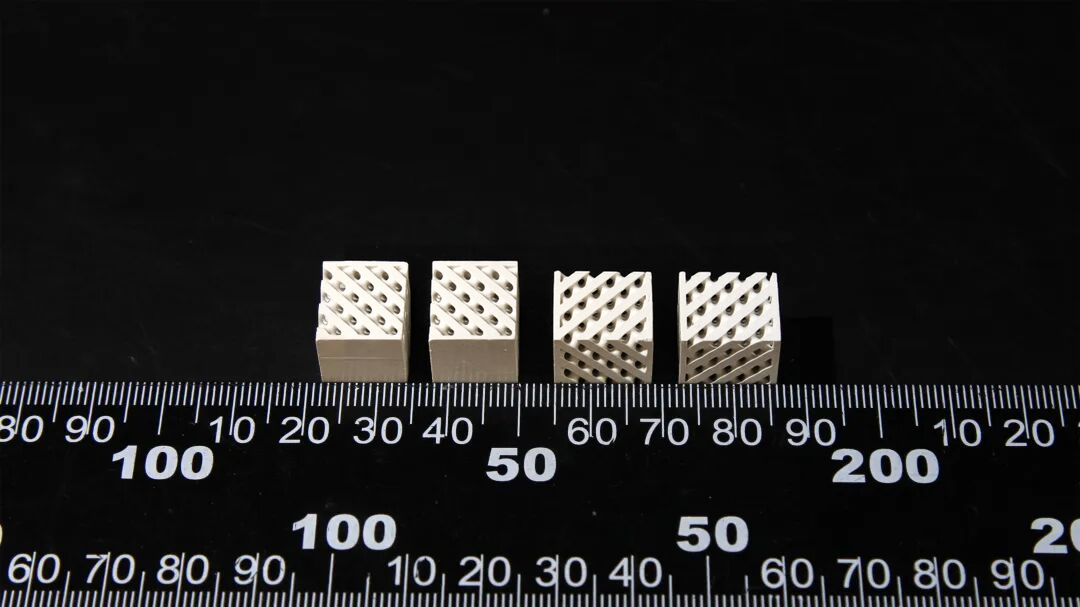
KUNWU printing sample display · Barium titanate porous lattice piezoelectric ceramic structure
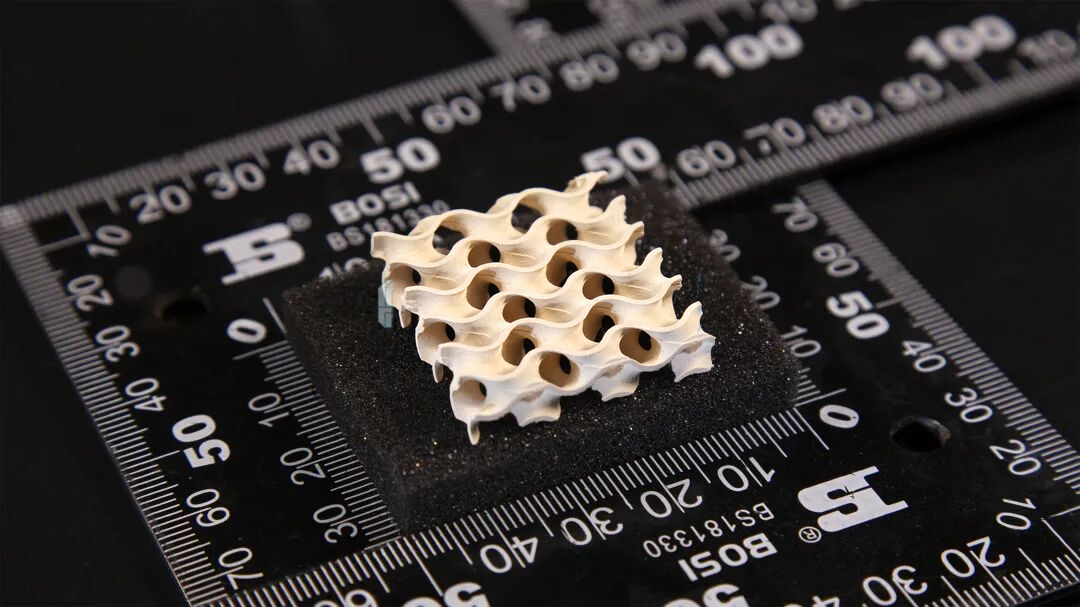
KUNWU printing sample display · Lead zirconate titanate lattice honeycomb piezoelectric ceramic structure