Thermal processing
Powder-bed pre-debinding for ceramic–metal FFF parts
Fine alumina powder supports polyethylene-based filaments through the least stable part of the thermal cycle.
Authorized republication with translated text and the source’s original scientific figures. Numerical results belong to the reported study, not to KUNWU equipment specifications.
- Pre-debinding window
- 200–400 °C
- Procedures compared
- 4
- Filament systems
- 5
A study of 3D-printed ceramic–metal multimaterial parts shows that an alumina powder-bed pre-debinding step can substantially improve shape stability during heat treatment, supporting the manufacture of complex, high-performance components.
1. Summary
Ceramics and metal–ceramic composites attract interest for high-temperature applications such as aerospace turbine blades, fuel cells and precision tooling because of their heat resistance and stability. Conventional forming methods struggle with complex shapes. Fused filament fabrication (FFF) provides a route to near-net-shape multimaterial green bodies, but removing approximately 50% polymer binder and completing sintering without deformation remains a central challenge.
Conventional thermal debinding is slow and can cause distortion; solvent methods are faster but introduce environmental concerns. A team led by Piotr Malczyk at TU Bergakademie Freiberg reported ‘Development of powder bed pre-debinding techniques for the manufacturing process of 3D-printed multi-material parts made of polyethylene-based ceramic, metal and metal–ceramic filaments’ in Ceramics International. Comparing four powder-bed strategies, the team found that fine alumina acts as a temporary support that preserves geometry during the early binder-removal stage.
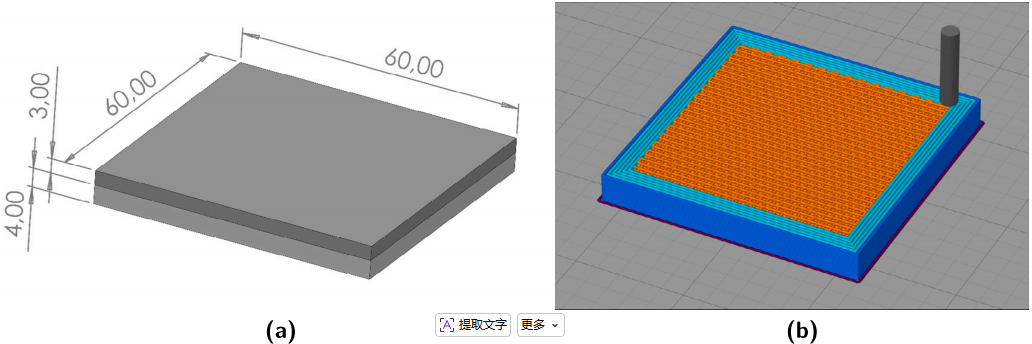
2. Methods
FFF ceramic/metal green bodies contain powder particles embedded in polymer binders such as polyethylene and paraffin. During debinding, the binder softens, decomposes and volatilizes as temperature increases. Loss of support makes the part vulnerable to gravity- and thermal-stress-induced distortion, collapse and cracking.
Conventional wick debinding buries the green body in an inert powder such as alumina, which draws out molten binder by capillary action. It can be slow and sensitive to powder properties. This study restricted powder-bed support to pre-debinding, the critical softening stage at approximately 200–400°C, before conventional thermal debinding and sintering. The goal was to retain stability while shortening the overall process.
Five filament compositions were prepared, including lanthanum strontium manganite (LSM), magnesium aluminate spinel (AR78), 316L stainless steel and their composites. Four treatment routes were compared:
EX — reference route.
No pre-debinding; direct conventional thermal debinding.
C — coke bed.
Filaments were completely buried in coke granules and pre-debound under a reducing atmosphere.
A — alumina bed.
Filaments were completely buried in fine alumina and pre-debound under an oxidizing atmosphere.
A+C — combined bed.
Filaments were first embedded in alumina, then surrounded by coke granules, providing a reducing atmosphere without direct contact with carbon powder.
The experimental results showed substantial differences.
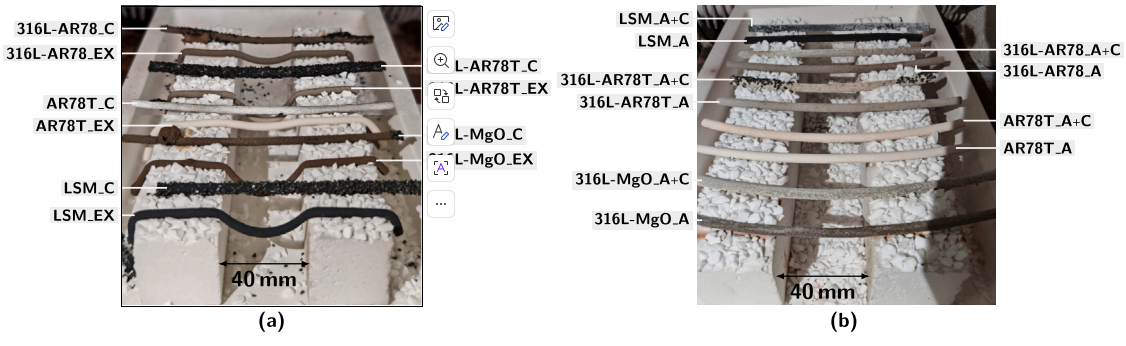
Shape stability favored the alumina beds. In softening tests, EX filaments softened severely and collapsed; C improved stability but still allowed noticeable distortion in some specimens. A and A+C retained shape best, with almost no visible deformation. Fine alumina therefore provided physical support that suppressed creep during binder softening.
3. Microstructural evidence: how stability affects final quality
Shape stability during debinding ultimately affects the sintered microstructure. The team examined sintered filaments using scanning electron microscopy (SEM).
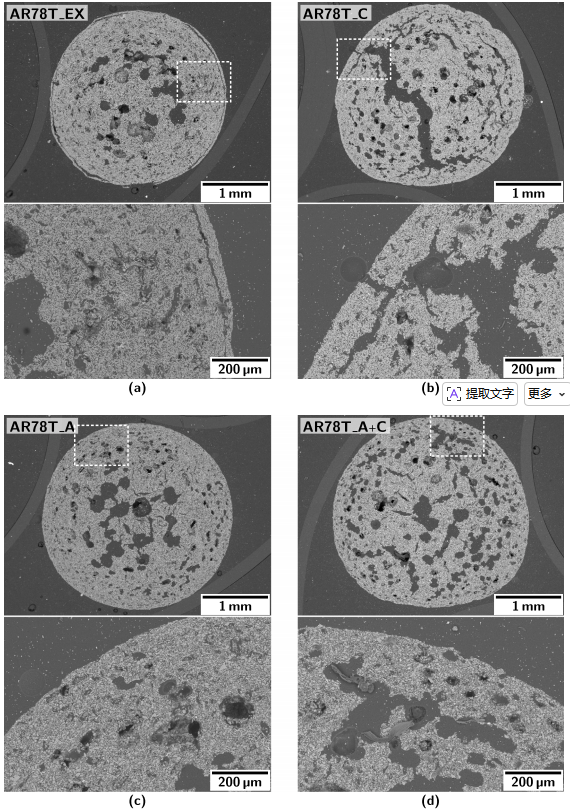
For LSM, EX specimens contained numerous large, irregular pores and microcracks, consistent with uneven deformation and shrinkage. A and A+C specimens were denser, with smaller, more uniformly distributed pores, indicating that pre-debinding stability supported more uniform sintering.
Magnesium aluminate spinel (AR78) and its TiO2 composites showed a similar pattern: alumina-bed pre-debinding reduced internal defects and helped avoid delamination or cracks caused by excessive local shrinkage.
4. Demonstration results
The team then produced a complex demonstrator combining LSM and AR78+TiO2 using a favorable pre-debinding route. The source body describes the route as likely A or A+C; the original figure caption specifically identifies A+C for the illustrated demonstrator.
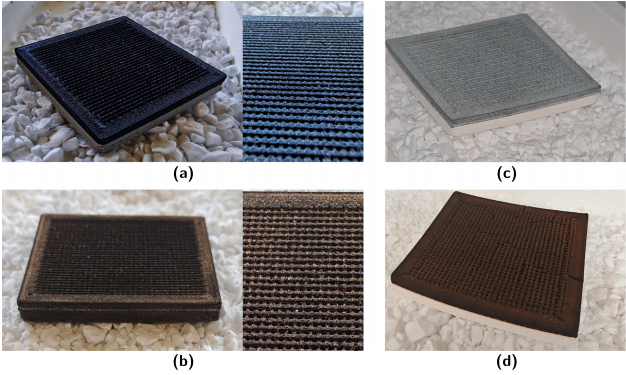
After debinding and sintering, the demonstrator retained its geometry and showed good intermaterial bonding without obvious cracking, delamination or warpage. This supports optimized powder-bed pre-debinding as a route for complex ceramic/metal multimaterial components.
5. Conclusions and outlook
The study proposes an efficient processing route for FFF ceramic/metal multimaterial parts. Its main findings are: (1) powder-bed pre-debinding improves shape stability; (2) fine alumina provides better physical support than coke alone or no pre-debinding; and (3) combining alumina and coke offers support while allowing atmosphere control.
Potential applications include solid oxide fuel cells, microreactors and customized implants. Further research could examine powder particle size and heating rate effects on debinding kinetics and extend the method to more complex graded multimaterial structures.
Paper information as supplied in the source: Piotr Malczyk et al. Development of powder bed pre-debinding techniques for the manufacturing process of 3D-printed multi-material parts made of polyethylene-based ceramic, metal and metal–ceramic filaments. Ceramics International. The source lists 2026, volume 50(12), and the page string ‘2123421245’; bibliographic formatting should be checked against the DOI record.
DOI: 10.1016/j.ceramint.2026.01.076.