Structure design
Programmable orientation in bioinspired ceramics
Controlled reinforcement orientation creates a tortuous crack path and enables design of anisotropic fracture resistance.
This KUNWU editorial note is based on the supplied technical source. Reported results belong to the described study or sample and are not KUNWU equipment specifications.
The high intensity, hardness, temperature resistance and corrosive resistance of ceramic materials, among others, make them irreplaceable in areas such as aerospace, defence force workers, precision manufacturing, etc. However, the inherent brittle of ceramics — the rapid expansion of cracks once they are born, leading to catastrophic failure — has always been the fatal weakness of its engineering applications. The long-sought-out goal of material science is how to give fine pottery resilience while maintaining high intensity.
Nature's biological structural materials provide the answer. Although natural materials such as abalone shells, fish scales, and bamboo are composed of brittle components, they achieve synergistic improvements in strength and toughness with their exquisite multi-scale hierarchical structures and ordered components. For example, the outer layer of an abalone shell is a vertically oriented prism layer, the inner layer is a horizontally oriented nacre layer, and the organic layer in the middle reduces stress concentration. This orientation-controlled hierarchical design is a common strategy in nature to improve overall performance.
Inspired by this, the Huazhong University of Science and Technology research team published a study in the Journal of Materials Research and Technology and proposed a programmable orientation control 3D printing strategy (ON-3D). By regulating the flow field in the printing nozzle, the orientation of ceramic nanosheets can be precisely controlled, and a variety of bionic hierarchical structures can be constructed. Finally, the strength of the alumina-epoxy resin composite material was 181.6 MPa and the fracture toughness was 6.02. Synergistic improvement of MPa·m¹/² - Compared with the single-oriented structure, the strength is increased by 2 times and the toughness is increased by 1.5 times.
Flow-induced programmable orientation
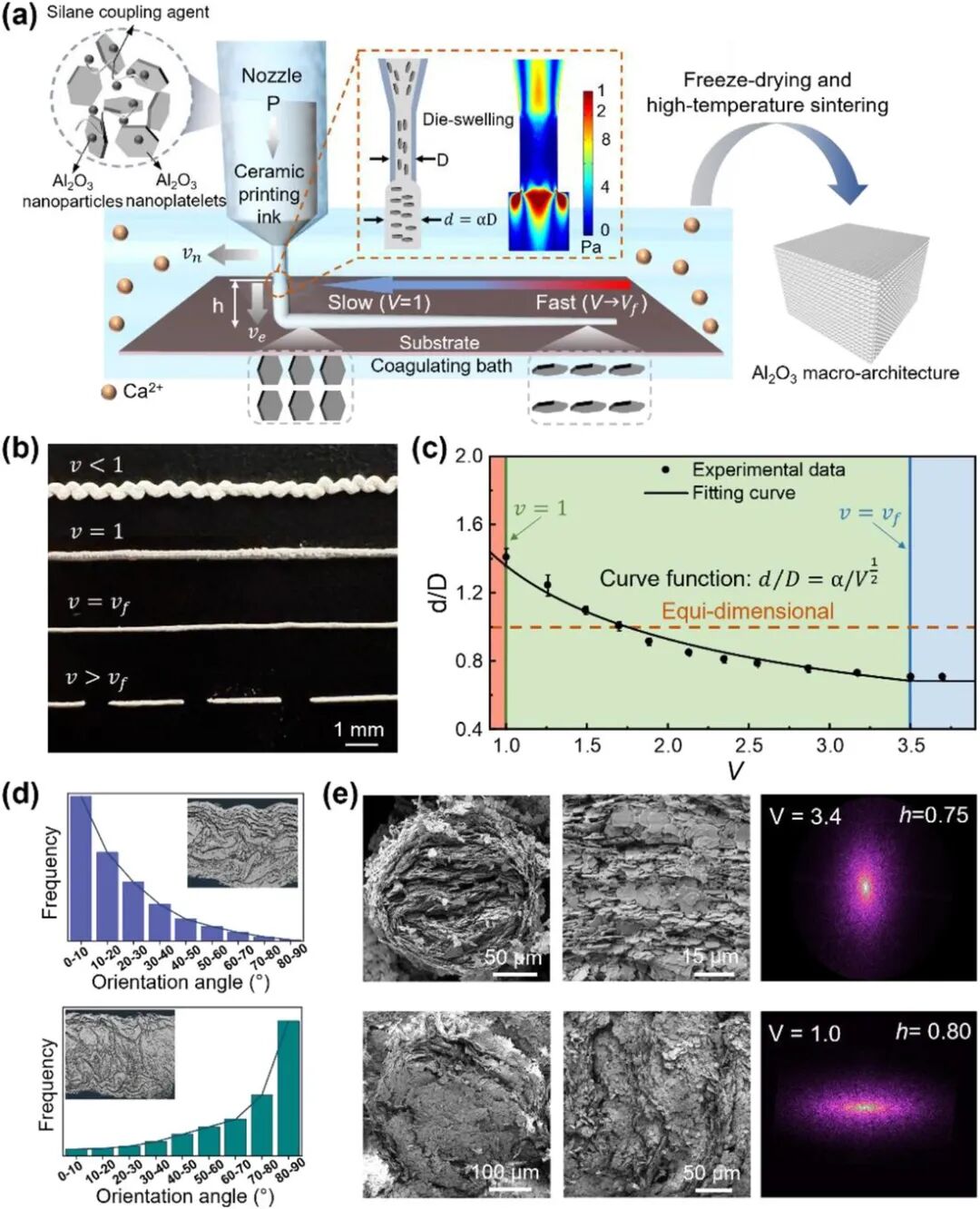
Traditional DIW (direct printing) techniques make it difficult to accurately control the orientation of ceramic nanos. The team found that the flow range within the nozzle could be used to achieve programmable control of nanoparticle orientation by regulating print parameters, with the following physical mechanisms:
Initial alignment by shear flow
Ceramic slurry undergoes a strong shear flow inside the nozzle, and nanoparticles follow the direction of movement (axis) under the cutting field. This is the common feature of all DIW printing.
Reorientation by extensional flow
When the slurry is extruded from the nozzle, the constraints are suddenly released, and the material expands radially and contracts axially due to entropic elasticity. This expansion and contraction produces a high tensile strain rate, which causes an orientation change in the originally axially oriented nanosheets. When the printing speed matches the extrusion speed (dimensionless speed V = 1), the nanosheets transform to be oriented perpendicular to the substrate; when the printing speed is much higher than the extrusion speed (V ≈ 3.4), the nanosheets remain oriented parallel to the substrate.
The key to this discovery is that the critical condition for orientation transition is determined by the dimensionless printing speed V=vn/ve (vn is the nozzle moving speed, ve is the slurry extrusion speed). Experimentally measured critical speed Vf≈3.5 of the slurry system, V=1 corresponds to vertical orientation, and V=3.4 corresponds to horizontal orientation.
Rapid fixing in a coagulation bath
The printing process is carried out in an ethanol-water mixed coagulation bath containing Ca²⁺ ions. Ca²⁺ cross-links with the oxygen-containing functional groups on the surface of alumina nanosheets, allowing the extruded fibers to quickly solidify and maintain the orientation structure. This strategy kills three birds with one stone: avoiding dehydration and deformation of the slurry, reducing the rheological requirements of the slurry (smaller nozzles can be used), and rapid solidification to ensure orientation stability.
CT scanning and SEM analysis confirmed that the orientation angle of nanosheets in horizontally oriented fibers is concentrated at 0-10°, and that in vertically oriented fibers is concentrated at 80-90°, with an average orientation degree as high as 0.8 (1 is perfect orientation). The standard deviations in fiber diameter and orientation from batch to batch were small, demonstrating good process repeatability.
Polydopamine interface reinforcement
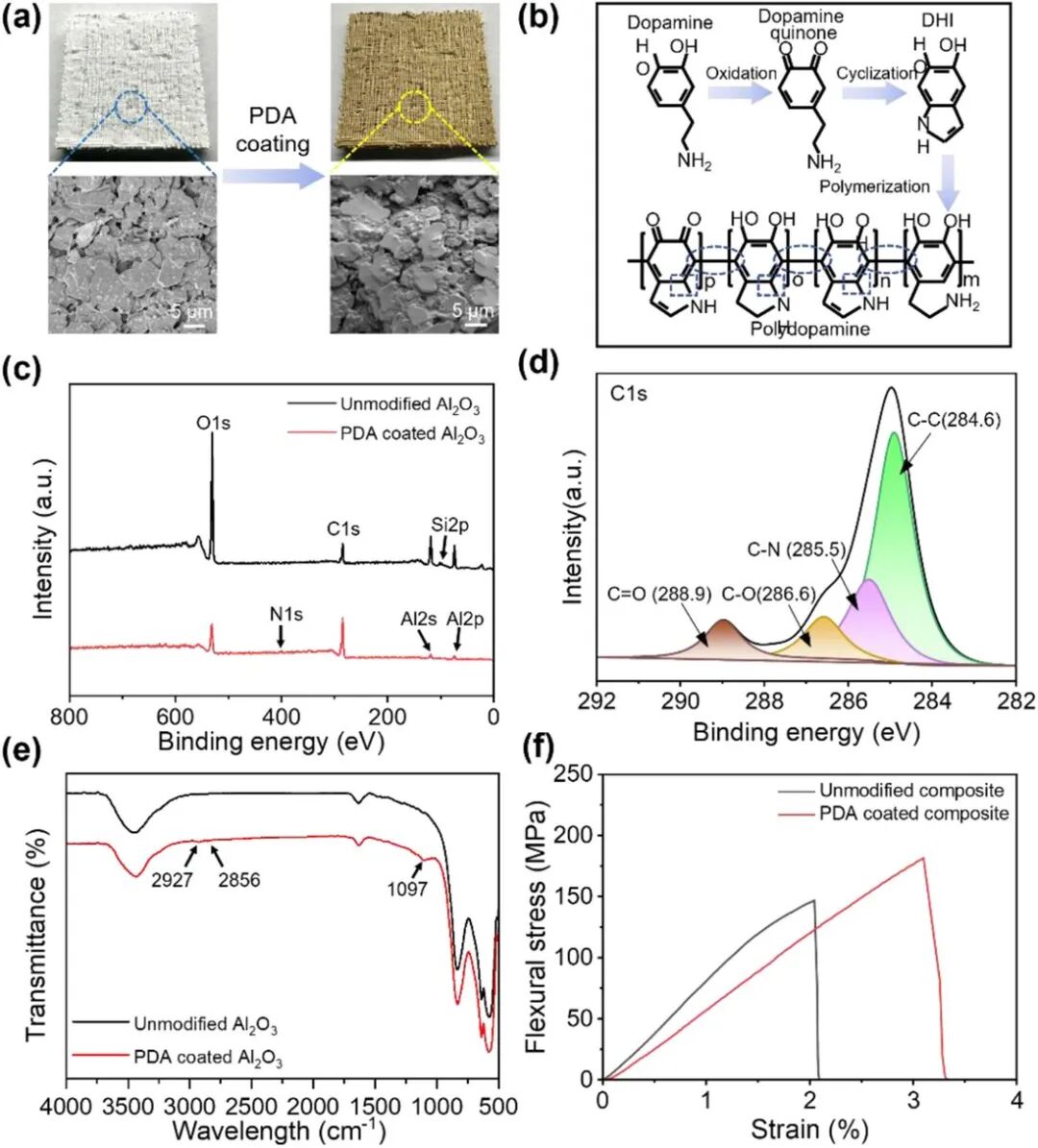
The bonding strength of the ceramic-polymer interface directly determines the mechanical properties of the composite material. The research team used ultrafast polydopamine (PDA) coating technology to form a PDA film about 4.2nm thick on the surface of the alumina skeleton, enhancing the interface through two mechanisms:
Micro/nanoscale mechanical interlocking
The PDA coating itself has micro-nano-scale roughness, forming mechanical interlocking with the epoxy resin to enhance interface bonding.
Covalent molecular bridges
The amino group in PDA undergoes a ring-opening reaction with the epoxy group to form a strong covalent bond. XPS analysis shows that after coating, the Al signal weakens, the C and N signals increase, and characteristic peaks such as C─NH₂ (285.5eV) and C═O (288.9eV) appear in the C1s spectrum, proving that PDA is successfully coated. In the FTIR spectrum, the C─O─C (1097cm⁻¹) peak is enhanced and the methylene peak (2856/2927cm⁻¹) appears, which is further confirmed.
Mechanical tests show that the flexural strength of the PDA-modified composite material increased from 146.65 MPa to 181.85 MPa, an increase of 24%. This proves that interface enhancements are critical to the final performance.
Bioinspired hierarchical design
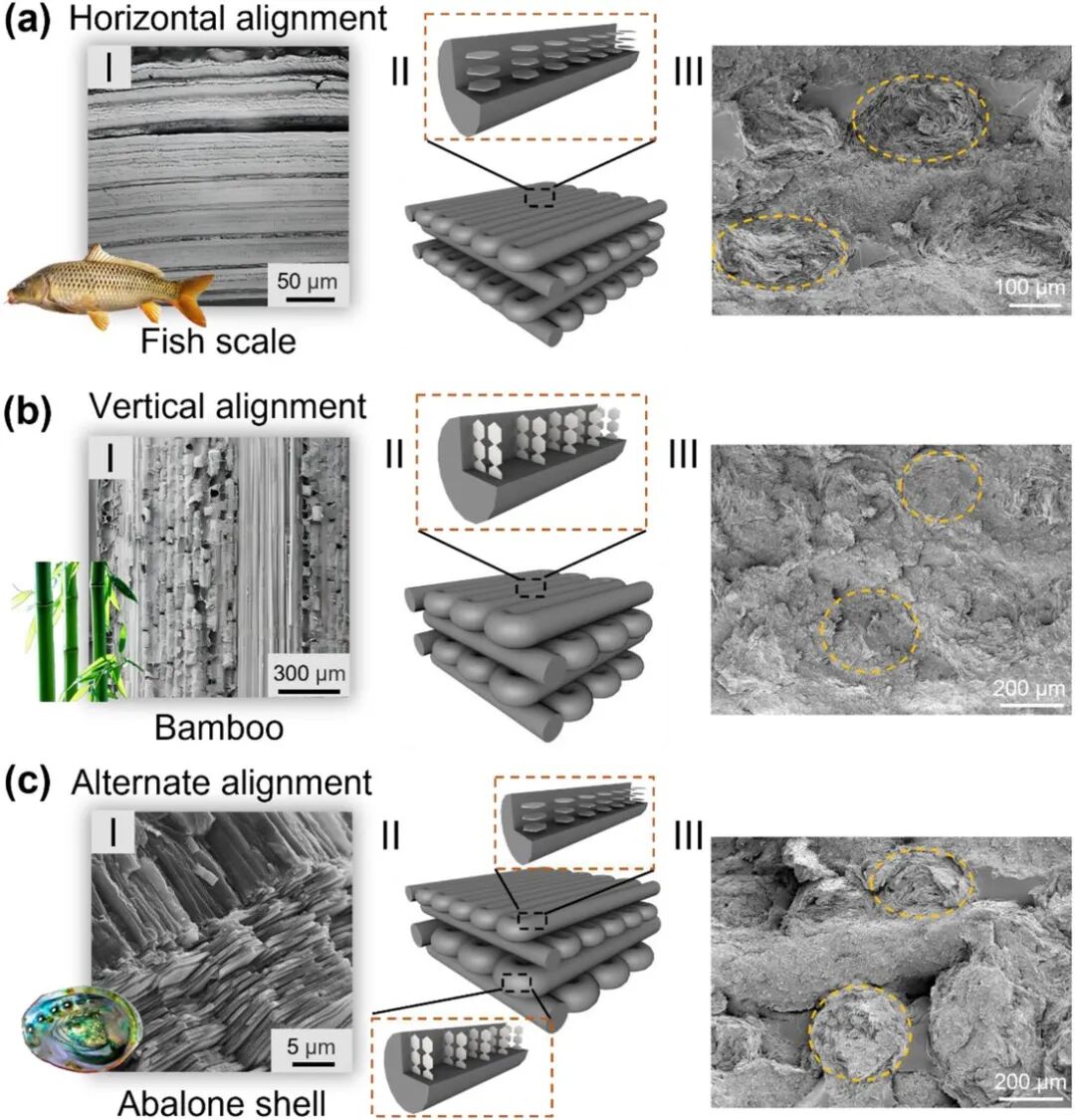
The research team designed three bionic structures, corresponding to three typical orientation strategies in nature:
Horizontal alignment inspired by fish scales
The tile-like laminate structure of the fish scales provides high impact resistance and longitudinal anisotropy. In the printed single-oriented horizontal structure, all nanosheets are arranged parallel to the substrate, simulating the layered structure of fish scales.
Vertical alignment inspired by bamboo
The long unidirectional fibers within bamboo provide excellent transverse bending strength and fracture resistance. In the printed single-oriented vertical structure, all nanosheets are aligned perpendicular to the substrate, simulating the fiber orientation of bamboo.
Alternating alignment inspired by abalone shell
The alternating structure of the abalone shell's vertically oriented outer layer, horizontally oriented inner layer, and organic layer in the middle is a classic example of strength-toughness synergy in nature. The research team designed three alternating structures, 4V-2H (4 layers vertical-2 horizontal), 2V-4H (2 vertical-4 horizontal), and 2V-2H (2 vertical-2 horizontal), to explore the impact of orientation sequence on performance.
SEM analysis confirmed that the internal nanosheet orientation of the printed composite material successfully matched the design target, verifying the effectiveness of the ON-3D printing strategy in manufacturing multi-scale hierarchical structures.
Orientation-dependent mechanical properties
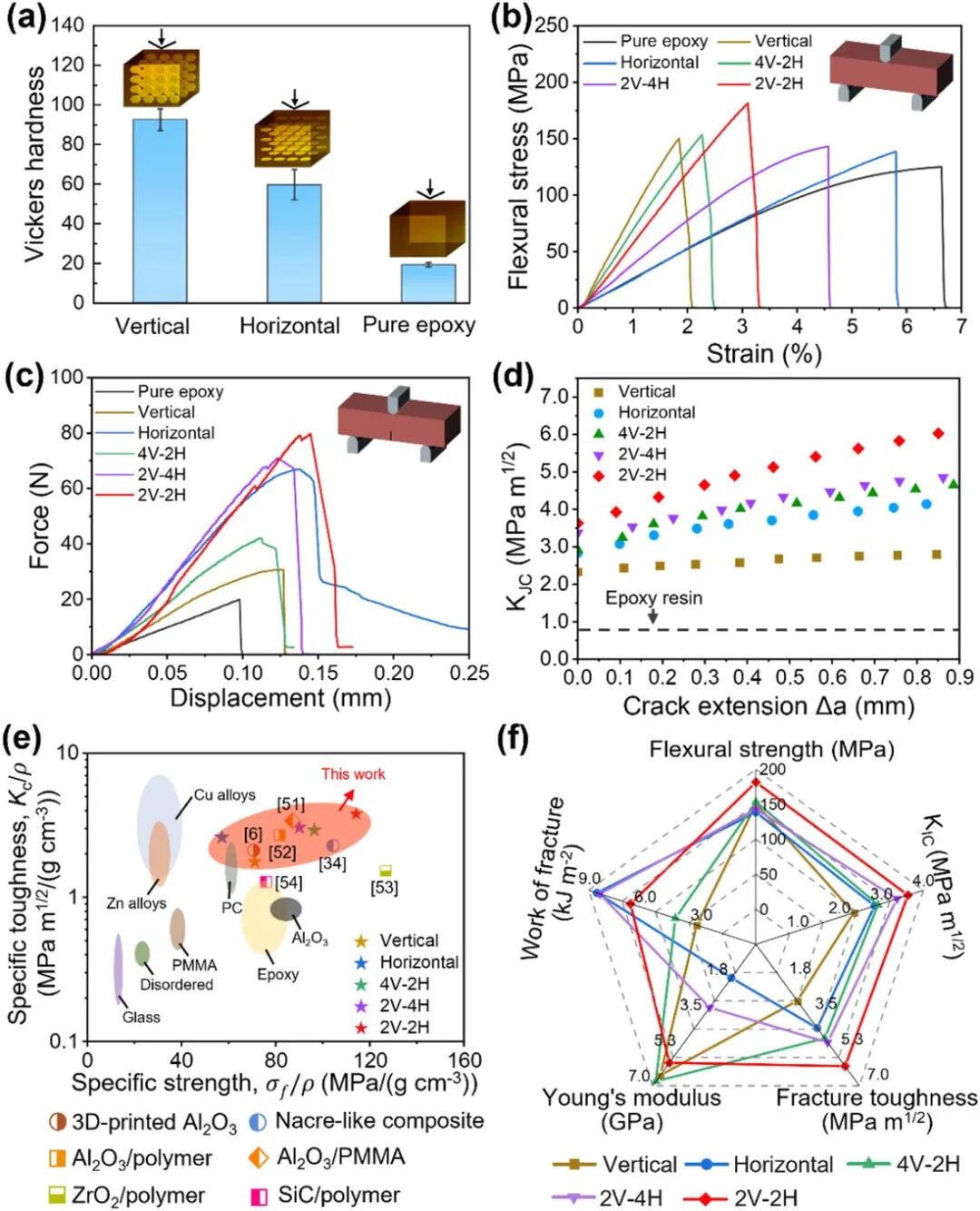
Differences between unidirectional architectures
Vertically oriented structures are harder and stiffer, but have smaller fracture strains. This is because the effective bearing area of vertically oriented nanosheets under bending stress is small, and stress is easily concentrated at the ceramic-polymer interface, leading to interface debonding or cracking. The fracture strain of the horizontally oriented structure is about 3 times that of the vertically oriented structure, but the hardness and stiffness are lower.
Synergy of alternating orientations
The bending stress of the alternating orientation structure is higher than that of all single orientation structures. Among them, the 2V-2H structure has the highest bending strength, and the 2V-4H structure has the largest fracture strain. Composites theory explains: Horizontal layers absorb energy, redistribute shear stress, and delay ceramic fracture, while rigid vertical layers hinder the transfer of bending stress. The two are arranged alternately to achieve functional synergy.
Improved fracture toughness
The single-sided notched beam (SENB) test showed that pure epoxy resin had a flat R-curve and suffered catastrophic failure; while all bionic composite materials showed rising R-curve behavior, indicating increased crack propagation resistance.
The fracture toughness KJC of the 2V-2H structure reaches 6.03±0.28 MPa·m¹/², far exceeding other structures. Its crack initiation resistance KIC is 3.63±0.21 MPa·m¹/², indicating that it also has excellent resistance to crack initiation.
The specific strength (σf/ρ) and specific fracture toughness (Kc/ρ) are 113.3 MPa/(Mg·m⁻³) and 3.15 MPa·m¹/²/(Mg·m⁻³) respectively, which are significantly better than most engineering polymers, ceramics, metals and imitation pearl layer composite materials.
Combined property assessment
The combined radar map assesses five indicators of convulsive strength, Yang ' s modulus, cracking edible resistance, cracking power, fracture resilience, and 2V-2H structural integration is optimal. This proves that the precise design of the sequence of orientations allows for "suspension and avoidance" and the achievement of intensity-resilience synergetic increases, breaking the strong-resilience in traditional materials.
Toughening mechanisms
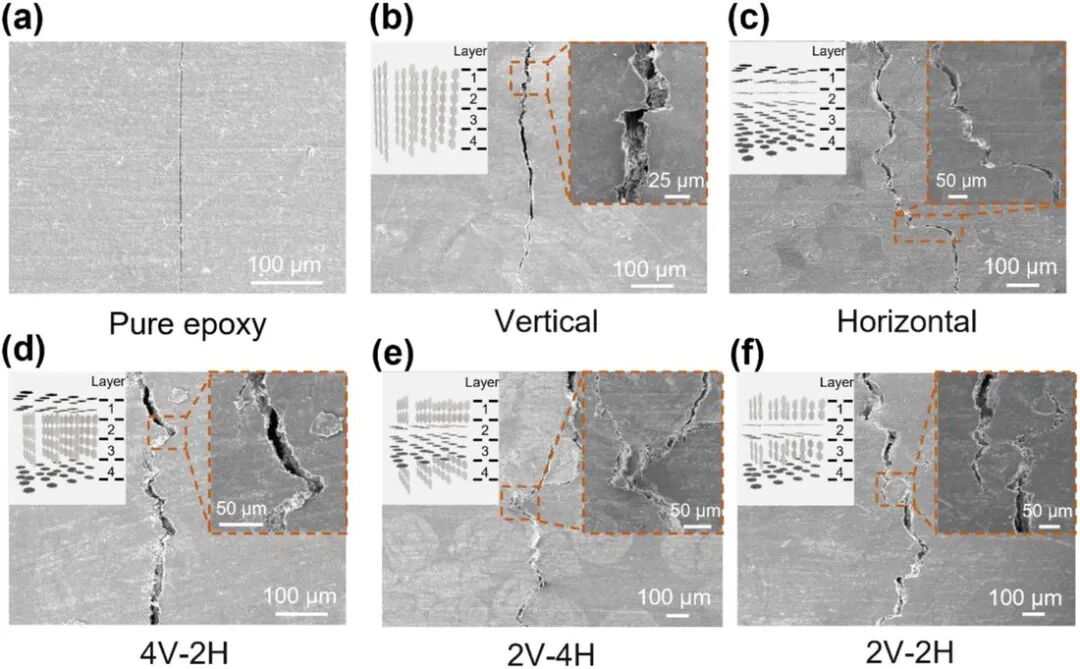
Combining in-situ crack growth observation and SEM fracture analysis, the research team revealed three synergistic toughening mechanisms:
Second-phase toughening
High-modulus aluminum oxide nanosheets form a rigid reinforcing skeleton. When the crack encounters the nanosheet, it deflects, increasing the crack propagation path length and fracture surface area, and dissipating more energy.
Hierarchical toughening
The horizontal-vertical alternating hierarchical structure promotes crack deflection, bifurcation, and bridging. The "pull-out" process of the nanosheets during fracture significantly dissipates energy.
Interface reinforcement
The PDA interface layer enhances the ceramic-polymer bond. When the crack approaches the interface, the stress concentration at the crack tip is relieved, preventing the crack from cutting directly through the composite material.
The toughening effect is highly dependent on the relationship between the crack direction and the microstructure: when the cracks are oriented parallel to the nanosheets, the resistance is small, and when they are vertical, deflection and other toughening mechanisms occur. The 2V-2H structure has the highest frequency of orientation transition, the largest number of crack deflections, and the strongest toughening effect.
Technical details and process parameters
Slurry formula: γ-MPS modified Al₂O₃ nanosheets (average diameter 7μm, 20vol%), Al₂O₃ nanoparticles (average diameter 100nm), Darvan 811D dispersant (2wt%), Pluronic F-127 rheology modifier (2wt%).
Printing parameters: nozzle inner diameter 250μm, air pressure 1-2bar, coagulation bath is CaCl₂ (6.5mg/mL) ethanol-water mixture (1:3 volume ratio). Vertical orientation: V≈1; horizontal orientation: V≈3.4.
Post-processing: freeze drying at -60°C for >24 hours → sintering at 1550°C → PDA coating (dopamine 40mM, pH 9.5, rapid spraying) → vacuum impregnation with epoxy resin (80°C, 1 hour) → curing at 100°C/150°C for 2 hours each.
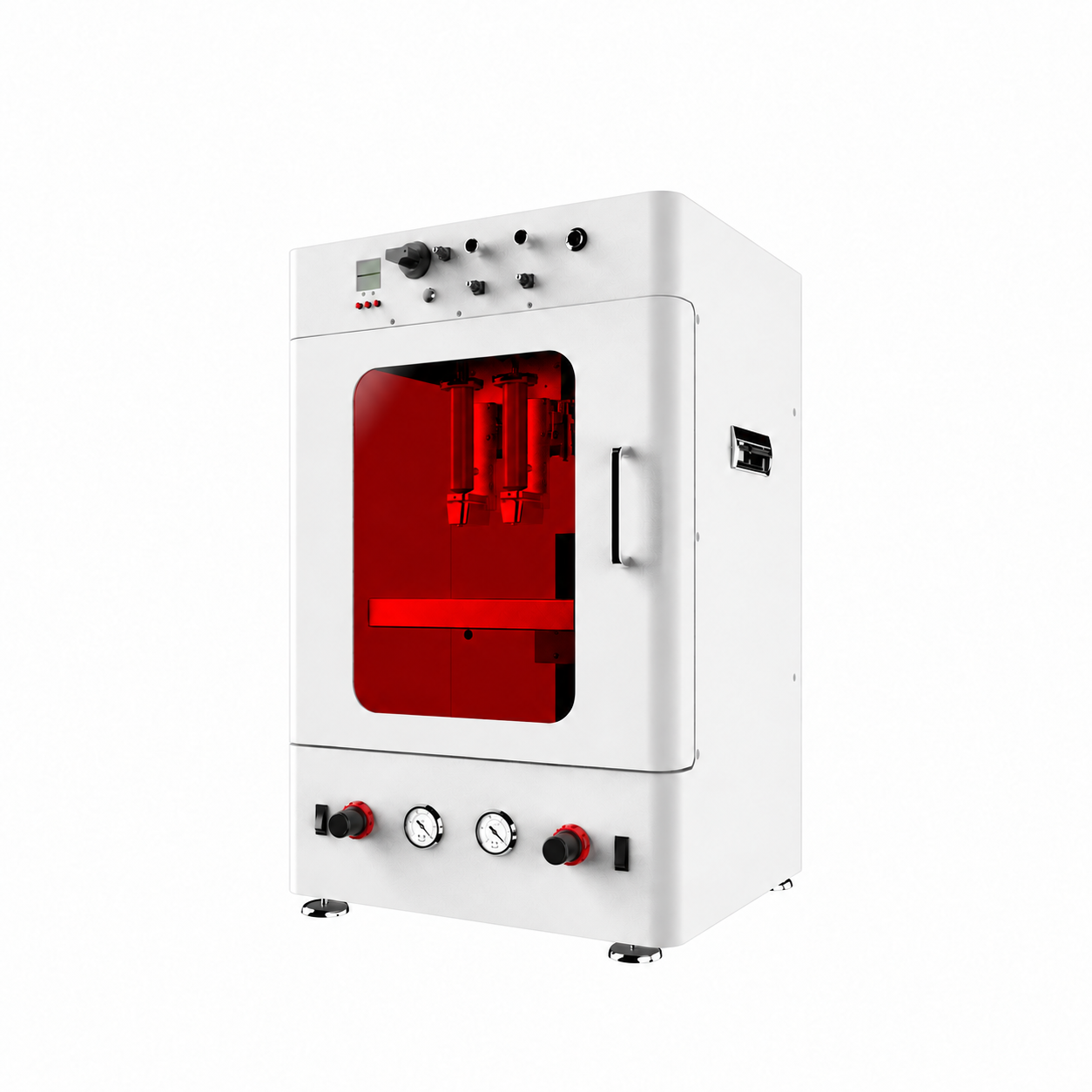
Equipment: Adventure 3D-LB-printer (KUNWU).
Scientific significance and applications
The core contribution of the study lies in the establishment of a quantitative relationship of "control orientation -- hierarchical structure -- mechanics performance". Accurate control over nanoparticle extraction can be achieved by simple printing parameters, thus customizing the mechanics of composite materials. This programmability provides new ideas for material design.
The success of the 2V-2H structure proves that through reasonable orientation sequence design, the functional synergy of the "strong layer" (vertical orientation) and the "tough layer" (horizontal orientation) can be achieved, breaking the strength-toughness inversion. This design principle can be generalized to other ceramic-polymer systems.
PDA interface engineering provides a universal, fast, and environment-friendly interface enhancement strategy. Compared with traditional silane coupling agents, PDA coating conditions are mild, no complex surface pretreatment is required, and it is suitable for a variety of inorganic fillers.
This strategy can be extended to other two-dimensional ceramic materials (such as boron nitride, MXene, etc.), providing a platform technology for the design of multifunctional composite materials (with both mechanical, thermal, and electrical properties).
Implications for research on ceramic composite materials:
First, orientation control is the key to achieving breakthroughs in the performance of ceramic composite materials. The filler orientation in traditional composite materials is random or difficult to control, resulting in limited room for performance optimization. The ON-3D printing strategy provides a simple and effective method of orientation control.
Second, a hierarchical structure design is more effective than a single structure. Nature has selected hierarchical structures rather than homogeneous structures after hundreds of millions of years of evolution, and this study verifies the effectiveness of this strategy from a materials science perspective.
Third, interface enhancement and structural design must be coordinated. No matter how good the structural design is, if the interface connection is weak, it will be difficult to achieve the expected effect. PDA coatings provide new options for ceramic-polymer interface enhancement.
Fourth, programmability is the future direction. From "trial and error" to "programmable design", from "empirical optimization" to "performance prediction", it is an important change in the paradigm of materials research. This research demonstrates the potential of programmable materials design.
Video: Crack propagation of neat epoxy resin in SENB test
Reference paper: Chang S, Yang K, Zhou C, Pang S, Xin G. Programmable 3D printing orientation-induced toughening for biomimetic hierarchical ceramic composites. Journal of Materials Research and Technology. 2026;41:1786-1795. DOI: 10.1016/j.jmrt.2026.01.101