Materials research
Additive manufacturing routes for silicon carbide
A literature review compares slurry-, powder- and filament-based routes and shows why reported strength values must include densification and test conditions.
This KUNWU editorial note is based on the supplied technical source. Reported results belong to the described study or sample and are not KUNWU equipment specifications.
Introduction
3D printing is driving Silicon carbide (SiC) ceramics beyond traditional manufacturing limits to achieve complex structural efficiency. The paper summarizes the main processes and performance optimization progress in the manufacture of SiC ceramics.
Silicon carbide (SiC) ceramics, based on their excellent chemical stability and corrosive resistance, are gradually becoming key materials for replacing traditional metal heaters, demonstrating great application potential in industrial kilns, such as hot stoves and stoves. However, traditional preparation processes have long been constrained by bottlenecks such as low sophistication, high production costs and inefficient production, severely constraining large-scale industrialization applications of SiC ceramics. With the rapid development of materials manufacturing (3D printing) technology, a new path has emerged that can break geometric limits and achieve complex structural integration. The purpose of this paper is to systematize the latest advances in the 3D printing technology in the preparation of the SiC ceramics, to provide an in-depth analysis of the mechanisms that influence the material mechanics of different formation processes and to look ahead to their future direction.
I. Slurry base enrichment
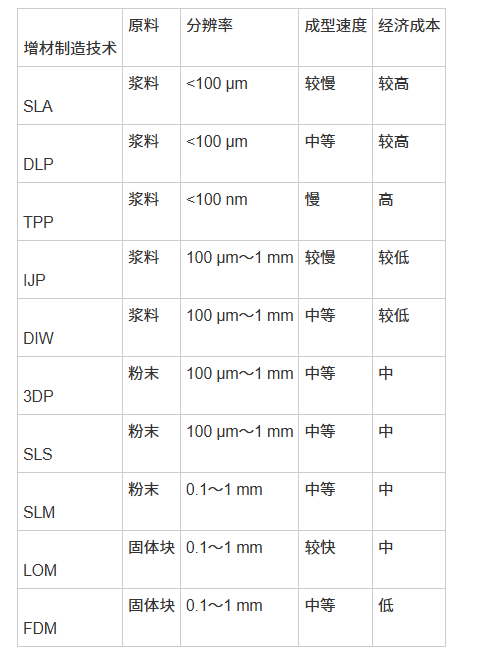
Slurry base formations (e.g., directly DIW, photoconsolidation SLA/DLP) occupy an important place in the many technical routes of 3D printing SiC ceramics. The core of such technologies is the fluidity of the plasma and solidification behaviour. In the case of straight-written (DIW), it transforms structures into digital models through computer-assisted design, extracts slurry layer by layer using nozzles and relies on material-supporting behaviour to build a three-dimensional structure. The mutagenicity and cut-down behaviour of the slurry are key to determining the quality of formation, and studies show that when the slurry solid phase is 4 per cent, the optimal fluid properties tend to emerge.
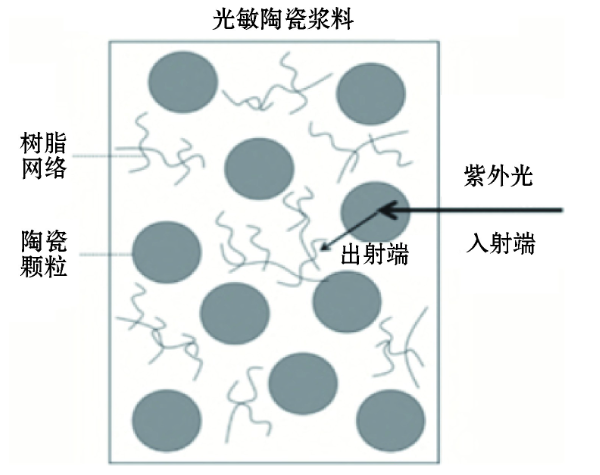
However, the slurry-based process faces difficulties in balancing solid phase fractions, sorpture and solidity depths, which often result in inadequate formation precision or poor homogenization. In response to this problem, optimizing the formulation and solidification parameters of the slurry is critical. For example, the introduction of the SiO2 composite powder in photoconservation technology enhances UV penetration and improves printability, while the addition of methyl benzene polysiloxane (PSO) as a cryogenic burner helps to form a mechanical lock between the layers of SiOC resulting from its cracking, effectively reducing the allogenic properties of materials and significantly increasing compression intensity. In addition, fine-tuning of equipment parameters is also essential.
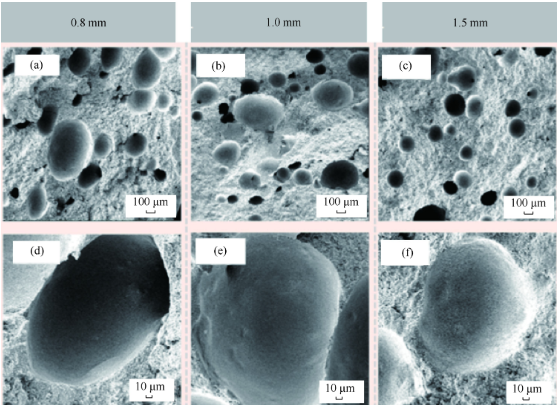
Comsol fluid-structure coupling simulations show that when 60° fibre nozzle angles and 1.55 mm nozzle diameters are used, the slurry viscosity is the best, with the relative density of post-combustion material and the resistance strength of 113.17 MPa, respectively. For multi-pore structure preparation, a smaller nozzle diameter (e.g. 1 mm) helps maintain the integrity of the body and can hold up to 7.9 MPa after sintering
II. Powder base enrichment manufacturing
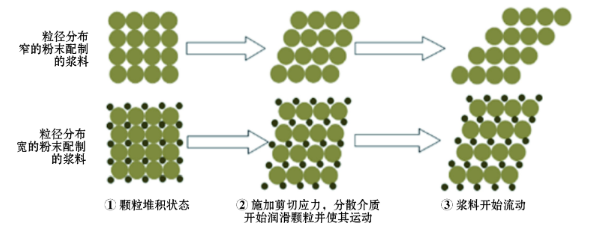
Compared to the slurry-based process, powder-base preparation (e.g. selective laser sintering SLS) has the advantage of simple process and does not require complex slurry matching, reducing material waste and facilitating cost control. The powder-based process is less influenced by the high insorption and refraction rates of the SiC particles and has higher print quality and efficiency. However, the control of powder particles is key to success: when the particle size is less than 5 μm, proliferation defects seriously affect the print quality; and when greater than 20 μm, mobility decreases significantly. Therefore, strict control of the particle size threshold at 5-20 μm is at the core of assurance of formation mass.
In terms of filamentation, the powder base is only partially filled by adhesive adhesives, with a high pore rate and must rely on subsequent sintering processes. High-intensity, high-intensity SiC ceramics can be produced by optimizing parameters such as laser power, layer thickness and scanned space. For example, composite powders prepared using a blend evaporation method (SPC) are burned under specific laser parameters with a volume density greater than 2.8 g/cm3 and a decomposition strength greater than 240 MPa.
III. SOLID BASIC PRODUCTION
The manufacture of solid block-based increments (e.g., melted sediment formation FDM) faces challenges such as high heterogeneity and large surface roughness, often showing high friction coefficients. In order to improve their mechanical performance, nanofills such as carbon fibre, graphite and ceramic nanoparticles can be introduced, and surface treatment techniques such as polishing, coating and so on can further reduce surface roughness and friction factors. In the FDM process, the system adjusts the temperature, nozzle diameter and printing layer thickness to perform significantly. It was found that SiC ceramics had a contour strength of up to optimal 302 MPa at 180°C, a nozzle diameter of 0.8 mm and a print layer thickness of 0.2 mm. In addition, a triangle filler usually provides better stretching performance.
Reprocessing and confidentiality
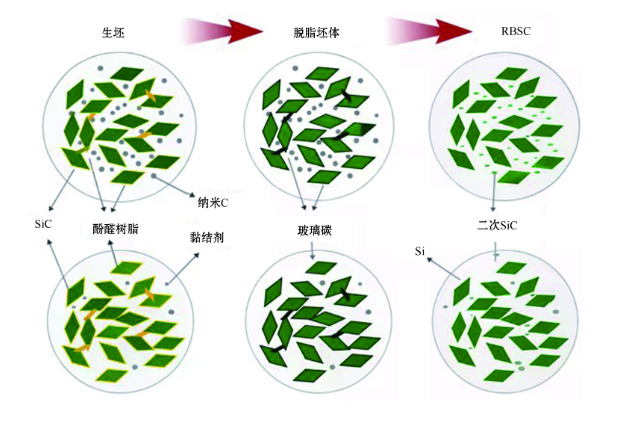
Regardless of the type of printing used, reprocessing to decryptation is a key element in determining the final mechanic performance of SiC ceramics. Slurry extraction and powder glue technology often rely on polymer impregnation cracking (PIP), liquid silicon leaching (LSI) or reaction leaching (RMI) processes for decontaminating, but this process is often associated with residual silicon, secondary siC distribution and condensation malformations. In the future, finely calibrated follow-up processes are expected to significantly improve the mechanics of SiC ceramics while ensuring print size accuracy.
The chemical gas phase penetration (CVI) technology presents a unique advantage as a means of decryption under low-temperature pressure. The technology allows the material to have a volume density of 2.95 g/cm3 (approximately 92% of the SiC theoretical density), provides new pathways for the manufacture of complex shapes of high-performance materials and has the potential to extend to other high-temperature ceramics or metals. For fibre-enhanced composites, the design of the print angle directly affects fibre orientation and mechanics. When printing with an angle of 0°, single-body SiC and carbon fibre-enrichment SiC composites are resistant to a level of 375 MPa and 361 MPa, respectively, indicating excellent carrying capacity.
Challenges and development directions
Although the 3D printing of SiC ceramics has made significant progress, it still faces limitations such as the difficulty of slurry formula balance and the complexity of condensing contraction control. Future developments will focus on the following directions: first, in-depth exploration of the synergy optimization mechanisms for the formulation of the plasma and the solidification parameters, addressing the conflict between solid phase fractions and solidification depths, and increasing the accuracy and homogeneity of the formation. Second, to promote the deep application of 3D printing technologies in high-end areas such as aerospace, nuclear energy, electronics and biomedical, and to develop high-performance components with complex structures.
In addition, sustainable development would become an industry consensus. Strengthening the development of green manufacturing processes and recycling technologies to ensure consistency and reliability of print components is an important direction for future technology overlaps. Through multidisciplinary cross-fertilization, 3D printing technologies are expected to completely break the bottlenecks in traditional SiC ceramics, promote their widespread application in extreme environments and provide strong material support for upgrading industrial kilns.
Reference papers
Paper citation information:
Liu Zai, Liu Hsiang, Ting Guoqiang, Feng Tung, Luo Xudong, Jigang, Zhi Dabin 3D to print progress in the development of carbide ceramics and mechanics. J]. Iron and Steel Research Journal, 2026, 38(4): 494-506. DOI: 10.13228/j.boyuan.issn 1001-0963250359.
Note: This paper is based on the analytical content of the synthesis paper, which contains original illustrations of the paper, with references to the original literature.