Applications
Three-dimensional piezoceramic devices
Complex geometry creates new deformation modes for sensing, transduction and energy harvesting, while requiring device-level electrical and mechanical validation.
This KUNWU editorial note is based on the supplied technical source. Reported results belong to the described study or sample and are not KUNWU equipment specifications.
Piezoelectric ceramics are functional materials that can realize the mutual conversion of mechanical energy and electrical energy. They are widely used in sensors, actuators, ultrasonic transducers and other fields. However, traditional dry press molding, tape molding and other processes are limited by molds and cutting tools, making it difficult to create complex three-dimensional structures, gradient pores and personalized geometric forms.
Nowadays, through DLP light-curing ceramic 3D printing technology, piezoelectric ceramic materials such as PZT, barium titanate, potassium sodium niobate, etc. can break through the molding bottleneck and achieve a precise leap "from powder to functional parts". The following printing cases demonstrate the technical possibilities of piezoelectric ceramics in different structural designs and application scenarios.
— 1. Potassium sodium niobate transducer —
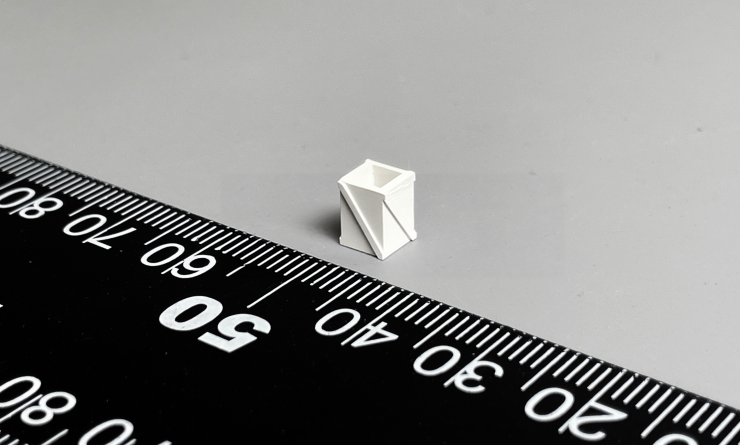
Potassium sodium niobate periodic lattice array. It is composed of multiple unit lattices arranged repeatedly.
Suitable for phononic crystals, metamaterial filters, elastic wave control devices, and intelligent vibration reduction structures. The periodic lattice can produce a band gap effect to block or guide sound waves/elastic waves in specific frequency bands.
— 2. Complex hollow structure of lead zirconate titanate —
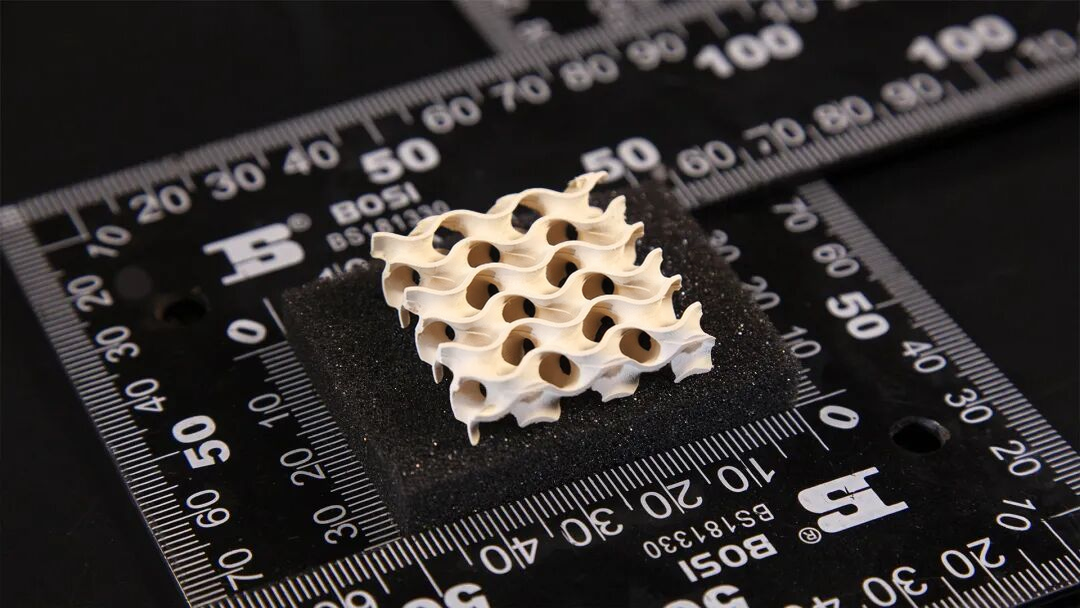
PZT complex structure designed with three-dimensional hollow lattice. The interior is a continuous porous network, and the exterior is a lightweight topology.
Suitable for lightweight piezoelectric sensors, bionic piezoelectric skeletons, energy harvesting structural parts, and vibration and noise reduction devices. The hollow structure significantly reduces the equivalent density while maintaining piezoelectric response capability.
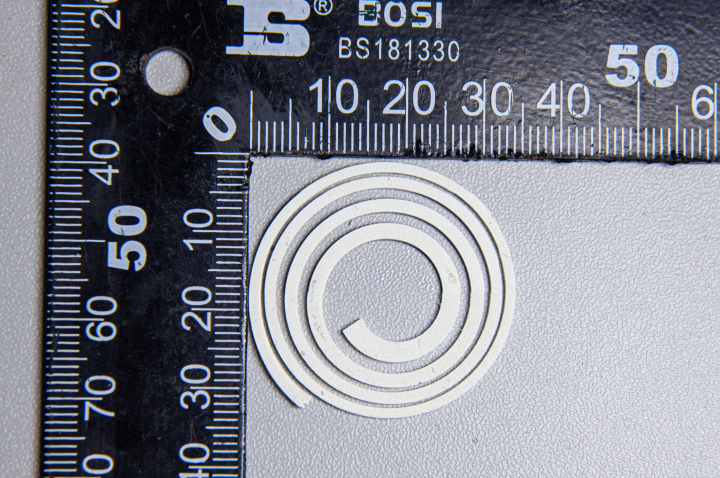
— 3. Lead zirconate titanate ring —
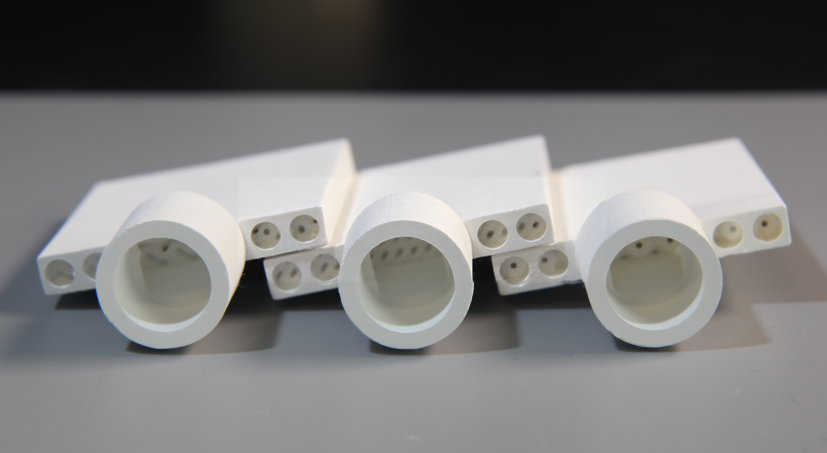
— 4. Barium titanate multi-channel tubular connector —
— 5. Barium titanate three-dimensional phononic crystal —
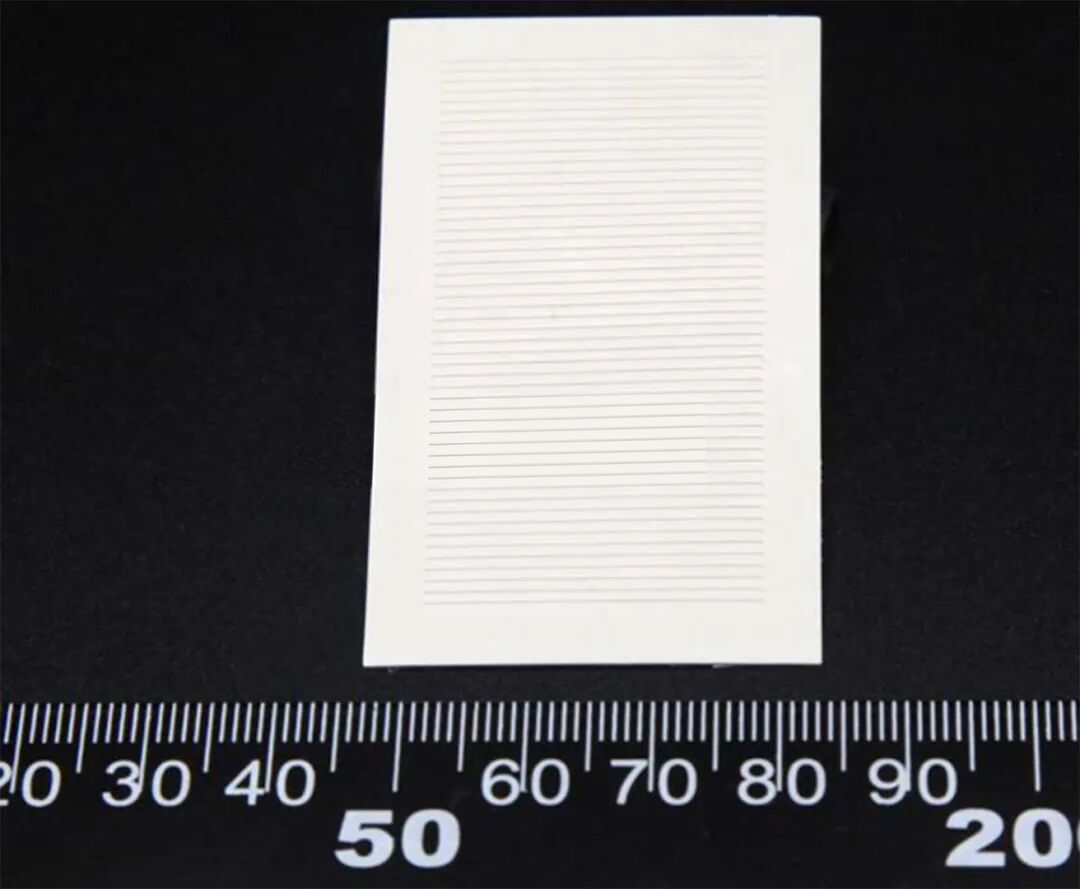
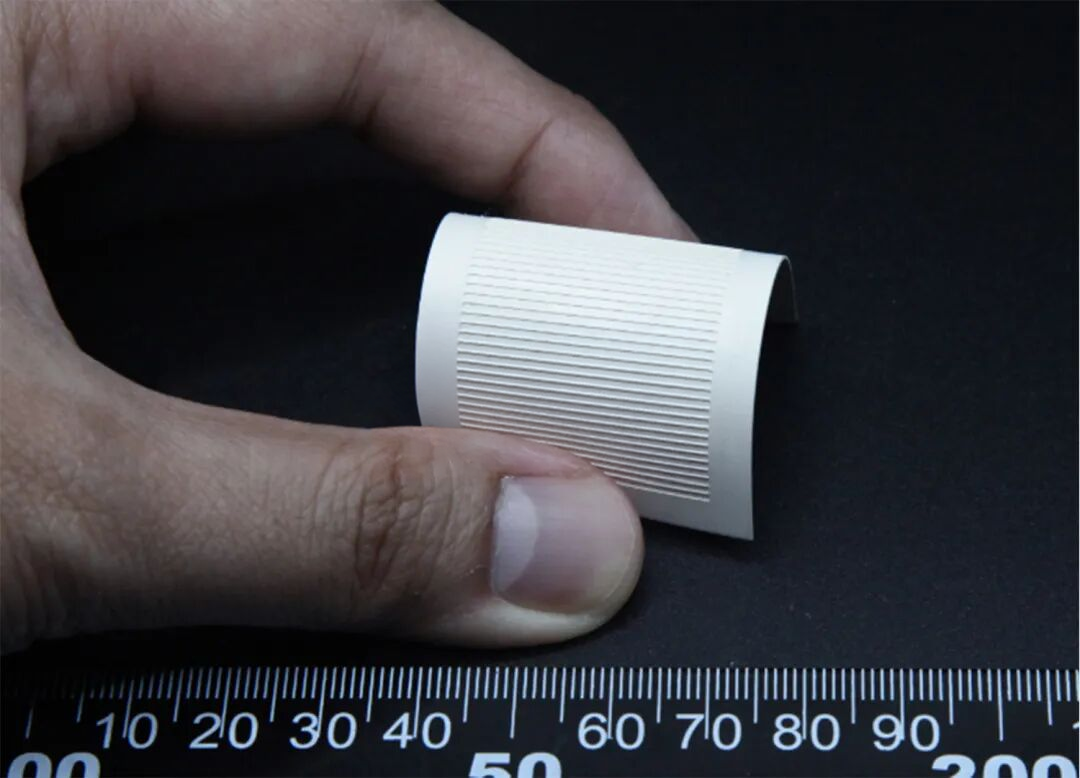
It can be used for precision acoustic filters, noise isolation devices, comparison test blocks for ultrasonic non-destructive testing, and resonant cavities of thermoacoustic refrigerators. Three-dimensional bandgap structure enables omnidirectional sound wave manipulation
— 6. Barium titanate quadrangular pyramid —