Ceramic application cases
Yttria gas-distribution disc: DLP printing internal channels in one green body
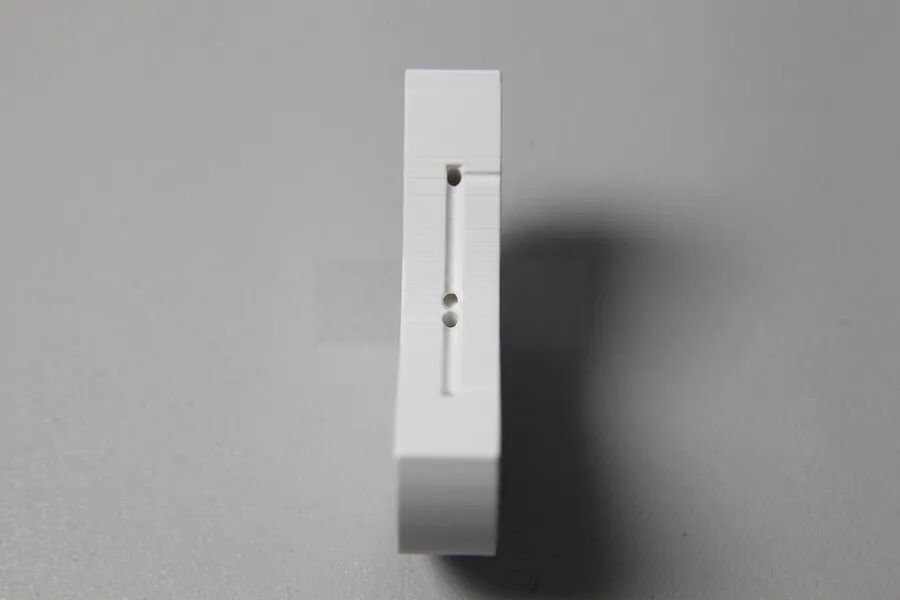
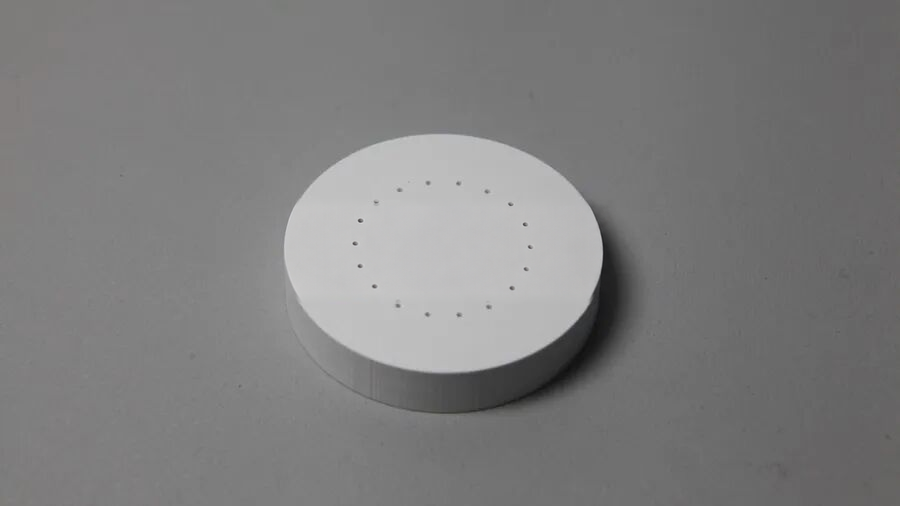
A Y₂O₃ green-body demonstration with a central inlet and circumferential outlets. The sample has not yet undergone debinding or sintering.
Authorized translation of a supplied application case, not a KUNWU qualification test. Source-account promotions are excluded. Sample photographs have localized logo retouching; texture inside those regions is reconstructed, not raw measurement evidence. Image dimensions and pixels outside the repair regions are unchanged.
Gas distribution in a compact ceramic part
In advanced semiconductor and photovoltaic manufacturing equipment, a gas-distribution disc must deliver uniform, stable gas flow within limited space. This places demanding requirements on internal-channel accuracy and corrosion resistance. Machining fine passages and complex cavities in hard, brittle ceramics such as yttria is expensive and time-consuming. This case presents a yttria gas-distribution disc green body made by DLP ceramic 3D printing. Its central inlet and circumferential distribution channels are formed together during printing, producing an intact body with a clearly defined structure.
1 · Sample geometry
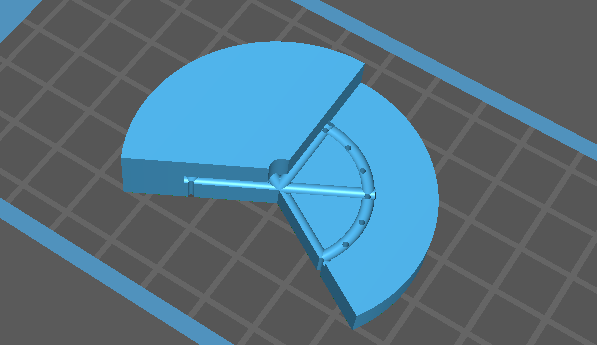
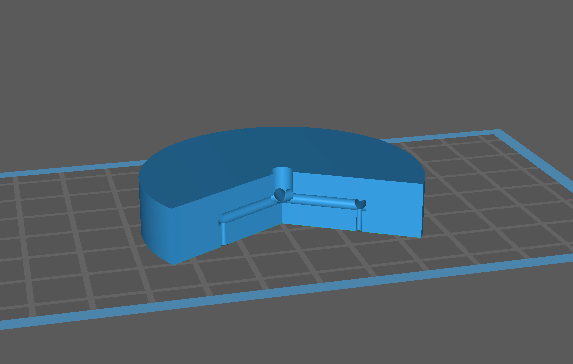
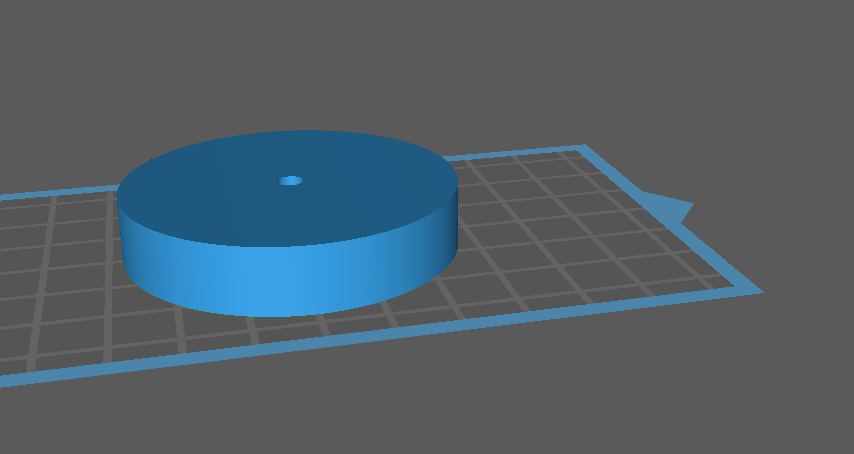
The disc has a central gas inlet and multiple uniformly distributed micro-outlets around a circle. Cross-sectional models show that the interior is not simply a set of straight bores: a three-dimensional channel network connects the central hole to the circumferential outlets, implementing a center-in, ring-out distribution layout. Hole positions, diameters and channel cross-sections can be edited directly in the 3D model, allowing rapid iteration for different gas-distribution requirements.
2 · Printed green body and process state
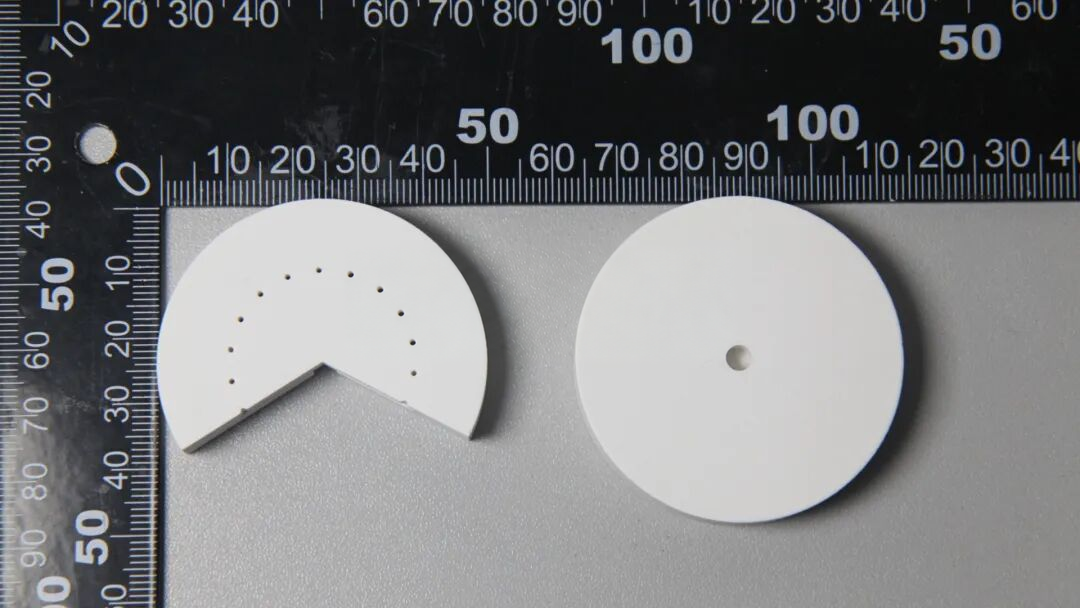
The sample is still a printed green body and has NOT undergone debinding or sintering. From its appearance, the source reports an intact disc outline, accurately positioned central and circumferential holes, and no obvious residue in the washed internal channels. The source interprets these visual observations as evidence that the slurry crosslinked and retained its shape during photocuring. These are source observations, not an independently measured tolerance or conversion value.
Printing-process record
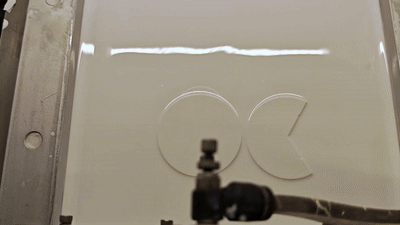
The source’s process recording shows yttria slurry accumulating through layer-by-layer exposure. The disc outline and internal passages emerge as printing progresses. Cleaning after printing removes residual supports and uncured slurry to produce the illustrated green body. Figure 7 is a logo-retouched still frame from that recording, not the original animation.
3 · Material and structural advantages
Yttria ceramics are valued for high-temperature resistance, corrosion resistance and high purity, and are used where atmospheric cleanliness and chemical stability are important. Ceramic 3D printing allows the center-to-ring three-dimensional passages to be formed directly in the green body. This avoids the sealing and alignment issues associated with joining several ceramic pieces. Model parameters can also change the outlet count, hole diameter and distribution radius, providing a customizable design basis for different flow rates and uniformity requirements.
Model-driven formation of complex internal passages is an advantage of ceramic 3D printing over conventional machining and molding. The equipment, slurry and printing process must be considered together to control the manufacture of high-purity ceramic gas-distribution structures.
Validation boundary
Editorial clarification: no post-sintering dimensional report, gas-flow uniformity measurement or corrosion qualification is supplied. The illustrated green part is not a qualified finished semiconductor component. Debinding, sintering shrinkage, channel openness, final purity and service performance still require verification. The three CAD illustrations are unchanged; only the sample-photo logo regions and the process still were retouched. Source-account advertising and the unrelated product-ecosystem illustration are omitted.